Showing posts with label R.I.P. Reading Challenge. Show all posts

Sunday, October 31, 2021

RIP Roundup


I had a particularly good RIP this year, one might say I had a RIP roaring time! I completed six and a half mystery books in Sept/Oct and had a marvelous time doing so.

Started Early, Took My Dog, by Kate Atkinson - #4 in her Jackson Brodie series, I loved this, of course, as the setting (north of England and Scotland), the characters, and the writing are all superb. Very interesting with an unresolved ending. I am hoping Tracy Waterhouse surfaces in this next book.

A Tiding of Magpies, by Steve Burrows - #5 in his Birder Murder mysteries. These are always interesting with good characters and good settings.

The Guest List, by Lucy Foley - absolutely terrific. All the hype wasn't far off the mark, and I really enjoyed this page-turner. Definitely channeling Lord of the Flies in this variation on the classic locked room mystery with all the suspects and victim being on an island off of Ireland. Now, I am eager to read Foley's next book, The Hunting Party.

The Long Call, by Ann Cleeves - #1 in Cleeves latest series. Really enjoyed it--Matthew Venn shows great promise as the starring detective with plenty of family baggage for the long haul. Love the small town setting and the bird references.

Thornyhold, by Mary Stewart - I'm a Mary Stewart fan and Lark of Lark Writes recommended it as terrific, and it was! A wonderful good witch story with romance and magic wrapped in a comfortable package. 

Jane and the Waterloo Map, by Stephanie Barron - my JASNA bookclub has invited the author to our November meeting and so I wanted to read one of her more recent books in the Jane Austen mystery series. This was enormously fun with a spunky Jane and I enjoyed her visits to Carleton House (this is during the time when she was reviewing proofs of Emma) and the mystery itself and the characters it involved were all interesting. I love maps and watercolors, so this was just all around perfect.

Final book, half way finished, is Witch Elm, by Tana French. This might actually be the best read of the season--so good. I really cannot predict how it is going to work out.

Happy Halloween!


Sunday, September 19, 2021

R.I.P. XVI - Readers Imbibing Peril


Not being much for horror, I usually focus on indulging in mysteries and supernatural stuff during the annual R.I.P. spooky reading challenge. This year is the 16th or XVI running of the spooks and here's my lineup for R.I.P. XIV:
  • The Guest List, by Lucy Foley - I've been wanting to read this for awhile, and I picked it up at the cute indie bookstore when I was up in Steamboat Springs a couple of weeks ago.
  • Thornyhold, by Mary Stewart - it's been way too long since I read anything by Mary Stewart, who is always good for a spinechilling tale.
  • Jamaica Inn, by Daphne du Maurier - again, too long since I indulged in a DDM story.
  • A Dance of Cranes, by Steve Burrow - I recently finished book four in the Birder Murder mystery series and am eager to see what happens next!
Speaking of mysteries, I am thoroughly enjoying Only Murders in the Building, starring and produced by Steve Martin, Martin Short, and Selena Gomez. It takes place in NYC and is so much fun, especially the all-star cameos. I think everyone wanted to have a piece of this show.


Monday, September 07, 2020

R.I.P. XV - Readers Imbibing Peril


Everything about 2020 may be different from years past...except the excitement around the yearly reading challenge, Readers Imbibing Peril, or R.I.P, now in its 15th or XV incarnation.

I usually stick to mysteries for R.I.P., but I have been reading a lot this year already so I am going to branch out a bit.

Here are two that I will definitely be reading. I feel good that one is a new book and one is a classic, and both are out of my comfort zone.

Mexican Gothic, by Silvia Moreno-Garcia - set in 1950s Mexico in a very spooky house.


Carmilla, by J. Sheridan Le Fanu - it's a vampire story that predates Bram Stoker's Dracula, by the leading ghost-story writer of the 19th century, at least according to GoodReads. My good friend, Charles Dickens, also wrote quite a few ghost stories as well.


 And then, of course, I have a slew of mysteries that I can always fall back on as the mood strikes.

Hope you all remain healthy as we march toward the equinox.

Take care and read on!


Sunday, September 01, 2019

RIP14 - Readers Imbibing Peril - getting my books together


For the past couple of years, I have devoted the month of October to reading mysteries and the RIP (Readers Imbibing Peril) Challenge is always fun. I'm not really into horror, although I think I might join a Dr Sleep (Stephen King) read-along.

Here is my lineup, so far, for October and for RIPXIV. I know I won't get through them all, but I'll have fun trying.


In no particular order...

A Siege of Bitterns, by Steve Burrows - birder murder series #1
Death at La Fenice, by Donna Leon - #1 set in Venice, I want to reread the series as I love it so much
Dying in the Wool by Frances Brody - a Kate Shackleton mystery I picked up at a JASNA book exchange
A Monstrous Regiment of Women, by Laurie King - #2 in the Sherlock Holmes, Mary Russell series
Where Serpents Sleep, by C.S. Harris - #4 in the Sebastian St Cyr series, although I also have #3 on order, so will probably read that one first
Brat Farrar, by Josephine Tey - a slender book, I may count this as my novella for Back to the Classics challenge
Anna's Book, by Ruth Rendell (aka Barbara Vine) - set in London, 1905; really enjoyed her Brimstone Wedding, which I read a few years ago
Murder on Astor Place, by Victoria Thompson - this has been on my TBR shelf  for ages; I need to read it or recycle it!
The Key to Rebecca, by Ken Follett - Nazis and Egypt - I'm intrigued - also, I have this notion it ties into Daphne du Maurier's Rebecca, but the back cover is not confirming that...

Oh, and the Goodreads True Book Talk group will be doing a spooky read in October--the voting indicates one of two sets of short stories. Both look great--Twice Told Tales, by Nathaniel Hawthorne or Black Spirits and White, by Ralph Adams Cram.

And, I have Melmoth audio waiting in my library queue...same with Louise Penny's latest A Better Man, but who knows when my turn will be!


Sunday, October 28, 2018

When Gods Die - RIPXIII #3


October continues to be great fun, reading wise, with another mystery logged for RIPXIII.

Last week I read When Gods Die by C.S. Harris--#2 in her Sebastian St Cyr series. I read the first book a couple of years ago, and enjoyed it. This one was even better.

It is initially set in Brighton, at the Royal Pavilion, which I actually visited in 2000 and found absolutely enchanting in a thoroughly over the top way. The mystery involves a plot to overthrow the Hanoverians on the throne, has a marvelous chase scene through the London sewers, and gives the reader much backstory of the very charming hero, who has a penchant for ruining his beautiful clothes, much to the dismay of his valet.

It's a true Regency romp with mystery and derring-do, lords and ladies, upstairs and downstairs. The mystery itself is quite interesting--a variation on the closed door approach, this time the mystery hinges on when the murder happened and how the body got to where it was found.

I also loved the connection to Wales and the Arthurian legend, with a whole family of witchy women with names likes Morgana, Guinevere, and Isolde.

Speaking of names, I think I just got the author's pun on the hero's name--since I know that St John, as in St John Rivers of Jane Eyre, to be pronounced Sin-Jin. I assume St Cyr to be pronounced Sin-Cere...or sincere. I think that's kind of cute because, despite appearance, Sebastian is sincere.

I'm not sure whether I'll get the fourth book read to reach Peril the First level. It's a set of short stories that aren't really doing it for me, and I've set it aside for other more interesting books.


Sunday, October 14, 2018

Sup With the Devil - Abigail Adams rides again


Second book in my R.I.P. XIII reading challenge and last in Barbara Hamilton's excellent Abigail Adams mystery series was Sup With Devil.

The year is 1774, and the nervous patriots of Boston are awaiting the ship from London that will determine the fate of the city and Massachusetts Colony for the crime of dumping crates of tea into Boston Harbor the previous December.

Against this backdrop of tension, Abigail is sucked into life at Harvard College, where her erudite nephew is a scholar, and solves a murder of a student. The story involves pirates, buried treasure, prostitutes, alchemy, and a host of other delightful elements.

I absolutely adore this series, and am so sorry that I don't have another book in the series to read next October. The relationship between Abigail and husband John is simply wonderful, and I enjoy meeting other revolutionary notables such as Paul Revere, John Hancock, and the ever-maddening Sam Adams.

Hamilton gives them believable dialogue and characters, and I appreciate the details she piles on--Abigail having to do her housework (laundry, cooking, child rearing, cleaning, etc.) all while gadding off to Cambridge, Concord, Lexington, and other outlying villages around Boston.

The mystery itself is well-constructed and whodunit neatly hidden for most of the book

A thoroughly enjoyable historical mystery with one of America's leading ladies as the star.


Sunday, October 07, 2018

The House on the Strand


I've been meaning to reread Daphne Du Maurier's The House on the Strand for decades now, and so decided to make it my first book in the R.I.P. challenge this year.

I read it when I was in my teens, in the mid-70's, shortly after it was published in 1969, after reading Rebecca and My Cousin Rachel and being eager for more of DMM. 

It wasn't the first time-travel book I had read, but it helped cement my love of the genre. In the intervening decades, I forgot most of how it works, with a couple of notable exceptions. I remembered that the first-person narrator, Dick Young, took drugs to voyage back to the 14th century, that it took place in Cornwall, and that Dick was invisible to the 14th people he encountered, but his body never actually left the 20th century. Oh yes, and encountering trains while tripping can be dangerous.

This time around, I found it utterly fascinating and my admiration for DMM's skills as storyteller of psychological thrillers knows no bounds. The way time travel works in The House on the Strand is that the drug transports the individual back to the physical location in which they are occupying, but centuries earlier, and then the person returns after the drug's effects fade or they touch a person of the distant past.

This time reading the book I found two aspects intriguing. First, the role of Magnus, Dick's friend from youth, who is a scientist and develops the drug and talks Dick into being his guinea pig. Magnus is definitely a Mephistopheles character who tempts Dick and enables his addiction to visiting the past, not only by providing the drug but also by supporting Dick's growing fascination with the world of the past by digging up the historical records on the various people he encounters, from his alter-ego in the other world, Roger, to the damsel in distress, Isolda, who he comes to love more than his 20th century wife. Magnus/Dick also sort of reminded me of Gatsby/Nick from The Great Gatsby. Dick, like Nick, is enthralled by the aura of the flashier, more confident, bigger than life Magnus/Gatsby, and becomes a pawn in a game he in no way understands.

Second, DMM leaves ambiguous whether Dick actually was able to travel back in time, at least in his head. The doctor who treats him near the end of the novel makes a convincing case that the drug is hallucinogenic and the trips are entirely figments of Dick's mind, with all the Freudian nooks and crannies creating the House on the Strand that Dick loves so much. However, Dick himself believes that time and space are not a continuum, and the drug enables him to inhabit both, one with his body and one with his mind. Because there is no way that Dick could've know the histories of the real people he encounters, DMM leaves that possibility open.

The ending reminded me of the ending of DMM's classic short story, Don't Look Now. The ending really leaves you breathless.

This was a perfect start to R.I.P. for me--chilling, spooky, ghostly, mysterious--everything I like in an October book.


Sunday, September 16, 2018

R.I.P. XII Challenge - Looking forward to October


I had so much fun reading mysteries last October, I decided to do the same for this year's R.I.P. (Readers Imbibing Peril) Challenge. I'm also throwing in a collection of ghost stories for good measure, and I may do a Daphne du Maurier reread as well.

I'm going for Peril the First, which means 4 books. I have a good selection from which to choose:

Ghost Stories of an Antiquary, by M.R. Jones - Jones was a scholar and folklorist and this collection was first published in 1904. Here's the wikipedia link on this collection--very excited to read this.

The Man He Never Was, by James L. Rubart - a modern retelling of The Strange Case of Dr. Jekyll and Mr. Hyde. I won this in a book giveaway and I think R.I.P is a perfect time to read it.

Sup With the Devil, by Barbara Hamilton - book 3 and the final one in this absolutely wonderful historical mystery series with Abigail Adams as the sleuth. I read book 2 last October and vowed to read book 3 this year.

The Cater Street Hangman, by Anne Perry - looking forward to book 1 in this series featuring Thomas and Charlotte Pitt. Comes highly recommended by many fellow bloggers.

The House on the Strand, by Daphne du Maurier - I read this when I was in junior high back in the Dark Ages, and as a lover of the time travel genre, I am eager to reread this. I remember a few parts vividly, and DDM is always a treat to read.

A Monstrous Regiment of Women, by Laurie R. King - book 2 in the Sherlock Holmes/Mary Russell series. I enjoyed book 1 last October, and decided to read book 2 this year.

When Gods Die, by C.S. Harris - book 2 in the Sebastian St. Cyr mystery series. I read book 1 a few years ago, thought it good and promising, but haven't carved out the time to read book 2...yet!


But first, I need to complete the books I'm currently reading:

Drums of Autumn (book 4 in the Outlander series), although that may go on hiatus until November if I don't get it done in September. I wanted to get a good start on it before season 4 of the TV series started up in November so I would have the details fresh in mind so I could quibble over what they did and didn't include or do properly! :)

D-Day by Stephen Ambrose - I love this book so much. Detailed, well-written, engaging, moving.

Cry, the Beloved Country, by Alan Paton - heartbreaking and sobering

At Home, a Short History of Private Life, by Bill Bryson - I'm listening to BB read his own words, which is my favorite way to experience his books. This is a reread, and an absolute treat.

Happy Reading!


Sunday, September 24, 2017

Journey to Munich (Maisie Dobbs #12)


I absolutely love the Maisie Dobbs series, and the latest, Journey to Munich,  that I listened to (the reader, Orlagh Cassidy, is superb) takes Maisie to Nazi Germany in 1938 on the eve of WWII, working undercover for the British government.

Maisie has grown and changed and experienced so much of life since the series began, but at her core she is someone I can relate to and admire and sympathize with. Despite her changing fortunes, she keeps her feet on the ground and tries to do what she thinks is right.

I always love her encounters with Robbie MacFarlane, and he was, of  course, one of the movers and shakers getting her to take the assignment in the first place and I can't help feeling that he holds a torch for Maisie, despite the big brother role he tends to take with her. The story has a bit of Sandra and Billy, a bit of Priscilla Partridge, a bit of Frankie and Brenda, but it's mostly Maisie on her own, solving a case and putting to rest another set of personal demons.

I really loved the story line involving society girl, Elaine Otterburn, whom Maisie meets up with in Munich. The theme of this novel is really "people are not what they seem." Perfect for a plot line involving undercover work.

Maisie's visit to Dachau, which I actually visited about 30 years ago, was fascinating, as was her observations of the tensions that gripped Munich and Germany on the eve of the coming war.  I think historical novels are a wonderful way to get inside a time period, if the author has done her homework and the history is solid.

I have only one more book in the series, In This Grave Hour, before I am caught up with author Jacqueline Winspear--I do hope she's working on #14. I know that she will have plenty of plot possibilities as WWII progresses.

This is my first mystery in the R.I.P. Challenge! #RIPXII


Thursday, September 07, 2017

R.I.P. Challenge Reading List


The R.eaders I.mbibing P.eril Challenge, affectionately known as the R.I.P. Challenge, is already underway, running from September 1 through October. I'm still in the middle of some pretty hefty books, so I won't be joining until October, but I had fun collecting 10 mysteries from my TBR shelf that are just "dying" to be read.

If you want to sign up or read reviews, visit Estella's Revenge.


Here's what I've read so far:
  1. Journey to Munich, which is #12 in the Maisie Dobbs mystery series by Jacqueline Winspear.
  2. The Brimstone Wedding, by Barbara Vine - I read about this a few years ago and got a copy for specifically for R.I.P.
  3. The Bee Keeper's Apprentice, by Laurie King - with Sherlock Holmes, no less, I've been wanting to give this a whirl for years now.
  4. A Marked Man, by Barbara Hamilton - second in a mystery series starring one of my favorite founding mothers, Abigail Adams.
  5. Bruno, Chief of Police, by Martin Walker - first in a series set in rural France.
And here's what I'm looking forward to:

Borderline, by Nevada Barr - I haven't read an Anna Pigeon mystery in a while, and this is the next one in the series for me.

The Falls, by Ian Ranking - another one that has been languishing on my shelf. Reading about Edinburgh in Diana Gabaldon's Voyager is just whetting my appetite for more Edinburgh scenes, albeit more modern than the 18th century.

Borrower of the Night, by Elizabeth Peters - I liked Peters' Amelia Peabody stories, so I'm looking forward to meeting art historian Vicky Bliss.

The Eagle Catcher, by Margaret Coel - set on a Wyoming Indian Reservation, I've been wanting to read more from this Colorado writer.

Lake of Fire, by Linda Jacobs - set in Yellowstone, this is a historical mystery/thriller. I love Westerns, I love National Parks especially Yellowsone, I love mysteries. Hope it's a winner.

Suffer the Little Children, by Donna Leon - another Guido Brunetti mystery, set in Venice, love this series. Should be a comfort read despite the inevitable murder.

Such a wealth of choices--I'll be revisiting old friends and catching up on their doings, and meeting new, and hopefully interesting, characters. Bring on the Pumpkin Spice and let the leaves fall!

I know I won't get through all of these books in October, but it's nice to have them all at the ready.


Sunday, October 02, 2016

R.I.P. Challenge Update


I signed up for the ever popular R.eaders I.mbibing P.eril Challenge this year and blithely set out to read four books.  I've got two of them under my belt, and I'm not sure if I will read the other two as horror is really not my favorite genre.


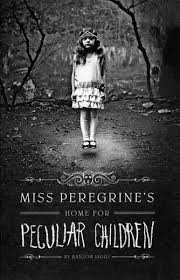
I read Miss Peregrine's Home for Peculiar Children by Ransom Riggs, which I thought pretty good. It was a fresh idea, an interesting twist on time travel, had a good dose of WWII, which is a time frame I'm currently much interested in, likable characters, and a healthy amount of tension and danger.  I like school stories and this was definitely a school story; it was a bit reminiscent of Harry Potter in that you have a very ordinary boy as the hero who becomes extraordinary because he has the courage to do the right thing.  There's also a Hermione type of girl character as well as an evil one who is disguised as a friend of the hero.  I'm not sure I loved it enough to read more in the series or to watch the movie, but it was a fun book.


My second R.I.P. book was Ray Bradbury's classic Something Wicked This Way Comes. Published in 1962, it is very much a product of its time, reflecting the fears of rampant technology that characterized the Cold War.  Just as Miss Peregrine reminded me of Harry Potter books, Something Wicked reminded me of Frankenstein, especially towards the end with Mr. Electrico being revived.  I liked the idea of the carousel adding or subtracting years to one's life.

Both books dealt with the problems inherent in immortality--being stuck in a time loop in Miss Peregrine and being alive but not "living" and endlessly riding the carousel forward and backward in Something Wicked but not having anyone left to love or care about.

I'm glad I read both, but I have to say I felt a sense of relief when I finished.  Neither gave me a world that I particularly liked inhabiting.

I have to say that Something Wicked ended up being exhausting. Early in the book, I tweeted that I was surprised at how poetic it was, but my GoodReads summary when I finished it was a "hemorrhage of words--good story but an overwhelming metaphoric flood."

I like writing that is leaner, with the occasional poetic flight. Not sure whether this is typical of Bradbury or not, but I found it too much for my taste.

Wednesday, October 08, 2014

An Occurrence at Owl Creek Bridge

Ambrose Bierce, American author and journalist, 1842-1914

I've known for years about An Occurrence at Owl Creek Bridge, a short story by Ambrose Bierce.  It's included in a collection I have entitled Shadows of Blue & Gray: The Civil War Writings of Ambrose Bierce.  I'm interested in the Civil War and heard that this was a chilling story.  Since I'm in the chilly story mode these days, I thought I'd give it a go.

It is remarkable.  Just twelve pages long, it is a perfect story.  The writing is crisp, almost clinical, as the narrator describes the execution of a Southern plantation owner during the latter days of the war when defeat was inevitable but loyalty to the cause still ran high.

As with any great short story writer, Bierce manages to convey a strong sense of the personality and drivers of the main character, the man being executed, in but a few phrases.  And as with any great short story, there are one or two moments at which the reader does a double-take.  The end of the story, of course, takes your breath away.

I love stories like this one and writers like Bierce.  At least I think I like him--I should probably read more than one story by him before making such a blanket statement.

Read it here and tell me what you think!

And in case you don't read it, I assure you, it qualifies as an R.I.P. challenge work!


Monday, October 06, 2014

Touch Not the Cat


I read Mary Stewart's wonderful paranormal romantic thriller, Touch Not the Cat, for both the R.I.P. Challenge and last week's Frightfall Read-A-Thon.  It's a shortish book--only 302 pages in the mass market paperback version--but it still took me all week.

Published in 1976, it was a nostalgic read for me.  That was the year I graduated from high school, and while all the action takes place in Europe, mostly England, but a bit in Madeira and Germany, the time and mores felt familiar from my teenage years.

Beyond the nostalgia, there's a lot to like in this novel.  The paranormal element is mental telepathy -- that is, the heroine, Bryony (love that name!) communicates mind-to-mind with her "lover," whose identity she doesn't even know.  She comes from an old family, the Ashleys, some of whose members share this ability, and so she assumes the person she can communicate with telepathically and who she has come to love romantically is related to her.  The family estate is entailed and when her father mysteriously dies, the estate must pass on to her uncle and his family of sons.  She cannot inherit it from her father being female.   Honestly, I had to work to suspend my disbelief around the mind-to-mind communication, but it was a fun premise and a kick to think about.

The estate is pretty cool too--complete with a moat and maze and secret dwelling within the maze where one of Bryony's ancestors, Wicked Nick lured maidens for romantic liasons back in the 1830s. There are Bryony's dashing twin cousins, one of which might be her mental lover, an American family that is leasing the estate, a friendly vicar, a hunky caretaker, a link to Britain's Roman past, and a way cool family motto..."Touch Not the Cat," which has Scottish roots and is linked to the shy but deadly Scottish wildcats.


There's a great Romeo and Juliet theme that run throughout the novel, in both plots (the modern day one and the one from the 1830s) as well as in chapter intros and more subtle references in the text that are fun to recognize.

The mystery is a bit light-weight.  Nothing gruesome happens, and there's a nice happily-ever-after with the nasties slinking off to parts unknown rather than being brutally dealt with.

A fun read...not terribly spooky but awfully fun.

Monday, September 15, 2014

The Daylight Gate


The Daylight Gate by Jeanette Winterson is my first spooky book of the season. It was surprising in some ways, definitely chilling, and made me curious to find out what else Winterson has written.

It's a short book, 224 pages in 4"x5" size page--more of a novella, really--and I read it in a day when I had lots of other stuff to do besides read.

The Daylight Gate is a fictional imagining of the circumstances behind the Lancashire witch trials of 1612.  In the Introduction, Winterson explains that the Trial of the Lancashire Witches is not only the most famous of the English witch trials but also the first to be documented.  A lawyer, Thomas Potts, wrote what he claimed was an eye-witness account, and Winterson uses this document as a spring-board for her story. 

The surprising thing for me about the novel was that the witches in it really seemed to possess some powers.  Most witch trial literature I've been exposed to--for example, The Crucible--focuses on mob hysteria, the power of suggestion and imagination, and the marginal status of most of the accused persons, who are usually women.  The witches in The Daylight Gate are powerful enough to inflict harm on their enemies, consort with familiars, seem able to shift shape, and can interact with the deceased via the Daylight Gate, which is essentially twilight, when the portal between the worlds of the living and that of the dead is open.

I really liked Winterson's style in the book.  The prose is clean, sparse, and blunt but the details are vivid and the pacing is almost mesmerizing.  Perfect for a dark, witchy book.  And it is dark.  Virtually every character is deplorable--the witches, and they're mostly from a single family, and their accusers.  There's some rough stuff in there that is hard to read at times--makes me quite glad that I wasn't alive during the early 1600's in Lancashire!

Winterson also tells her story without making it too black and white.  Despite my assertion that the witches seem to have some magical powers, she is fairly ambiguous as to how much of what is purported as magical is hallucination and how much is real.  I like that--in a book like this, the reader should be thrown off balance and forced to try to piece together where one world blends into another.

From a historical fiction standpoint, I found fascinating the link that the characters, particularly that lawyer Potts, made between witchcraft and Catholicism, that bogeyman of the 17th century.    Winterson did a masterful job of bringing in William Shakespeare as a believable character at this point in the novel.
The Daylight Gate was an interesting, well-written book--bite-sized but satisfying, giving me a lot to think over after I finished reading it, and a few jaw-dropping scenes that curled my toes.

This is the first book in my R.I.P. reading challenge.  You can read review of other scary books at the R.I.P. review site.


Thursday, September 11, 2014

R.eaders I.mbibing P.eril IX - aka R.I.P 9 Reading Challenge

(Art used for banners is the property of the wonderful Abigail Larson)
The book blogosphere is all abuzz with the 9th R.I. P. challenge hosted by Carl at Stainless Steel Droppings. It runs from 1 September through to 31 October and involves reading from the following categories: Mystery, Suspense, Thriller, Dark Fantasy, Gothic, Horror, Supernatural...or anything sufficiently moody that shares a kinship with the above.
Most years I skip this challenge because I figure I have enough on my plate, reading-wise, but I do like spooky (not too spooky, though!) reading in the fall, so I decided to take the plunge and sign up for Peril the First (which is just 4 books to be read by Oct. 31).


Here's my list:

1. Whatever the Tuesday Book Talk group at GoodReads votes on for Oct.  It's looking like 77 Shadow Street, by Dean Koontz.  That's what I voted for since I haven't read any Koontz yet.

2. Touch Not the Cat, by Mary Stewart and/or The House on the Strand, by Daphne du Maurier--it'll be a reread but that's okay.  I read it >40 years ago!

3. The 39 Steps, by John Buchan - I have it, it's a classic, I've been wanting to read it since it started cropping up on everyone's blog last year.  Perfect timing.

4. The Daylight Gate, by Jeanette Winterson - I got this as a Christmas present last year and I want to read it this year.  Here's the Amazon blurb:
After the Gunpowder Plot of 1605, every Catholic conspirator in England fled to a wild, untamed place far from the reach of London law. On Good Friday, 1612, deep in the woods of Pendle Hill, amid baptismal pools and low, thick fog, a gathering of thirteen is interrupted by the local magistrate. Two of their coven have already been imprisoned for witchcraft and are awaiting trial, but those who remain are vouched for by the wealthy and respected Alice Nutter.
I have a lot of books underway already, but most are on fairly long reading schedules so I think I can squeeze in these mostly short (not 800 pages at least) books.