Showing posts with label North and South. Show all posts

Tuesday, February 18, 2025

Post-Holiday Reading Roundup - Wrist is on the Mend

I'm back, having graduated from a splint to a brace in just one week, and the doctor's orders to do whatever. "If it hurts, then don't do it!" So cooking, driving, typing are all back--not sure I can play the piano yet or sew, but so much happier to be doing instead of whining!

So, without further ado, I present to you...what I have been reading:

Making It So - Patrick Stewart's Memoir

Really enjoyed this. I have never watched Star Trek: The Next Generation, which catapulted him from a stock Shakespearean actor to a global celebrity, but it is now on my watch list. I particularly enjoyed hearing about Stewart's youth in Yorkshire--very poor, hardscrabble, with a rough father, but incredibly interesting. I loved hearing about his early days as an actor, going from school plays to a scholarship in Bristol to the dream job with the Royal Shakespearean Company. All the backstage, behind the scenes stuff reminded me of the Judi Dench memoir, which I also loved. And his "bromance" with Ian McKellen was simply wonderful. Despite his celebrity, Stewart seems to have maintained a practical, salt of the earth demeanor which made the memoir work for me. I listened to him read it, but I did have to up the speed to 1.5 as he talks slower than is comfortable for this listener.


Fun Fact: Did you know that one of Stewart's first TV roles was as Mr. John Thornton in a BBC adaptation of Elizabeth's Gaskell's North and South, from 1975? I thought the marvelous version with Richard Armitage was the one and only adaptation! Not sure that I necessarily want to watch it, but who knew?


You Are Here - David Nicholls

Actually, this was a pretty good Valentine's Day read. It's all about getting over the heartache of a breakup and figuring out how to live and relate and even love again. And the best part is that our hero and heroine walk the Coast-to-Coast path in the UK--something I still burn with ambition to do myself. Of course, they do 15-20 miles a day, whereas I am a 8-12 mile/day hiker. But still, I loved reading about the walking.

Nicholls creates realistic characters who deal with modern life in ways that make sense to me--I really enjoy his writing and his characters.


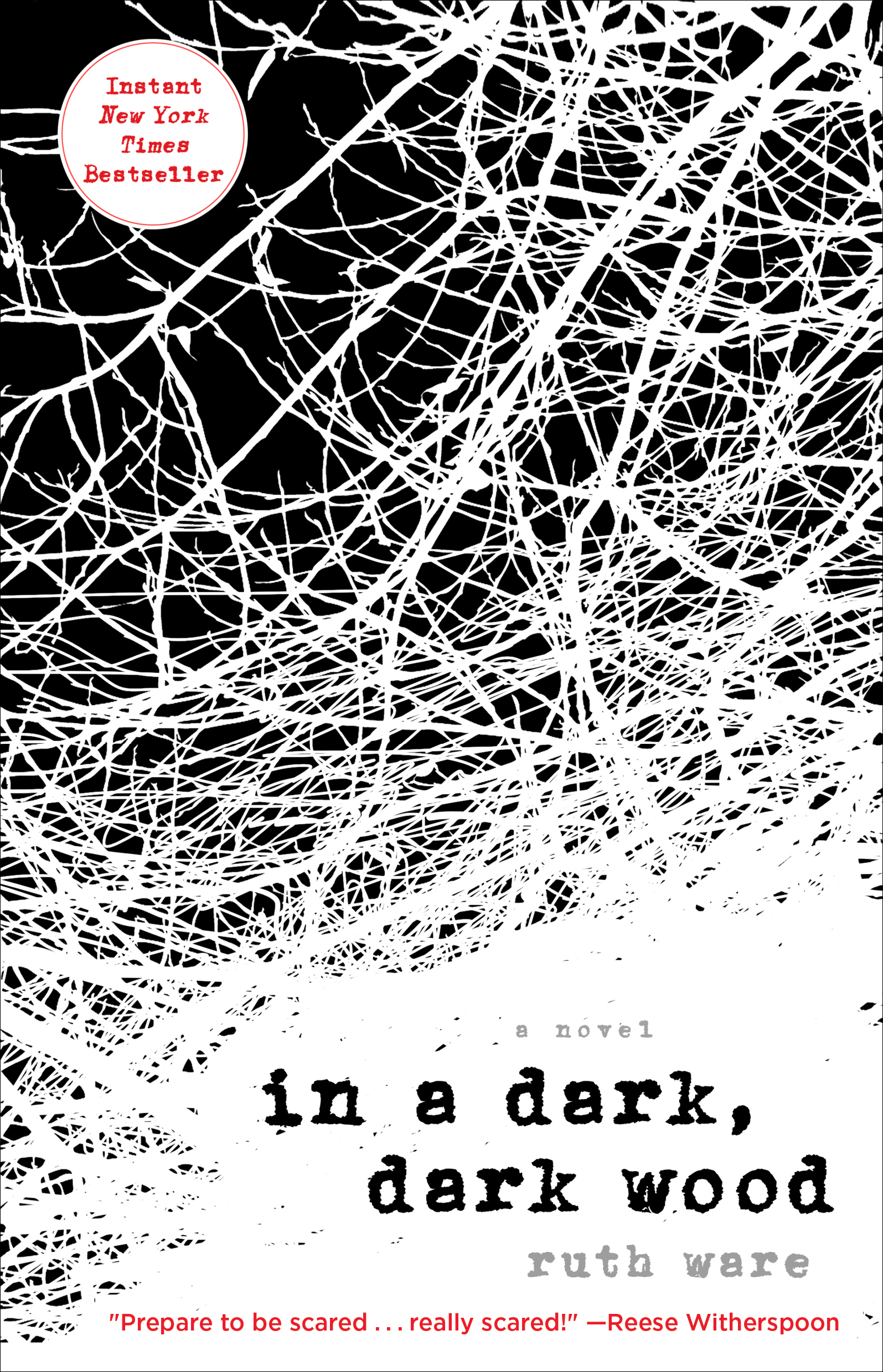
In a Dark, Dark Wood - Ruth Ware

I am becoming addicted to Ware's thrillers, despite her penchant for rather dim heroines. This is the third one that I've read in the last 6 months, and it was a page turner and definitely took my mind off of my broken wrist. I did figure out the killer fairly early, which is never as much fun as being surprised, but it was still an interesting story.

Rereads 

The Winter King - Thomas Penn 

I reread this nonfiction book about the later years of the reign of Henry VII, and I enjoyed it immensely. It is so rich in detail that a reread still worked--lots to review and try to retain. Penn has written several other books about this time period--late Renaissance in England, and I want to read them all, starting with The Brothers York. One of my favorite historical periods to dive into.

Here's my original post on the book.

The Briar Club - Kate Quinn

I do love this book so much. The reread was listening to it with my husband because I knew he would enjoy it and it's fun to listen to a book while we're doing errands or on road trips.

And, here's my original post on this one.

Wednesday, August 09, 2023

Dog Days of August Roundup - True Grit, et al


I used to think the perfect year would jump from spring to fall, but lately I am truly starting to appreciate summer. Maybe it's because this one has been relatively cool and much rainier than usual. Anyway, summer is winding down, and it's time for a reading roundup before pumpkin spice hits the shelves and frost hits the tomatoes.

True Grit, by Charles Portis - an absolutely fabulous 5-star read. I loved Mattie Ross, Rooster Cogburn, and LeBoeuf, and I loved the setting (the Old West circa 1870). I especially loved the writing--Mattie is the first-person narrator, and her voice is crisp and authentic with a dry wit. I listened to the audio version, as read by Donna Tartt, who also provided the afterword for the novel. Tartt raves eloquently about her entire family's multi-generational love for this novel, and she also wrote an excellent piece for the New York Times after Portis's death in 2020. I am sorry I didn't read this book as a teenager because I definitely feel I would have had a lifelong love for it, as does Tartt. Even if you're not sure you would like a Western, it's a short book and well worth a try. I actually think it should be on school reading lists. 

I've never seen the John Wayne movie and didn't really want to. However, I did just watch the 2010 movie with Jeff Bridges as Rooster, Matt Damon as LeBoeuf, and Hattie Steinfeld as Mattie. I thought it was fabulous. Very true to the book, snakes and all! I've just put a couple of other books by Portis on my GoodReads TBR list.


The Survivors, by Jane Harper - this Australian author is definitely becoming a favorite of mine. I like everything she writes. This standalone mystery is set in Tasmania, in a stiflingly small seaside village where most people are carrying a load of secrets under a weight of guilt. The perfect setting for a good then-and-now set of mysteries. I loved reading about the deadly caves--spooky and intriguing. Good, interesting characters, and, as always, well-written.


Station Eleven, by Emily St John Mandel - I never read sci-fi (except the occasional time travel yarn) and I loathe post-apocalyptic distopian stories, but my daughter said Station Eleven was really good and had lots of Shakespeare in it. She reads books that I recommend, so I thought I should do the same. It was really good--and it did have some Shakespeare in it. The post-apocalyptic cast of characters is a troupe of actors who put on Shakespeare's plays and travel with classical musicians who put on concerts in the upper Midwest after a virus destroys civilization and the survivors are attempting to survive. The novel was published in 2014, and anyone who read it before Covid hit was probably even more scared than the rest of us when Covid was in its earliest, scariest phase. I really enjoyed the jumping around in time (we get to know the characters before their world changed), and I especially enjoyed reading about how people viewed the lost world. I really had to swallow a lot to accept the idea that no one who survived could figure out how to turn the lights back on, but the author did a believable job in creating a fictional world I wanted to read about. It's not everyone's cup of tea, but I am glad I gave it a shot.

There's a mini-series that my daughter says is very good, and so I will be watching that sometime this Fall if I ever finish watching Castle.


The Last Runaway, by Tracy Chevalier - this was a reread of one of my favorite novels by one of my favorite contemporary authors. Set in 1850, it is the story of a young woman who immigrates to the US and makes her way in the new world, becoming a link in the underground railroad and quilting her way into a place for herself. Rereading this book has inspired me to find a place in my office to set up my sewing machine so that I can finish the quilt I started a few years ago so that I can start on my own underground railroad sampler quilt. Here a link to my original review, complete with references to Austen's Mansfield Park and Gaskell's North and South and the Thornton family, particularly the ladies. I'm happy to say that I saw the parallels on the second reading as well.

Happy Dog Days of Summer!

Wednesday, May 06, 2015

Comparing Framley Parsonage to Pride and Prejudice


A few years ago, my regional JASNA organization had a meeting in which we looked at how Jane Austen influenced other writers.  I tackled Elizabeth Gaskell’s North and South, and blogged about my thoughts in these posts:

A friend of mine and fellow Janeite, Maxene, gave a paper comparing Trollope’s Framely Parsonage with Austen’s Pride and Prejudice.  After finishing Framely Parsonage and posting about it, I reread Maxene’s paper and thought it so good that I got her permission to post it on my blog.

So, for your reading pleasure, courtesy of Maxene…
[Spoiler alert - Maxene does summarize the plot in her paper below]

FRAMLEY PARSONAGE and PRIDE AND PREJUDICE

Attributing literary influence is always difficult. We’ve seen that even with all the similarities between North and South and Pride and Prejudice, Elizabeth Gaskell never did acknowledge being influenced by Jane Austen.

With Anthony Trollope, it’s a far different matter. Trollope’s novelist mother, Fanny Trollope, loved to read Austen’s works and they were widely read in the Trollope household by the entire family.

When Anthony was nineteen, he stated that Pride and Prejudice was the best novel in the English language. He retained his high opinion of Jane Austen throughout his life. So, we may very well ask: was Trollope thinking of Pride and Prejudice when he wrote Framley Parsonage  in 1859-60?

Framley Parsonage, fourth novel in Trollope’s Barchester Chronicles, is typically Victorian with multiple interconnecting plots. I’ll give a summary before turning to an analysis. One plot in the novel involves Mark Robarts, a young vicar living at Framley Parsonage with his wife, Fanny. Mark was given the living by his school friend, Lord Ludovic Lufton, who lives at Framley Park with his mother, Lady Lufton, the reigning social matriarch of the neighborhood. Mark, trying to climb the social ladder, foolishly signs a guarantee for the villainous Mr. Sowerby, the local MP. He eventually faces financial ruin and social scandal when he cannot pay this debt.

The second plot concerns Lucy Robarts, Mark’s sister, a petite, rather plain young woman, who comes to live with Mark and Fanny at the Parsonage. Lord Lufton, after some initial hesitancy,  falls in love with Lucy, seriously displeasing his mother, Lady Lufton, who has already made an arrangement with the Archdeacon’s wife, Mrs. Grantley, whereby Ludovic would marry Griselda Grantley, beautiful, but shallow and insipid.  Lady Lufton tells her son: “She (Lucy) is not of that class from which I would have you choose.” Ludovic, however, proposes to Lucy and she, knowing of his mother’s hostility, refuses him, for his sake, and lies to him about her love for him. Lucy declares that she will marry Ludovic only if his mother asks her to do so.

It isn’t until Lucy has shown her real mettle by caring for the critically-ill Mrs. Crawley, wife of a poverty-stricken curate, thus endangering her own life to save that poor woman’s, that Lady Lufton realizes Lucy’s strength of character and her worthiness to marry Ludovic. Lady Lufton then goes to the Crawley cottage and asks Lucy to marry her son.

Just from this short summary, we can see some similarities with Pride and Prejudice.

When we look further, we can see that there are similarities in the financial positions of the two heroines. Both Lucy and Lizzy are poor, Lucy even poorer than Lizzy and also an orphan. And note the similar names as well. Neither young woman is considered to be a beauty, Lizzy being compared unfavorably to her much prettier sister,  Jane,  and Lucy to the elegant but heartless Griselda Grantley.

Secondly, there is a putative pre-arranged marriage in both novels. Lady Catherine and Lady Anne Darcy supposedly had committed their progeny “while in their cradles” to a life together while Lady Lufton and Mrs. Grantley have decided that their children should wed.

Thirdly, unequal marriages play a part in both novels. Lord Lufton is aristocratic and wealthy, and we know that Mr. Darcy has at least 10,00 pounds a year. But here is where there is a great difference between the two novels. Trollope, the Victorian, acceded to his era’s conventional wisdom that an unequal marriage, based on social position and wealth, would lead to misery since the young lady would never be able to fit into an elevated society and to fulfill her social responsibilities. To that conventional wisdom, Austen would say: “Ha!” Austen’s idea of an unequal marriage is inequality of intellect. Conventional wisdom would applaud Lucy’s refusal of Ludovic’s proposal as well as Lizzy’s of Mr. Darcy’s first, but, as we know, Austen did not have Elizabeth refuse Darcy because of any perceived social inequality, but rather because of his treatment of Jane and Wickham.

The real difference between the novels is expressed in the two scenes between Lady Lufton and Lucy  on the one hand and of Lady Catherine and Lizzy on the other.  We recall that Lizzy rejects Lady Catherine’s attempts to paint her as a polluter of the shades of Pemberley.”He is a gentleman; I am a gentleman’s daughter,” she affirms and she refuses to promise never to enter into a betrothal with Mr. Darcy. Lizzy also says these important words: “And with regard to the resentment of his family, or the indignation of the world, if the former were excited by his marrying me, it would not give me one moment’s concern—and the world in general would have too much sense to join in the scorn.”

But in Lucy’s scene with Lady Lufton, she says the following: “ I could not endure to come into this house as your son’s wife, and be coldly looked on by your son’s mother. Much as I loved him, much as I do love him, dearly as I prize the generous offer which he came down here to repeat to me, I could not live with him to be made the object of your scorn. I sent him word, therefore, that I would have him when you would ask me, and not before.”   The narrator states that Lady Lufton:  “did sympathize with her, and admire her, and to a certain extent like her….and to feel that but for certain unfortunate concomitant circumstances the girl before her might have made a fitting Lady Lufton.” Lucy acts out of pride, yes, but a different type of pride from Lizzy’s. As the narrator states: “strong as her love was yet her pride was perhaps stronger.” Lucy bows down to social convention—She will not go where she is not welcomed.

Fourthly, both Lizzy  and Lucy underestimate their lovers. When Darcy leaves the inn at Lambton, Lizzy believes she will never see him again.  With Lydia’s situation resolved without scandal, she regrets Darcy’s having known about it since she thinks he would never renew his offer to someone related to Wickham. However, as we know, Darcy has raced to the rescue for Lizzy’s sake and done so altruistically, not wishing her to know what he has done.

In Framley Parsonage, Ludovic, too, acts faithfully and heroically. He, unfortunately, must suffer another rejected proposal by Lucy, but he also rescues a family member. He redeems Mark’s debts, blaming himself for not warning Mark about Sowerby’s machinations, and thus saves Mark from financial ruin.

In both novels, there is a theme of indebtedness, albeit less strong in Pride and Prejudice. Darcy, in trying to keep from Lizzy knowledge of his part in saving Lydia, doesn’t want her to incur any debt to him. When he renews his proposal, he wishes her acceptance to be free and open and not clouded by her gratitude. Lucy, by insisting that Lady Lufton ask her to marry Ludovic, wants to be welcomed into her new family without feeling indebted.

With Ludovic’s paying of Mark’s debts, the two plots of Framley Parsonage—the church-related and the courtship, come together. Pamela Regis, in her History of the Romance Novel, writes that the “Lucy-Ludovic plot reproduces the thematic concerns of the church plot with the elements of the romance novel.” Both plots hinge on the unpayable debt.

In her Persuasions article: Pride and Prejudice and Framley Parsonage: A StructuralResemblance, Barbara Horwitz summarizes the similarities between the two novels: “the lovers’ unequal social and economic situations, their initial disdain for each other, an overbearing and interfering older female relative, a sibling in need of rescue, the initial proposal and refusal, the heroine’s surprise at the moral worth and constancy of the hero, a second, more favorably received proposal, suspicion that the heroine’s motives are mercenary, and the eventual marriage and settling down happily on the family property.”

The basic difference between the two novels is in their respective heroines.  Trollope wrote in the Victorian period. His heroine is more restricted, as is the period in which she was created. Elizabeth Bennet is a product of the  less strait-laced Regency society as well as being the creation of a more socially rebellious author who, in Pride and Prejudice, defies the accepted social conventions.


After Trollope’s death, an article in the Spectator linked the two authors: “The loss of Mr. A. Trollope makes us turn back from his long series of elaborate pictures of English society…to those in which Miss Austen painted the rural society of England during the end of the last and beginning of the present century.” In a Persuasions article by Pamela Neville-Sington: Jane Austen and the Trollopes, the author concludes: “Anthony Trollope was his mother’s son, but he preferred to be thought of as Jane Austen’s literary successor.”

***

Thank you, Maxene, for that terrific article.  Now let's go back to reading Austen!

Tuesday, May 17, 2011

Hard Times by Charles Dickens


A few years ago, along with countless other readers I fell in love with Elizabeth Gaskell's North and South after discovering it first through the BBC mini-series. Reading N&S prompted me to read more of Gaskell and I spent about a year reading her front-to-back while I read the wonderful Jenny Uglow bio of her. In the bio, I learned about what a patronizing rat Charles Dickens was to Gaskell, how he upstaged her N&S with his own Hard Times, and how he blamed N&S for the decline in readership of his periodical Household Words.

This is my way of saying that I read Hard Times with an agenda. This Classics Circuit tour may be an Austen vs. Dickens throw-down, but for me it is a Dickens vs. Gaskell Main Event, with Hard Times going head-to-head with N&S.

Suffice it to say that Hard Times is one of the weakest Victorian novels I've ever read. My personal vendetta aside, I just didn't like it. I found the first half of the book to be a series of character sketches--well, actually caricatures--and the second half to be a fairly interesting, but conventional short story. I like good writing, writing that takes my breath away and makes me sit up straight and see things in a new and clearer way. I didn't find that in Hard Times--it felt slick and jaded and calculating.

After I finished Hard Times, I did a bit of reading about where Dickens was in his life and career when he wrote the book and the response to it by critics since its publication. This actually turned out to be a more interesting project than reading the book itself, which really was a slog-fest.

I found an absolutely wonderful Norton Critical Edition of the novel that also had a terrific section called Backgrounds, Sources, and Contempory Reactions.

Hard Times was the tenth novel by Dickens, written between January and August 1854, when he was 42 years old. Chronologically, it comes after Bleak House and before A Tale of Two Cities. It was written for serial publication in Dickens' periodical Household Words, and its full title is Hard Times - For These Times.

It was written while Dickens was still living with his wife, albeit unhappily, and before he met his mistress, Ellen Ternan. As such, it reflects a bitter, discouraged, tired outlook and in my view is little more than propaganda for a position that it's not clear that Dickens completely supported.

The novel takes place in Coketown, a northern industrial town based on Preston, which was the scene of a prolonged strike by loom-workers. Dickens visited the town very briefly, attended one meeting of the workers and listened to part of one speech by a labour organizer. Based on this thin research, he wrote a story in which he satirizes Utilitarianism and political economy using characters that are one-dimensional. I found Hard Times to be little more than a morality play and not a good one at that. The good are very good and are rewarded for their virtues, the bad are very bad and are punished for their vices.

Despite John Ruskin's assertion that Hard Times was Dickens' best novel, most contemporary critics found much to dislike and it wasn't until the late twentieth century that many fans of the book appeared. It seems that currently the novel is held in high regard by the academic world, but the pieces I read in the Norton Critical Edition failed to sway me into liking it, especially when I compare it to Gaskell's N&S.

What I love about N&S is that there are no clear-cut good people versus bad people, with perhaps the sole exception of Fanny Thornton, and this cuts across class. Margaret Hale is a dutiful daughter with a large heart but prejudiced and, at times, arrogant; John Thornton is a harsh master with an open mind and compassionate nature; Mrs. Thornton is fiercely loyal and stern with deep maternal affection and pride, and so it goes. These are people, real people with real qualities trying to make their way as best they can in a world that can be confusing and frightening.

In Hard Times, the people in charge (i.e., the mill owners, the labour leaders, the politicians, etc.) are bad people--they are narrow, peevish, and self-serving, as reflected in their names...Mr. Bounderby, Mr. Gradgrind, Mr M'Choakumchild, Mrs. Sparsit, Mr. Slackbridge. The poor and the vulnerable are good people--Old Stephen, Mrs. Pegler, Rachael, Sissy Jupe, and the circus performers. These aren't real people, they're stock characters who don't sound or act like real people but give speeches and utter platitudes.

The world of Hard Times almost seems Suessical--the education system that Dickens lampoons (i.e., based entirely on the teaching of facts) is so prepousterous that it can't be taken as a serious threat. Jane Sinnett wrote an anonymous review of Hard Times in the Westminster Review in October 1854 in which she says of the education system described in Hard Times "we are not aware of such a system being in operation anywhere in England." Perhaps I am simply not a fan of satire, and Hard Times is nothing if not satirical.

One of the things I like best about Elizabeth Gaskell is that she felt that she had been given a gift (i.e., her ability to tell a good story), and she tried to use it to make the world a better place. Why then do I have such a problem with Dickens trying to do the same thing? I think it comes down to intent.

Dickens wanted to move from being perceived as merely a popular novelist to serious social reformer, and the result is that Hard Times reads like a political tract. Gaskell, on the other hand, was motivated by the desire to tell both sides of a story so that each could find common ground with the other. It's a common adage that writers do best when they write what they know. Dickens didn't take the time to know the people of the northern industrial towns, neither the masters nor the hands, and so Hard Times, his story about them, rings false regardless of the wit, energy, and skill that he brings to it.

In the end, it seems self-serving to me. Even his most sympathetic character, Stephen Blackpool, seems little more than a mouthpiece for Dickens' increasing discontent with the married state and his ardent desire to rid himself of his wife. Here's an image showing Blackpool's reaction to the return of his wife, whom Dickens blessed with the most vile attributes. I can just imagine Mr. Knightley saying, "Badly done, Charles, badly done."

Friday, October 08, 2010

Winner announced in the Naxos Audiobooks recording of North and South giveaway


Last week's Elizabeth Gaskell Bicentennial Blog Tour on September 29th was a great success. I had fun participating in it, and I definitely appreciate everyone who dropped by to comment and enter the drawing for the giveaway. The drawing for the unabridged Naxos Audiobooks recording of North and South has now closed, and the lucky winner is…

Annette who posted a comment on September 29th on Stiletto Storytime’s review of Sylvia’s Lovers.

Congratulations Annette. Enjoy your new audiobook of the incomparable North and South.

Thursday, January 29, 2009

Cousin Phillis - a fragment? Say what?

According to the Jenny Uglo bio of Elizabeth Gaskell(Elizabeth Gaskell: A Habit of Stories), Gaskell intended Cousin Phillis (Victorian Collection) to have a third part which she never wrote.

The story was serialized in the Cornhill magazine, and Gaskell and George Smith, the editor and publisher of Cornhill, had a misunderstanding regarding the amount of space he would give to her story. In a letter to Smith, Gaskell said that Cousin Phillis were she able to complete it as planned, had 'a sort of moral, "Tis better to have loved and lost, then never to have loved at all.'" Uglow goes on to recount the sketch of the ending, saying that Gaskell planned that the "last scenes would be set years later, after Holman [Phillis's father] had died. Paul, now married, returns to find Heathbridge struck by typhus and comes across Phillis using Holdsworth's old technical sketches to help her drain the marshy land. An independent single woman, working in harmony with the 'common labourers', she uintes male knowledge with female love: Paul finds her with an orpphaned child in her arms, and 'another pulling at her gown'--we hear afterwards that she has adopted them."

I love this ending. Much as I liked Betty telling Phillis to get up and live, we don't see Phillis moving on from Holdsworth, and so the part that is finished does feel truncated, abrupt in its closing.

This unwritten sketch provides a much more complete and powerful picture of Phillis. So why didn't Gaskell write the ending anyway? With other serialized works, notably North and South (Oxford World's Classics), even though she was rushed at the end, she did go back and rework them to some degree, though I'm not sure ever to her satisfaction. After the Cornhill serialization, she could have written her ending as she wanted it. I find it curious that she didn't, but then, in reading her bio, it seems that she truly did try to do too much. You almost feel the mania that drove her from project to project, managing her family, her stories, her life, until she finally collapsed at the young age of fifty-five.

Thursday, December 11, 2008

Graham Greene on North and South

Today's online New York Times has an excerpt from Graham Greene: A Life in Letters, edited by Richard Greene. The excerpt is a letter Greene wrote to "Mumma" from Sierra Leone in May of 1942.

The part that caught my eye was this:
I'm reading North and South by Mrs Gaskell at the moment. Some of it is very good - and the acid humour is most pleasant. Only people in Victorian novels do seem to behave so oddly whenever sex rears its ugly head! Tremors and horrors and indignations. Would they think we behaved oddly? perhaps they'd think just disgustingly.


He goes on to talk about a Disney movie and Trollope, but having just had a mini-discussion on Republic of Pemberley's Library board about whether Gaskell had a sense of humor or not, I thought it interesting the Greene would mention the humor in N&S and modify it as acid. I think Gaskell is much more gentle in her humor than acidic, but then I don't know that much about Graham Greene. However, just reading the blurb on Amazon makes me want to read up on him:
Greene is presented in these letters through the five main preoccupations of his life: Roman Catholicism, politics, love, travel and, certainly not least, the processes of writing and publishing. As a publisher at Eyre & Spottiswoode, and as an author in disputes with Heinemann's and Viking ("Would rather change publisher than title"), Greene gained an unusually rounded view of the business side of his profession.


Connecting back to Gaskell, she ultimately did find another publisher than Dickens (i.e., for the serialization of her novels); perhaps like Greene, she would rather "change publisher than title" as Dickens changed a title on at least one occasion.

Wednesday, December 03, 2008

Reading Gaskell for the First Time?

Mary-Laure left a comment on the previous blog entry asking for a recommendation on which Gaskell to read first.

Here are my thoughts on the subject. Caveat - I haven't yet read Cousin Phillis, nor have I read ALL the short stories, but I think I've read enough to venture an opinion.

1) North and South - some people have a problem liking Margaret, but I think she is a marvelous Victorian heroine. Not as "on a pedestal" as many of Dickens' heroines, but definitely of the angel variety who stumbles from time to time. N&S is a love story, it's a social problem story, and it has a good cross section of characters, showing Gaskell's range and sympathies.

2) Cranford - her most popular novel, and her personal favorite. Based on reminiscences of her girlhood in Knutsford, it is episodic in nature, gentle in tone and humor, and sweet. Dickens loved Gaskell's Cranford stories, which he published as individual pieces before she collected them into a novel.

3) Wives and Daughters - I think of this as Gaskell's masterpiece, but, tragically, she died just before completing it. It is rich in characters that defy type, rich in detail, rural, and a thumping good read. It lacks the social problem aspect that characterized most of Gaskell's writing, especially her early writing, and drove her to sacrifice so much of her time to writing so I can't say that it is the one Gaskell to read, but it is marvelous.

4) The Grey Woman - a novella that is a wonderful Blackbead type story. If all you know about Gaskell is Cranford, the GW is something completely different.

5) My Lady Ludlow - a fascinating novella that shows Gaskell's ability to weave various stories and themes into a cohesive whole, with variations in narrative technique.

6) Sylvia's Lovers - while I never warmed to the heroine, this is a purely historical novel with all the dialogue delivered in accurate dialect. A monumental feat of historical research, inspired during Gaskell's visit to Whitby with her daughters. Based on true events.

7) The Old Nurse's Story - my favorite of Gaskell's short stories. A classic Victorian ghost story.

8) Ruth - a fascinating moral tale in which Gaskell takes the road not often taken by Victorian authors and champions the unwed mother.

Saturday, November 15, 2008

Final thoughts on Austen's Influence on Gaskell's North and South

I posted on the similarities of plot lines here; the background on Gaskell and her reputation pre-N&S here; similarities of language and characterization here; and some thoughts on why Gaskell might have turned to Austen and P&P for a model and inspiration here. In this final post on the topic, I want to address who might have put this idea to turn to Austen into Gaskell's head.

To reiterate...

So, based primarily on the comedic plot outline (which is definitely not part of either MB or R) and to a lesser degree the similarities in language, characterization, and some scenes, it seems that Gaskell used P&P as a way of approaching her story, N&S, and making it more generally appealing and less controversial than the earlier social problem novels. While Mary Barton and Ruth were ultimately successful, the controversy they aroused was uncomfortable. Knowing that Cranford, which was evocative of Austen in terms of rural village life, was well liked, it seems that Gaskell turned to Austen more directly in her next novel, N&S.

I’ve been wondering whether she did this on her own, or whether someone else suggested it.

I first thought of John Forster, literary agent and close friend of both Charles Dickens and Elizabeth Gaskell. They were regular correspondents, and he provided guidance regarding her career as an author. My thought process is that if Forster admired Austen so much that he assumed Dickens had read Emma and was influenced by it, it is not unlikely that he would have counseled his friend Gaskell to study Austen as well. In fact, in his review of Ruth, Forster compared Gaskell to Austen saying that both writers are characterized by "little unexpected touches that surprise the reader into tears or laughter," arising from "a quickness of minute observation and light movement of the fancy, feminine qualities employed in a charming feminine way."

I’ve also thought a lot about G.H. Lewes, his admiration for Austen, and his clout with the Victorian intellectuals. While Gaskell didn’t personally like Lewes, she read his articles and seemed to respect his intellect and opinions. More significantly, though, Lewes did actually counsel Charlotte Bronte to study Austen, and Gaskell and Charlotte were close friends.

Charlotte wrote to Lewes after he reviewed Jane Eyre in 1847 and he wrote back advising Charlotte to take Austen as a model. She did not like this idea one bit and wrote in return:

"What a strange lecture comes next in your letter! You say I must familiarise my mind with the fact, that 'Miss Austen is not a poetess, has no "sentiment" (you scornfully enclose the word in inverted commas), no eloquence, none of the ravishing enthusiasm of poetry,'--and then you add, I MUST 'learn to acknowledge her as ONE OF THE GREATEST ARTISTS, OF THE GREATEST PAINTERS OF HUMAN CHARACTER, and one of the writers with the nicest sense of means to an end that ever lived.' The last point only will I ever acknowledge.”

While Gaskell does reprint another exchange on Austen between Lewes and Bronte in her bio of Bronte, Gaskell does not comment in the narrative on her friend Charlotte’s dislike of Austen. Gaskell wrote The Life of Charlotte Bronte immediately after finishing the serialization of North and South—perhaps she found herself between the proverbial rock and hard place. P&P clearly influenced N&S—Charlotte Bronte clearly disliked Austen. Gaskell neatly walked the tightrope by quoting Charlotte’s letter on the subject without additional commentary. Perhaps she didn’t think it would be fair to disagree with her on Austen posthumously and publicly—when Charlotte couldn’t explain herself further. Had she agreed with Bronte on Austen, I don’t think she would have hesitated to let the world know that. This itself seems to corroborate Austen’s influence on Gaskell.

My personal favorite musing on this subject is that Charlotte Bronte herself recommended Austen to Gaskell with regards to N&S. I find it significant that Gaskell mailed the outline of N&S to Dickens, who published it in serial form in "Household Words," the day after Charlotte Bronte left the Gaskell home where she had been visiting for a few weeks. It is speculated that the two authors discussed their next projects during this visit, and it’s likely that Gaskell discussed her plans, hopes, and frustrations with the reading public with Bronte and her ideas around N&S. While George Lewes recommended that Bronte read Austen, and specifically P&P, it's not a stretch that though Bronte didn't care for Austen herself, she might have recommended the same thing to Gaskell, who was a very different sort of author from Bronte. Perhaps they might have recalled Richard Whately’s opinion that Austen was a master at presenting a moral tale in a highly palatable fashion and that if Gaskell wanted to continue writing her own moral tales—i.e., addressing social problems and resolving them through fiction—then she might study how Austen accomplished this.

One final point on Bronte and Gaskell, in my reading on both authors, I have seen no evidence of the “green-eyed monster” – that is, any professional jealousy between Bronte and Gaskell or for earlier authors, male or female. In fact, such jealousy would be very out of character for either of them. So I can’t really accept the notion that Gaskell used Austen but didn’t acknowledge this because of jealousy of “rising star.” In Uglow's bio, she discusses how Gaskell befriended younger female authors, and her relationship with Bronte really seems to be that of an older sister and not a rival.

Finally, Gaskell’s husband, William, had a big influence on her writing career. He had urged her to write in the first place, and read, commented, and proofed all of her work. He, like his wife, was well-educated and he taught literature at the Working Men's College in Manchester. As one of his students recalled, he was "the most beautiful reader I have ever heard." With Austen’s novels showing up on the bookcases of the fictional Mr. Harrison, we can safely assume that Austen’s novels were on the Gaskell bookcases as well, that Wm. Gaskell read them aloud in his lectures on literature, and perhaps suggested to his wife that she could do worse than look to Austen and Pride and Prejudice for inspiration, technique, language, and comfort.

Friday, November 14, 2008

Sylvia's Lovers - Dialect and Extras


I've finished Sylvia's Lovers and have been digesting a bit before posting my thoughts on it. To aid in the digestion, I read the sections in Jenny Uglow's Gaskell bio that deal with SL and the writing of it. The main thing I learned was what a tremendous job Gaskell did with the dialects of the various characters. This was pretty much lost on my American tin ear, but apparently she distinguished between classes and regions to a degree that would have made Henry Higgins proud.

Here's what Uglow says:
...Gaskell kept faith with the expression of the people. Speech, as William [Gaskell's husband] had insisted in his 'Lectures on Lancashire Dialect', has its own history and evolution, displaying regional, class and individual variants. Gaskell carefully gave Bell Robson Cumbrian forms to fit her origins. The manuscript reveals numerous alterations of word endings and technical details such as variations of the definite--the, th', t'...Such details, imperceptible to most of her readers, were in tune with her determination to gather the 'unimportant' chaff and dust of past lives.


I still have to read about press gangs, which is an appendix in the Penquin Classics version I have of the novel, but I think I can say that I liked the book well enough. I've heard that many critics think that Gaskell fell into melodrama in the final volume, and much as I like Gaskell, I can't say I disagree with this. The chapter in which Philip saves Kinraid stretches belief to the breaking point, and their last encounter pushes it over the edge. In reading the bio of Gaskell simultaneously with reading the works themselves shows that Gaskell was an impatient writer. In SL, unlike N&S, she wasn't writing serially, but life had intruded on her progress with the novel to such a degree that she was impatient to be done with it and so forced the ending in ways that require revision...but unless there were lawsuits, as in the case of her bio of Bronte, it seems that Gaskell rarely reworked what she produced.

In comparing Gaskell to Austen, Austen's novels, except Persuasion and perhaps Northanger Abbey, are polished, perfected, exquisite, whereas Gaskell's tend to be hurried. It's significant to me that Gaskell said that Cranford was the only of her novels that she ever reread once she had finished it.

Monday, November 10, 2008

Lancashire Hotpot

I stumbled across this blog with a recipe for Lancashire Hotpot (i.e., the dish that John Thornton in North and South mentions as one of the meals produced in his mill's communal kitchen).

Sounds tasty, and a lot like pot roast :). I usually make a red wine beef stew, so I might give this a try instead now that the weather is definitely getting frosty.

I found a number of other recipes that call for lamb and liver (lamb mostly), but I imagine I'll stick with either beef or maybe lamb, but not liver. The crispy potato layer at the top looks delicious.

Thursday, November 06, 2008

Pride and Prejudice vs. North and South: Why the Similarities

I posted on the similarities of plot lines here; the background on Gaskell and her reputation pre-N&S here; and similarities of language and characterization here.

Now I want to start addressing why N&S is so similar to P&P.

I don’t want to suggest that in N&S Gaskell simply retold or reshaped P&P into her own setting and time—fan fiction it is not. Margaret is not an Elizabeth, and Thornton is not a Darcy, though I do believe that the men are more similar as characters than Margaret is to Elizabeth, and while both authors deal with the notions of pride and prejudice extensively, they diverge significantly in other themes and tone and especially setting. Nor do I want to suggest that the strong parallels between N&S and P&P are coincidence or evidence that Austen simply modeled her story on an earlier archetypal story that Gaskell is also tapping into. I believe that Gaskell consciously used P&P as a model for N&S—the trick is that there is no hard evidence that she did so. Her daughters, like Cassandra Austen, burned much of her correspondence at her death. And while, many of her letters remain, many were destroyed. So, Austen’s influence on Gaskell can only be surmised.

I think that Gaskell consciously used the story arc of P&P for N&S because she desperately wanted to produce another significant novel (i.e., one that deals with a social problem) but that was also popular with the middle-class reading public and she was either coached by one or more of a handful of likely candidates or concluded on her own that P&P was an excellent model for her story and that invoking Austen was a sure fire way to appeal to the middle-class.

So let’s review Gaskell and her career as an author.

Gaskell was born Elizabeth Cleghorn Stevenson in 1810—her mother died when she was a year old and though her father remarried when she was four, she lived with a maternal aunt and was surrounded by her mother’s family in Warwick, near Stratford-on-Avon. Both her parents were Unitarians, and as such she was very well-educated and was brought up to be tolerant and rational. Her father, whom she visited occasionally, died when she was 19 and two years later she married Wm. Gaskell, a Unitarian minister whose parish was in Manchester. She was active in her husband’s parish as a teacher and was sympathetic to the plight of the workers. She was very much an Elizabeth Bennet type of person—pretty, vivacious, well-educated and articulate, charming, flirtatious, sympathetic, and had many friends from all walks of life. She loved gossip and was a born story-teller. She had four daughters who lived to adulthood; one and possibly two sons who died in infancy; and a still-born daughter.

At her husband’s suggestion and example, shortly after they were married, she began writing non-fiction, mostly travel pieces, and soon transitioned to short stories. In all, she wrote seven novels, a biography of Charlotte Bronte, several novellas, and over sixty short stories. She very much believed that she could help ease society’s ills through her writing, and her first two novels were, what is called, social-problem novels. The first, Mary Barton, was written to shed light on the plight of the working class and portray them as human beings with a sense of dignity, family loyalty, capable of deep love, and beloved of God. The second, Ruth, told the story of an unwed mother who was seduced and abandoned by a rich young man. Both Mary Barton and Ruth are very much parables in that their plots and characters are intended to provide a moral lesson. They were both highly controversial but ultimately successful and brought Gaskell notoriety as well as celebrity.

Friends and family as well as reviewers were deeply divided over these two books—some friends burned them; they were often banned, and many labeled them as indecent, unwomanly, and disloyal (i.e., that is, to her class and friends). They were also highly praised, not only for their literary value but for their message, their compassion, and the way they grappled with tough issues. Though she was proud of her work in Mary Barton and Ruth, Gaskell was devastated by the criticism. Shortly after Ruth, she wrote that she wanted to write something more popular and less controversial, though still with a purpose, in her next novel. I think the important thing to keep in mind with Gaskell is that she wanted her stories to help society—she also wanted people to like her.

Also inspiring her to move away from creating another strictly social-problem novel was the success she had with Cranford. While she was writing Ruth, Gaskell was also writing a series of pieces for Dickens’ magazine Household Words that were slices of life in a small rural village in the north of England. These were nostalgic, sentimental, and absolutely beloved. She published them in book form in the same year she published Ruth. John Forster, a literary critic and close friend of Gaskell and a fellow Unitarian whom I quoted earlier praising Austen, loved the Cranford stories, and said the “little book which collects them will be a ‘hit’ if there be any taste left for that kind of social painting.’ As Forster was a big fan of Austen, it is generally assumed that he was comparing Cranford to Austen here, with his reference to social painting. In fact, when I read the book I felt that I was back in Highbury and that Miss Bates would be great friends with the sisters Jenkins and the other Amazons that inhabit Cranford. Cranford definitely feels like the "Further Adventures of Highbury."

So, based primarily on the comedic plot outline (which is definitely not part of either Mary Barton or Ruth) and to a lesser degree the similarities in language, characterization, and some scenes, it seems that Gaskell used P&P as a way of approaching her story, N&S, and making it more generally appealing and less controversial than the earlier social problem novels. While Mary Barton and Ruth were ultimately successful, the controversy they aroused was uncomfortable. Knowing that Cranford, which was evocative of Austen in terms of rural village life, was well liked, it seems that Gaskell turned to Austen more directly in her next novel, N&S.

I’ve been wondering whether she did this on her own, or whether someone else suggested it. More on that next time I address this topic.

Tuesday, November 04, 2008

Men and Their Houses

TeresaAF from Elegant Extracts made an interesting comment on my post about the similarities between P&P and N&S with regards to the heroine softening towards the hero when she sees him in his native habitat--she related this to the scene in Miss Austen Regrets "where Dr. Haden remarks that Elizabeth Bennet only realizes she loves Mr. Darcy after she has seen how big his house is."

Fresh from that comment, I was proof listening to portion 2 of Gaskell's The Grey Woman, which I am recording for LibriVox, and I was struck by another aspect of this man/house characterization. In The Grey Woman, the heroine, Anna, becomes a prisoner in her husband's castle just as she becomes a prisoner in her marriage. She is isolated from her family, forbidden to enter parts of the castle, and spied upon by the servants. In fact, she says at one point that "I have sometimes fancied since that the flower-garden, to which the only access from the castle was through his rooms, was designed in order to give me exercise and employment under his own eye."

Likewise in Sylvia's Lovers, Gaskell describes Sylvia as feeling as if she is a prisoner in her husband's house. She, of course, is imprisoned by her marriage, which not only prevents her from marrying Kinraid when he returns for her but from living the rural life she has loved.

In all four works, the heroine first sees the main man (I can hardly call Monsieur de la Tourelle or Philip Hepburn "heroes") for what he truly is when he is in his own home, and that home reflects his character.

In P&P and N&S, the heroine softens toward the stern hero when she sees him at home. In The Grey Woman and Sylvia's Lovers, the heroine first starts hardening towards her husband after she sees his house, and how it represents him and their marriage.

In The Grey Woman, Anna is fearful of the castle from the outset and increasingly her eyes are opened to the fact that M. de la Tourelle is a hard, cruel, murderous man and not the effete charmer who wooed her; her husband's castle is made of rock; it's massive, mysterious, and threatening. Even the flower garden has an ulterior purpose.

In Sylvia's Lovers, Sylvia comes to understand that Philip is selfish, deceitful, and weak after Kinraid returns, but from her wedding day, long before Kinraid returned, she hated the confines and stale air of Philip's town house and longed for the fresh air, solitude, and freedom of the farm she left behind.

Friday, October 31, 2008

North and South vs. Pride and Prejudice - Part III

I posted on the similarities of plot lines here, and the background on Gaskell and her reputation pre-N&S here.

So the next step is to look at similarities between the two novels, beyond the plot outline.

With regards to similarity in language, when rereading N&S last month I was struck by the frequent use of words that I tend to associate with P&P—namely, the words blind, offend or offensive, shame, honour, pride, disdain and prejudice. So I did a little, crude word count of these words in both novels, and then, by way of comparison, I counted the number of times these words appear in Dickens’ novel, Hard Times, which was written at the same time and about the same topic as N&S, namely labor relations in Manchester in the 1850s. I discovered that in both P&P and N&S the words honour, shame, and either offensive or offends show up significantly more than they do in Hard Times. I wouldn’t stake any claims regarding Austen’s influence on Gaskell based on this, but it was personally interesting to me to see validated my impression that the same language was being employed in two novels with such apparently different subjects as P&P and N&S.

Now let’s look at a few out of many passages in N&S that evoke P&P.

Here’s a passage in which Mr. Thornton has called at the Hales for the umpteenth time, and he has been, according to his friend and teacher, Mr. Hale, uncharacteristically quiet and out of sorts—like Mr. Darcy, Mr. Thornton repeatedly puts himself in situations where he can encounter the woman he admires but perplexes her by talking to her in a way that provokes her into irritating him:
“…uneasy at the thought that they [Margaret’s parents, Mr. and Mrs. Hale] were detaining Mr. Thornton against his will, which was a mistake; for he rather liked it, as long as Margaret would talk, although what she said only irritated him.”

With regards to both gentlemen being seen to best advantage in their own home:
“Margaret's attention was thus called to her host; his whole manner as master of the house, and entertainer of his friends, was so straightforward, yet simple and modest, as to be thoroughly dignified. Margaret thought she had never seen him to so much advantage. When he had come to their house, there had been always something, either of over-eagerness or of that kind of vexed annoyance which seemed ready to pre-suppose that he was unjustly judged, and yet felt too proud to try and make himself better understood. But now, among his fellows, there was no uncertainty as to his position. He was regarded by them as a man of great force of character; of power in many ways. There was no need to struggle for their respect. He had it, and he knew it; and the security of this gave a fine grand quietness to his voice and ways, which Margaret had missed before.”

I think it fair to say that Margaret might answer when asked how long she has loved Mr. Thornton, that "…it has been coming on so gradually, that I hardly know when it began. But I believe I must date it from my first seeing him in his house at Marlborough Mills."

Now on to the first proposal scenes—in P&P, it is famously in the exact center of the novel, a testament to Austen’s love of symmetry and her careful construction of the tension in the novel. In my paperback edition of N&S, there are 436 pages of novel text—the first proposal scene begins on page 193, slightly under the half way mark. Coincidence…I think not!

Another interesting point related to this is that N&S was serialized—meaning that Gaskell wrote and published chapters before completing the entire story. Although she did expand the ending when she readied it for publication in book form after the serialization, I would venture to state that her outline of the story, should we ever find it, would show the proposal smack in the middle of the outline just as P&P’s first proposal is precisely in the middle of the text.

Next time I post on the subject, I really will get into why I think N&S resembles P&P in so many ways.

Thursday, October 23, 2008

North and South vs. Hard Times, part 1

I haven't yet read Hard Times but it's coming up soon so I was particularly intrigued with the write up of this summer's Dickens Universe at UC/Santa Cruz in which the featured books were Hard Times and Mary Barton. I'm not sure why Mary Barton was chosen over North and South, but the review of the meeting at The Literature Compass Blog is very interesting, and this was my favorite part:

Tuesday morning’s lecture was delivered by Priti Joshi of the University of Puget Sound. With apologies to Helena Michie for not referring to “novels of poverty,” she explained that her title, “Synching Dickens with the Industrial Novel,” was derived from her recent foray into the technical revolution and the limitation of being able to “synch” her iPod to just one computer. The pressure to limit the ability to “synch” iPods, she explained, came from the music industry. With the ideas of “industry” and “pressure” in mind, why, she asked, did Dickens not write his industrial novel until 1854, after the popularity of such “social problem novels,” or “condition of England” novels, had passed? Disraeli, Kingsley, Eliot, Gaskell, Frances Trollope, and Charlotte Brontë had all written their social problem novels by 1849. In fact, Joshi argued, Hard Times marks the death of the industrial novel. And it is not a terribly good industrial novel at that. Dickens “addresses workers lopsidedly,” Joshi said. We learn nothing about the condition of Bounderby’s mill; in fact, the “fairy palaces” of the factories are merely a backdrop for the novel. But while Hard Times signals the death of the industrial novel, Gaskell’s North and South, which followed, is the culminating work of the genre.”

Judging from the rest of the review of the Dickens Universe, Dickensians are not all that appreciative of the surging tide of Gaskellians so it's nice to hear that North and South is recognized for the powerful work that it is. I can't wait to read Hard Times so that I can compare the two myself.

Monday, October 20, 2008

Austen's Influence on Gaskell: Background Thoughts

A few weeks ago, I posted about what I saw as the striking similarities between Pride and Prejudice and North and South.

Now, I'd like to back up and put N&S and Gaskell into context before thinking about why N&S might be modeled after P&P.

Austen’s reputation is currently at its high water mark. Scores of 21st century authors eagerly note Austen’s influence on their own work and not only have no problem in being compared to Austen, but clearly strive for that distinction.

But that was not always the case.

Austen died in 1817—as you know, Northanger Abbey and Persuasion were published posthumously, and Austen’s brother, Henry, introduced them with a 7-page biographical notice that emphasized the author’s piety and saintliness but not a lot more. In fact, there was not another bio of Austen until 1870, when her nephew, James Edward Austen-Leigh, published A Memoir of Jane Austen. Austen’s novels were reissued starting in 1833 and have never been out of print since then, which indicates that they were regularly read.

Timothy Spurgin, professor of English at Lawrence University, in one of his two lectures on Austen in his Teaching Company course, The English Novel, states that Austen’s earliest admirers were other writers, including Sir Walter Scott, who wrote a review of Emma that she was very proud of. He says that by the time of her death, she enjoyed a modest fame, but was not regarded as major figure. He goes on to say, that her reputation throughout most of the 19th century is that of a cult writer, a writer’s writer, whose fans admired her masterly use of dialogue and dramatic scenes.

Apart from Scott her early fans included Richard Whately, a professor of political economy at Oxford, and later Archbishop of Dublin. In 1821, he reviewed Persuasion and Northanger Abbey and wrote:
"The moral lessons…of this lady's novels, though clearly and impressively conveyed, are not offensively put forward, but spring incidentally from the circumstances of the story; they are not forced upon the reader, but he is left to collect them (though without any difficulty) for himself: hers is that unpretending kind of instruction which is furnished by real life; and certainly no author has ever conformed more closely to real life, as well in the incidents, as in the characters and descriptions. Her fables appear to us to be, in their own way, nearly faultless ... the story proceeds without the aid of extraordinary accidents…We know not whether Miss Austen ever had access to the precepts of Aristotle; but there are few, if any, writers of fiction who have illustrated them more successfully."

Thomas Babington Macaulay, poet, historian and politician, wrote extensively as an essayist and reviewer, though he died before completing his masterpiece, The History of England from the Accession of James the Second, which was published posthumously in 1861. In 1843 in an article entitled “The Diary and Letters of Mme. D'Arblay” published in the Edinburgh Review, Macaulay wrote that “Shakespeare has had neither equal or second. But among the writers who, in the point which we have noticed, have approached nearest to the manner of the great master, we have no hesitation in placing Jane Austen, a woman of whom England is justly proud. She has given us a multitude of characters, all in a certain sense, common place, all such as we meet every day. Yet they are all as perfectly discriminated from each other as if they were the most eccentric of human beings.”

Two other individuals—John Forster and G.H. Lewes—both praised Austen highly during this time period.

John Forster was the publishing industry’s first literary agent and a well-known and influential theatre and literary reviewer. In his 1872 biography of Dickens, Forster recalls discussing Nicholas Nickleby with Dickens when it was in draft form and he says, "I told him, on reading the first dialogue of Mrs. Nickleby and Miss Knag, that he had been lately reading Miss Bates in Emma, but I found that he had not at this time made the acquaintance of that fine writer."

Forster goes on to compare Dickens’ characterization with Austen’s: "This [characterization], which must always be a novelist's highest achievement, was the art carried to exquisite perfection on a more limited stage by Miss Austen…"

George Henry Lewes was also an influential Victorian reviewer and critic who wrote articles on a number of topics including philosophy, literature, and theatre. Lewes was a huge fan of Austen and wrote of her frequently, praising her technique and lamenting her lack of popularity. To give you a flavor of Lewes’s praise of Austen, in 1859, in an article entitled “The Novels of Jane Austen,” which was published in Blackwood’s Magazine, he says that “For nearly half a century England has possessed an artist of the highest rank, whose works have been extensively circulated, whose merits have been keenly relished, and whose name is still unfamiliar in men’s mouths….Miss Austen, indeed, has taken her revenge with posterity. She will doubtless be read as long as English novels find readers…[she] has generally but an indifferent story to tell, but her art of telling it is incomparable.”

Gaskell herself in Mr. Harrison’s Confessions in 1851 refers to Austen. Here, Mr. Harrison describes his new lodgings as his mentor, Mr. Morgan, helps him get settled:
Mr. Morgan took the house and delighted in advising and settling all my affairs. I was partly indolent, and partly amused, and was altogether passive. The house he took for me was near his own: it had two sitting-rooms downstairs…The back room was my consulting-room ("the library," he advised me to call it), and he gave me a skull to put on the top of my bookcase, in which the medical books were all ranged on the conspicuous shelves; while Miss Austen, Dickens and Thackeray were, by Mr. Morgan himself, skilfully placed in a careless way, upside down or with their backs turned to the wall.

So, the stage is set for our discussion of Austen’s influence on Elizabeth Gaskell, though we are now seeing a renaissance of her popularity after a decline into almost complete obscurity, was one of the leading Victorian novelists of her day. As I’ve discussed, Austen’s novels were being reissued starting in 1833 and were popular enough to stay in print indefinitely. Literary critics were occasionally singing her praises as a portrait painter and an effective teller of moral tales. Her somewhat self-deprecating remark about her art being confined to painting on bits of ivory with a small brush is taken at face value by these critics and she is appreciated as an artist within those limitations.

So let’s dive N&S, and then come back to a more general discussion of Gaskell. Unlike Austen’s novels, N&S is not a comedy, though it does follow the classic comedic tradition in that in ends with the marriage of the hero and heroine, but it has few if any funny scenes or characters. Unlike any of Austen’s works, it is very topical to its time and portrays all levels of society, from the desperately poor and oppressed factory workers in the north of England to London’s high society. Unlike Austen’s work, it drips pathos and is devoid of irony. In a nutshell, the heroine, Margaret Hale, moves with her parents from the south of England to the city of Milton, which was Gaskell’s name for Manchester in this novel. Her father has given up his living because he has developed doubts regarding the infallibility of the Church of England—this part is a bit complicated, and I’m not going to go into how it all worked—but suffice it to say that the Hales leave their beloved rural home to live in a manufacturing town where they are not only complete outsiders but have no understanding of the issues that keep the factory workers and the mill owners at each others’ throats. Mr. Hale now earns his living by teaching, and one of his students is mill owner, John Thornton, a self-made man, a master, and a self-described “hard” man known for his stubbornness, his ruthlessness in business, and his integrity. In addition to getting to know the Thorntons and other mill owners, Margaret also becomes friends with a family whose father, Nicholas Higgins, is a union man who is instrumental in organizing strikes against the mills. Through Margaret, Thornton and Higgins first come to know each other and then to understand each other. From that understand, they learn to work together to meet their common objectives.

Tuesday, September 30, 2008

Austen's Influence on Gaskell: N&S parallels to P&P

Let me tell you about a love story between a woman and a man whose initial encounter was marred by prejudice, misunderstanding, and pride to such a degree that it was a very long road before they were able to finally come together in complete understanding and equality and shared passionate love.

When she first meets him, she is struck by his stern demeanor and although she acknowledges his power among men and his intelligence and good sense, she believes him to be a proud, disagreeable man and laughingly states that she could never consider him as a husband and mocks the idea that he would ever think of her as wife.

From his first meeting her, however, he is thrown off-guard by her openness—she looks directly at him, as if challenging him, and this is so provocative that he finds himself, in his own words, “bewitched” by her, though those in his immediate circle harbor a jealous dislike of her that they make no attempt to hide. The lady, however, is not only unconscious of the affect she has had on the man, but unwittingly reinforces his feelings by continuing to act in a very open, direct way with him, which causes him to believe that she is not only aware of his feelings but welcomes them.

Their relationship in the early stages of their acquaintance is characterized by verbal sparring, in which he says something that provokes her, and then he prods her to explain herself more fully, inevitably ending with them misunderstanding each other even more than when they began talking. In fact, the man accuses the lady of persisting in misunderstanding him.

This situation comes to a head when the man proposes to the lady. Unfortunately, the lady has recently heard information from a third party that prejudices her even further against the man, and she angrily refuses him and tells him that his proposal offends her. After he storms away, she realizes how deeply he must love her if he would ask her to marry him despite the certain objections of his nearest relations. She has vanity enough to be somewhat gratified that she has inspired such feelings in such a man but is not softened enough to perceive that she has any real affection for him. He is deeply hurt and frustrated by her refusal—he had found himself unusually tongue tied and inarticulate when he was expressing his feelings as he was overcome by the strength of his passion for her, and he is ashamed of having let her cause him to lose his temper.

The man then attempts to redeem himself by refuting her accusations of his character, and the lady comes to be thoroughly ashamed of having misjudged him so severely. This shame forces her to reevaluate how she has viewed him and treated him and this puts her on the road to liking and esteeming him. The man is further frustrated by his belief that she loves someone else, and though this jealousy torments him it also inspires him to try to rise above it and open his mind and heart in the ways that she accused him of being closed and hard. When he learns of a situation in which she would not only be greatly distressed but acutely embarrassed and even damaged in society, he quickly and quietly takes action to completely alleviate the situation, without expecting or even wanting her acknowledgement or thanks.

Finally, she initiates the conversation that enables him to convince her that his love for her is not only real and present but has deepened since the time of his proposal, and she is able to show him that she now loves him as well.

You all know that to be the basic outline of Jane Austen's Pride and Prejudice, but it also happens to be the basic outline of Elizabeth Gaskell's North and South. Most who are familiar with P&P recognize many echoes of the older story in N&S—not only the evolution of the relationship between the principal couple (i.e., Elizabeth Bennet and Mr. Darcy, and Margaret Hale and Mr. Thornton) as outlined above, but also in certain somewhat parallel characters (e.g., Lady Catherine and Mrs. Thornton; Caroline Bingley and Fanny Thornton) and technique (e.g., Marlborough Mills embodies and reflects the character of John Thornton in much the same way that Pemberley embodies and reflects that of Mr. Darcy both to the reader and to Margaret/Elizabeth). I’ll post more in a future blog on similarities in language as this one is getting longish.

All this said, I don’t want to suggest that in N&S Gaskell simply retold or reshaped P&P into her own setting and time--fanfic it is not. Margaret is not an Elizabeth, and Thornton is not a Darcy, though I believe the men are more similar as characters than Margaret is to Elizabeth, and while both authors deal with the notions of pride and prejudice extensively, they diverge significantly in other themes and tone. Nor do I want to suggest that the strong parallels in N&S to P&P are coincidence or evidence that Austen modeled her story on an earlier archetypal story that Gaskell is also tapping into.

I have a notion that Gaskell consciously used the story arc of P&P for N&S because she desperately wanted to produce a novel that was popular with the middle-class reading public and she looked to what was then and has remained one of the most popular English novels. Though she was proud of her work in Mary Barton and Ruth, she was clearly frustrated by the bitter criticism she received from a variety of reviewers and friends. I have a couple of ideas as to who might have helped her look to Austen for inspiration, but I'll save that for another blog when I've had time to do a bit more research.

Friday, July 11, 2008

Gaskell vs. Nightingale, North & South

The discussion of N&S in the Uglow biography was immediately preceded by a discussion of Gaskell’s relationship with Florence Nightingale, which seems to have affected how she handled the theme of love for humanity vs. love for the individual, which is one aspect of the tension between John Thornton and Margaret Hale in the book.

To quote Uglow:
At Lea Hurst Gaskell met another woman whose real-life story influenced the final stages of her work [i.e., on N&S]. Her arrival coincided with the end of Florence Nightingale’s holiday, and in her Elizabeth found a woman who would make no compromises between genius and domestic ties…Like all who met Florence Nightingale, Elizabeth was spellbound…She was struck by her beauty—her chestnut hair and grey eyes—and her wicked humour…The humour suggested a certain detachment, though, and beneath the self-sacrifice Gaskell spotted steely single-mindedness.

Uglow then quotes a Gaskell letter in which she quotes Nightingale’s sister, Parthenope, or ‘Parthe,’as she was nicknamed: “’F. does not care for individuals but for the whole race as being God’s creatures.’”

Uglows says that “this remark intrigued Elizabeth, whose general social concern always sprang from individuals, especially those nearest to her.” Quoting Gaskell in another letter discussing Nightingale, “She has no friend—and she wants none. She stands perfectly alone, half-way between God and his creatures…but then this want of love for individuals becomes a gift and a very rare one, if one takes it in conjunction with her intense love for the race: her utter unselfishness in serving and ministering.”

Uglow closes this chapter with the remark that although “Gaskell described Nightingale’s tireless efforts in the Crimea…and warmly supported her work in future year, the whole of her own fiction—and especially North and South—opposes the route that Florence had chosen, the subordination of relationships and of people to ideas.

It’s interesting to consider Gaskell’s ambivalence towards Nightingale at the time when she was writing N&S—she admired and rejected the example of Nightingale in much the same way that Thornton and Margaret struggle to understand each other and the society in which they live, a society stratified and segmented by labels: master, worker, man, gentleman, Dissenter, Catholic, Christian.

So what does N&S say about love of individual versus love of humanity? I think it comes down to the idea that for most of us love of humanity can only be achieved via individual connection. Florence Nightingales are rare birds—they can operate, in fact, they can only operate when disconnected from family and when friendless, but the common folk, the rest of us, cannot function, cannot care deeply enough to act boldly enough to make a difference if we don’t connect with, relate to, or have a personal stake with the group we wish to help or understand. Labels disconnect people from each other, and prevent a true love of humanity from blossoming.