
Showing posts with label Persuasion. Show all posts

Thursday, November 21, 2024

Reading Roundup - Autumn


Since I've been participating in Nonfiction November and I really cannot seem to do more than one post per week, and even that is a challenge, I have a slew of wonderful books read that demand a comment or two.

Persuasion, by Jane Austen - This time I read the annotated version, with an introduction by David Morrison, and really enjoyed both the novel and the notes. I have said that I don't like annotated versions, but this one worked for me. A perfect Autumn read, and I think it just might be my favorite Austen novel.


We Solve Murders, by Richard Osman - first novel in what promises to be a new series by the author of the immensely popular Thursday Murder Club mysteries. It was bit slow going for the first third, but then the pace picked up and it turned out to be terrific. Basic idea is that a young woman (Amy) and her father-in-law (Steve) are best buds and team up to solve a series of murders and end up deciding to open a detective agency. He is a retired cop, and she is a professional bodyguard. They are funded by a best-selling author who craves excitement, and there is a motley assembly of secondary characters who are all good company. Osman's sense of humor is spot on for me, and the scenarios he creates, while pretty far-fetched and complicated, are also interesting, entertaining, and logical to a point.


The Lover of No Fixed Abode, by Carlo Fruttero and Franco Lucentini (Gregory Dowling, translator) - set in Venice, a rich, restless Roman princess falls in love with a mysterious tour guide, and while you might be thinking this is a sappy, feel-good romance (ala Roman Holiday), it is so much more. Not until at least two-thirds, maybe even three-quarters, into the book do you get the idea that Mr. Silvera is not simply a tour guide. I don't believe I am giving away too much of the twist of the novel to say that this is the most intriguing time travel book that I have ever read. And it's not really time travel but more about the elasticity of the time/space continuum. There is Jewish folklore and Christian mythology tied up along with an intimate voyage into the heart and magic of Venice. Booking my trip for 2025 now!


The Frozen River, by Ariel Lawhon - I absolutely loved Lawhon's Code Name Helene, from a few years ago, and this latest novel by the author was another 5-star read for me. Based on the diary of Martha Ballard, a Maine midwife in the late 18th century, the story has a murder mystery at its heart, but I loved it for the depiction of the life of a family and a community. In so many ways, Martha and her story reminded me of Claire in Diana Gabaldon's Outlander series. While Martha is not a time-traveler, the fictional Martha created by Lawhon shares her outspokenness, her insistence on truth and justice, her fierce love and protection of her extended family, her dedication to her profession and her desire to heal, both physically and emotionally. I love visiting Maine, and it was such a treat to read about its early days when the USA was brand new.


The Comfort of Ghosts, by Jacqueline Winspear - the final book in the absolutely wonderful Maisie Dobbs series. It was a beautiful rounding of the story, tying up loose ends, and connecting threads from the earliest novels together in a meaningful and satisfactory ending. I am sorry that there will be no more adventures with Maisie, but I do love to reread so I will happily visit with her from time to time.

Happy Thanksgiving to all my blogging friends. Stay safe, stay warm, and enjoy that second slice of pie!


Thursday, August 08, 2024

Dog Days and Summer Reads


At the Edge of the Orchard, by Tracy Chevalier - I like everything Chevalier writes, and this was no exception, except it takes a lot of faith to make it through the first part, which has some of the most disagreeable characters you can imagine. Actually, I started this book five or so years ago and stopped reading after about 30 pages because I couldn't stand the company. But, my husband read it and said that the awful people are really only in the first part and the overall story is good. Then, the GoodReads True Book Talk group voted to read it in July, so I plunged back in. 

The story starts with a homesteading family in the Black Swamp in Ohio in the 1830s and their struggle to survive and grow apples, courtesy of John Chapman, aka Johnny Appleseed. The father loves grafting trees to produce his favorite variety to eat, and the mother loves hard cider...to a fault. 

Robert is the eldest son, and the novel really gets good when he heads west to make his fortune and after trying his hand at cowboying and gold mining, he ends up working for a botanist from England who makes his living by providing English gardens and landowners with seeds and seedlings from redwoods and sequoias. Who knew this was a thing back in the 1850s? Loved reading about California in the early days.


How to Read a Book, by Monica Wood - this was a recommendation from JoAnn at Gulfside Musing, and it was a thoroughly enjoyable novel. Shades of Orange is the New Black as a women's correctional facility figures prominently--Violet is incarcerated for manslaughter, Harriet is a retired teacher who leads a weekly bookclub at the prison, and Frank is the husband of the woman Violet accidently killed. It is truly a lovely story about second chances and the power of forgiveness as a life-giving force.

Fun Fact: did you know that African Grey Parrots are super smart and can differentiate colors and objects and show feelings and affection? I didn't, but I learned a lot about them while reading this book!


Jane Austen: Writing, Society, Politics, by Tom Keymer - this was the JASNA Denver/Boulder bookclub's selection for our July read. Chosen because the author is delivering a keynote at the JASNA AGM in October in Cleveland (no, I am not going this year), it turned out to be quite interesting. 

A sampling of the tidbits I learned:

  • Blaise Castle, where John Thorpe takes Catherine Morland at breakneck speed in Northanger Abbey, was actually a tourist trap and folly and not a real gothic castle.
  • Virginia Woolf wrote something called "Jane Austen at 60," which I think I would like to read sometime.
  • Vladimir Nabakov lectured on Austen and did a drawing of Sotherton Court from Mansfield Park.

It was a fun, interesting book, and I'm sure his keynote will be excellent.

Once Persuaded, Twice Shy, by Melodie Edwards - for our September book, JASNA Denver/Boulder decided to read some fun modern riffs on Persuasion. I am traveling in September, so I got a jumpstart and read this one, which takes place in Canada (Niagra-on-the-Lake). It was enormous fun--well-written with mostly believable characters, sufficient angst, and a lovely resolution. Perfect summer escapism, but everyone agreed...the title is atrocious.

The author has also written a modern Jane Eyre story, Jane & Edward, that I might read. Has anyone read it? Worth reading?


The Scarecrow, by Michael Connelly - I've been listening to Connelly's Harry Bosch, Mickey Haller (Lincoln Lawyer), and Renee Ballard LA crime novels, but I didn't know that he had a 3-part series that featured a newspaper reporter until I was looking for something to listen to and stumbled across the middle book in the series. I generally don't read series out of order, but rules are made to be broken. 

Jack McEvoy is a LA Times crime reporter who has just been given his pink slip. He sees an opportunity to write a final, Pulitzer-Prize winning story with a tip that comes during his last week, and we're off to the races. This was classic Connelly in that I felt like I really had an insider's view of a newsroom and the relationships between law enforcement, lawyers, and the media. The set up was high-tech featuring data centers and hacking, the bad guys were smart and horrible, and the characters were terrific. I'm just sorry that McEvoy only has three books.


The Plot, by Jean Hanff Korelitz - I was super excited to read this one, but only ended up giving it three stars because I really hated the ending, which felt so contrived and non-satisfying. I also had a hard time buying into the premise, which is that a struggling novelist uses a surefire plot that one of his students told him before that student passed away. Apparently, using this plot was somehow considered heinous, which really didn't resonate with me, and the revenge angle also stretched my ability to suspend disbelief. 

-----------------

I think that's a wrap on the reading front.

In other news, it is finally raining in Colorado, helping to dampen down the wildfires and smoky haze, which means I need to get outside a do some weeding while we have a break from the heat.

I am loving the Olympics. Women's rugby!!! Who knew it was so much fun to watch? And track and field, and swimming, and diviing, and volleyball, and tennis, and something called Cross Canoe Slalom. Wow!

I am also loving Bridgerton. I finally bit the bullet and started watching. Finished season 2 last night, now on to season 3. I used to think Downton Abbey had the best costumes, but Bridgerton is just eye-candy galore. 

The tomatoes are starting to ripen so I'll be making tomato sauce to freeze for the winter. The chili peppers are fantastic, so I've been roasting and peeling and dicing and freezing for green chili. I actually grew bell peppers this year, and they are growing and just starting to ripen. The onions are awesome.

Life is good. Hope you are well and enjoying the dog days.

Sunday, August 19, 2018

To Kill a Mockingbird and Persuasion


In July, I reread another favorite, To Kill a Mockingbird, by Harper Lee. It's been probably ten years or more since my last reread of this classic American novel, and enough time has passed that I found details fresh although the arc of the story itself is burned into my psyche.

This time I found myself focused on Scout's brother, Jim, and saw the novel as his coming of age story. Scout as the narrator is puzzled by how Jim changes in the course of the novel, but we can see his struggles through her eyes and understand what she as a seven-year old can only be frustrated by.

I really see Jim as an Atticus in training--torn between love for his hometown and love for the human race, believing that justice will prevail. Jim as an adolescent rages when justice is thwarted, and hasn't yet gained the maturity of Atticus who works for justice when he knows it is a lost cause.

I hadn't planned on writing in this post about my other reread this summer, Persuasion, by Jane Austen, which I reread on my flight home from France, but thinking about Atticus reminded me of Anne's great speech at the end of Persuasion, which persuades Frederick Wentworth to finally reach out to her. She says: "All the privilege I claim for my own sex (it is not a very enviable one: you need not covet it), is that of loving longest, when existence or when hope is gone!"


Atticus works for justice when there is no hope; Anne continues to love when there is no hope.


Anne's faithfulness is rewarded by her second bloom and second chance to marry the one man she  loves; Atticus's faithfulness is rewarded by having a son like Jim who we know will carry the torch once it has been passed to him by his father.

Both novels fulfill two of the categories in this year's Back to the Classics Challenge - a reread of a favorite and a classic by a woman author. So, I'll put To Kill a Mockingbird in the woman author category, and Persuasion in the reread category. Two more classics to go to complete the challenge - title with a color in it and an author that's new to me.


Thursday, August 04, 2011

The Little Particulars of the Circumstance--where Persuasion meets It Happened One Night


A few months ago I acquired an iPad. I was dismayed that the whole ebook phenomena was passing me by. I had tried to jump on the bandwagon with my iPhone, but I just couldn't read anything substantial on that small a screen. Despite having downloaded a fair number of free classics from Amazon for the Kindle app, I still hadn't read anything of more than a page or two on my iPad as of last weekend.

Then, Susan Kaye, one of my favorite Austen-inspired authors, posted about a short work she had published on Smashwords. Since I didn't know anything about Smashwords, I ventured forth, bought her Persuasion-inspired story, The Little Particulars of the Circumstance, and read it in Breckenridge this past Monday afternoon.

The experience and the story were both terrific.

I found reading on the Kindle app on the iPad to feel very much like reading a book in weight, size, and appearance. The story was only $1.99--much less than a non-fat tall Chai at Starbucks (which is my "one" weakness) and well worth it.

The Little Particulars of the Circumstance is a what-if Persuasion story. Essentially, what if Captain Wentworth and Anne Elliot were confined together for a twenty-four period, away from the intrusions and attentions of the various Musgroves, Eliots, and Crofts and left to sort out their past together.


The story picks up from the scene in Persuasion where Captain Wentworth calls in at Uppercross Cottage and instead of having an awkward moment with Anne is part of a lock-down that the local doctor imposes when he suspects young Charles of having small pox.

I absolutely loved the chemistry between Wentworth and Anne as portrayed by Kaye, and she does her usual masterful job in creating incredibly poignant scenes without going over the top with pathos. Her characters always remain true to the parameters laid out by Austen, and her variations on a theme are what make reading Austen-inspired stories so pleasureable. I particularly like the tightness of the story--one twenty-four hour period and one location, and lots of dialogue and internal processing. Everything I like in a story!

I think I could get addicted to these Smashwords.

Wednesday, October 21, 2009

Cross-Pollination with Stephanie's Everything Austen


Stephanie of stephanie's written word is doing a giveaway of two, count 'em two, copies of my collection of Austen-inspired short stories entitled Intimations of Austen. This is part of her wonderful Everything Austen reading challenge, which has been sweeping the blogosphere and twitterland. For all of us who read Austen and Austen-inspired on a regular basis, this is a reading challenge made in heaven.

Thanks Stephanie for doing this giveaway.

I do want to take this opportunity to point out that the title is Intimations with an "n" not Imitations with an "m" - I wouldn't presume to imitate Austen, only to be inspired by her! A number of people have made this mistake...hindsight is 20-20 and I probably could've picked a better title.

If you're interested in Intimations of Austen, here are the blurbs I recently wrote about my stories:

Rainbow around the Moon
This is one of the shortest stories in the collection and is a first-person narrative by the daughter of Captain and Anne Eliot Wentworth. Many find it hauntingly beautiful, many find it desperately sad, many find it peaceful and reassuring. I loved writing it. I was driving to work one morning and the opening line, "My father watches the sky" popped into my head. By the time I had finished my commute, I knew that I would be writing a Persuasion story that night. I also remember how much fun I had researching all the expressions that sailors use in predicting weather, starting with the most familiar...red sky at morning, sailors take warning.


The Last Baby
Regarding Austen characters we love to hate, this is one of my favorite stories because it evokes such strong response from readers. It is a Pride and Prejudice-inspired story, a sequel and prequel wrapped up together, and Mrs. Bennet is the heroine! Again, the story began with an opening line that demanded a story be written around it: "My arms are empty."


Bird of Paradise
Once again, this is one of my favorites because so many readers tell me that they absolutely love seeing Fanny Price with an unambiguously happy future. This story begins with the wedding of Fanny and her cousin, Edmund Bertram, and goes gothic when Daphne du Maurier's Rebecca tries to steal the scene. I loved writing it and researching flowers that take awhile to bloom, but when they do, they do so gloriously. My favorite Austen critics have written about how Fanny is one of the most passionate of all Austen heroines, and I wanted to find a story and symbolism that would capture that passion she hid so well while under her Aunt Norris's thumb at Mansfield Park.


All I Do
By far the longest of the stories in this collection, this is a what-if Pride and Prejudice-inspired story that is angst ridden and forces the characters and the readers to address a moral dilemma that has no easy answer. Most readers love this story, but a few are seriously troubled by it. As a writer, I wrestled with the same question that Darcy wrestles with--how can I rid myself of this obligation without compromising my integrity. The story takes place twenty years after Austen's P&P closes, and it was immensely satisfying to write about a mature Elizabeth in middle age. The inspiration for Colonel Fitzwilliam's burial place in this story was Princess Diana's--her death, though it happened several years before I wrote this story, was still fresh in my mind.


Three Sisters
This story was once described as the anti-Persuasion. I won't give away the one-two punch at the end by telling you which Austen novel it's really about, but suffice it to say, I always rather thought that Lady Russell has gotten a bad rap all these years and that she may have had point that Anne Eliot and Austen readers don't like to acknowledge.


The Color of Love
I thought about this story for years before I sat down to write it. One of my brothers sent me an article about Synesthesia, a neurologically based condition in which one sensory path is crossed with another. There are many varieties of Synesthesia, and one that I read about involved reading in color. I found in this a way to explore Darcy's struggle to reconcile his love for Elizabeth Bennet with his own sense of self and family. This story parallels the action of Austen's Pride and Prejudice, but is told entirely from Darcy's perspective as a synesthete.


When Fates Conspire
The last story I wrote for the collection and different from most of the others in tone. This Persuasion story focuses on Captain Wentworth as he approaches Kellynch Hall to visit his sister and her husband. I was in a fanciful mood when I sat down to write this story, and when I got to wondering just what those Fates who play with our fate really look like and sound like pure fancy struck my pen.


Remember That We Are English
A Northanger Abbey story that explores how Henry felt knowing that his father was entirely mistaken about Catherine Morland's family and prospects. One of the threads that runs through most of my stories is that the natural world can heal wounded spirits if you seek solace and wisdom in it, and in this story that thread is given center stage.


Heaven Can Wait
This story was written as the dénouement for a longer work on Marianne Dashwood, post Sense and Sensibility, but I came to love Gideon Hayes, Jane Bennet's original suitor, so much that I had to share it in this collection. Again, this story blends the magic inherent in nature with a character's struggle to move forward, grow, and live and love. I shamelessly borrowed the title from that cute Warren Beatty movie from 1978.

Friday, June 19, 2009

None But You


I'm almost ready to start posting on my trip, at least I have the Dublin photos organized, which is half the battle. In the meantime, I wanted to post on the first book in a two-parter that tells the Persuasion story from Captain Wentworth's point of view.

I've been reading Susan Kaye's work online for years now, and it's a real treat to have the final polished version to read and enjoy other than on computer printouts.

None But You, (Frederick Wentworth, Captain: Book 1) tells the story from the time of the Laconia being decommisioned and Wentworth thrown on shore and into Kellynch to the immediate aftermath of Louisa jumping from the Cobb steps and missing Wentworth's arms and being rendered unconscious. The second book in the two-parter, For You Alone (Frederick Wentworth, Captain; Book 2),which I am currently reading finishes the story.
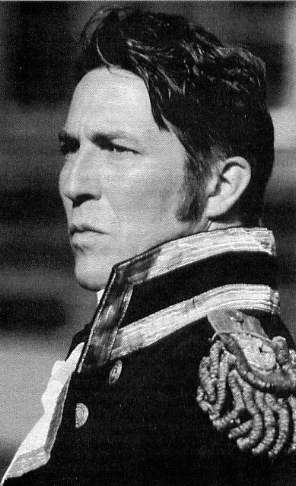
I love Kaye's writing style--crisp, detailed, and immensely satisfying. Her knowledge of the Navy and the life of Navy officers circa 1810 shines through, and she uses it to salt-and-pepper the romance of the story, making it savory instead of coy. I enjoy the rich backstory of Wentworth and his siblings. So often, sequels and retellings merely mirror the original. Susan Kaye presents fully imagined characters that stand on their own. Needless to say, I am completely swept off my feet by her Wentworth.

The only caveat, which I trust is corrected in the second of the two books, is that we don't see enough of Anne Elliot to really get why he never got over her--we hear that she is thoughtful, kind, intelligent, and lovely, but I have yet to see her in action to form my own opinion.


If you love Persuasion, and who doesn't, then I can heartily recommend Susan Kaye's look at the good captain that we all swoon over.

Friday, November 14, 2008

Sylvia's Lovers - Dialect and Extras


I've finished Sylvia's Lovers and have been digesting a bit before posting my thoughts on it. To aid in the digestion, I read the sections in Jenny Uglow's Gaskell bio that deal with SL and the writing of it. The main thing I learned was what a tremendous job Gaskell did with the dialects of the various characters. This was pretty much lost on my American tin ear, but apparently she distinguished between classes and regions to a degree that would have made Henry Higgins proud.

Here's what Uglow says:
...Gaskell kept faith with the expression of the people. Speech, as William [Gaskell's husband] had insisted in his 'Lectures on Lancashire Dialect', has its own history and evolution, displaying regional, class and individual variants. Gaskell carefully gave Bell Robson Cumbrian forms to fit her origins. The manuscript reveals numerous alterations of word endings and technical details such as variations of the definite--the, th', t'...Such details, imperceptible to most of her readers, were in tune with her determination to gather the 'unimportant' chaff and dust of past lives.


I still have to read about press gangs, which is an appendix in the Penquin Classics version I have of the novel, but I think I can say that I liked the book well enough. I've heard that many critics think that Gaskell fell into melodrama in the final volume, and much as I like Gaskell, I can't say I disagree with this. The chapter in which Philip saves Kinraid stretches belief to the breaking point, and their last encounter pushes it over the edge. In reading the bio of Gaskell simultaneously with reading the works themselves shows that Gaskell was an impatient writer. In SL, unlike N&S, she wasn't writing serially, but life had intruded on her progress with the novel to such a degree that she was impatient to be done with it and so forced the ending in ways that require revision...but unless there were lawsuits, as in the case of her bio of Bronte, it seems that Gaskell rarely reworked what she produced.

In comparing Gaskell to Austen, Austen's novels, except Persuasion and perhaps Northanger Abbey, are polished, perfected, exquisite, whereas Gaskell's tend to be hurried. It's significant to me that Gaskell said that Cranford was the only of her novels that she ever reread once she had finished it.

Monday, October 27, 2008

Sylvia's Lovers - Farmer, Sailor, Tradesman

I'm now about 3/4 through Sylvia's Lovers, and while I haven't warmed to the heroine particularly, I do think the story is interesting and the novel worth reading.

I'm impressed with the historical aspect of the novel. While Gaskell wrote other historical pieces, they are short stories or novellas. This, I believe, is her only full novel that is historical, and it is set during the Napoleonic Wars. Early on, I thought several times how this was a woman's version of Moby Dick--instead of details of life on a whaling ship, we have details of the lives of the women and families of the men on those whaling ships.

I was also struck by the fact that Sylvia, a farmer's daughter, is courted by a sailor and a tradesman, and, like Louisa Musgrove in Austen's Persuasion, she is completely captivated by the men of the sea, though in this case, it's not the patriotic theme as the Navy in SL are the bad guys in the form of the press gangs.