Showing posts with label Laura Ingalls Wilder. Show all posts

Wednesday, August 05, 2026

Double Feature: Long, Bright River and Little House on the Prairie


Long, Bright River by Liz Moore - I enjoyed The God of the Woods by the same author so much that I decided to read this earlier book, published in 2020. On the surface, the two novels couldn't be more different. God of the Woods is set in rural upstate New York, while Long, Bright River is set in the rough neighborhood of Kensington in Philadelphia. However, both stories are about searching for those that go missing.

The protagonist of Long, Bright River is Mickey, a female cop in her early thirties, estranged from her extended family and most recently from her younger sister, Kacey, who is a heroin addict who supports her addiction as a prostitute. A recent series of murders of girls just like Kacey alarms Mickey because she hasn't seen her sister around the neighborhood for weeks. 

The main storyline revolves around Mickey searching for Kacey while trying to figure out the identity of the serial killer. In the process, we learn the sisters' backstory--their heroin-addicted mother died and their father abandoned them, leaving them in the care of their cold, cynical grandmother. We learn about wild child Kacey and studious Mickey, whose dreams of college are sabotaged before they have a chance to bloom.

I know this all sounds depressing, but Mickey is a great character, with grit and honor and a deep love of her sister. She learns from her mistakes and finds unexpected allies when she needs them. This is a world that is often tough to read about--the title refers to the river of people who have lost their lives to drugs and despair--but the writing is terrific, the characters are interesting and believable, and the story ends on a positive note.

I think I prefer God of the Woods, but Long, Bright River also earned 5 stars from me on GoodReads.

At 482 pages, this qualifies for the 2026 Big Book Summer Challenge.


I decided to give the new Netflix series based on Laura Ingalls Wilder's Little House of the Prairie a try and ended up really liking it. I grew up reading the entire LIW series repeatedly but never watched the 1970s TV series. I was definitely devoted to the books and didn't care for all the liberties that Michael Landon took.

Now that I am >50 years older than when Melissa Gilbert first started her incarnation as Laura, I am actually quite happy with all the liberties that Netflix took with their source material. Here are some of thoughts about the series and some of the changes. 

  •  The Native Americans are fully part of the story. In the book, the Ingalls family's encounters with the Native Americans are always negative. They inspire fear and are described as savages. In this version, a Native American family is living in a house much older and more well-established than the one Pa builds. Laura becomes good friends with the daughter of the family, and the father is one the tribe's representatives who argues their case to the government agents. Unlike in the books, it is made abundantly clear that the Ingalls family is building a house and farming on land that is not available to them at all--they were stealing the land from the Native Americans. The script shows that Pa was deceived by the railroad company that wanted settlers to be where they wanted to run a RR line, but even after he learned the truth, they didn't leave until forced to.
  •  The town of Independence is not 40 miles away, as depicted in the book, making the Ingalls family completely isolated. Instead, the town is bustling with lots of stores and houses--this is pretty unrealistic, as no railroad line currently runs through the town. But, it is a place where the family goes together to shop and interact with the inhabitants.
  •  Mary is much older than Laura (and without blonde hair, although the girls are mostly dressed in blue for Mary and pink for Laura, as in the books). She is at least 13 to Laura's 8 or 9, flirts with a local boy, and has her first kiss! What this means is that Mary has a story line of her own, beyond being the goody-two-shoes as depicted in the book.
  •  Baby Carrie is born while the family is in Indian Territory, which is what actually happened rather than what Laura wrote. This provides an interesting little sub-arc for Laura's relationship to Pa--she has always been his helper and a tomboy, and with Ma pregnant she worries that the baby will be a boy and Pa will treat her differently since he will finally have a son. 
  •  Pa has a beard, just like in the book. I always thought it was weird that Michael Landon never grew a beard as this was such a defining physical characteristic of Pa. 
  •  The writers did an excellent job of pulling Little House in the Big Woods into Little House on the Prairie, with the family and especially Laura remembering the stories and games, relatives and parties that are such a wonderful part of the first book.
  •  Pa's brother George suffers from PTSD from serving in the Civil War, and Pa feels tremendous guilt about not being able to help him deal with it. Pa is labeled as a coward by some of the men in town when they learn he didn't fight in the war but stayed home on the farm to help his father.
  •  Mr. Edwards is also a Civil War veteran, and an alcoholic who goes off on fiery binges. I was glad that they included the Civil War in the script--Laura was born two years after it ended, and there is nary a mention of it beyond George blowing his trumpet in LHBW.
  •  Several African Americans are featured, including Dr. Tan, who is in the book, and Ma becomes close to the woman who owns the store and stands up to the other women in town when they exclude her friend from the Women's Society meeting.
I enjoyed the series, not so much for bringing the book to life, but because they took the raw material of the book and made an interesting variation for modern sensibilities. That said, most of the storylines were still hopelessly unrealistic. Life on the prairie in the 1870s was rough--this series made it look like a picnic. Just as Laura whitewashed much of her own story and the experiences of her family for her children's books, the NetFlix version has done something similar. 

The new series has been renewed for season 2. Yep. Gonna watch it too.


Friday, June 15, 2018

Little Town on the Prairie


I've been sporadically rereading my favorite Little House books by Laura Ingalls Wilder over the past several years, and just finished Little Town on the Prairie.

It's one of my favorites because Wilder does a such a fabulous job of documenting life on the many little towns that sprang up in the 19th century along railroad lines. I loved reading about how the town went from an idea to stores, homes, schoolhouse, church almost overnight. And Laura is fully engaged with the town--at first dreading the strangers who come to her prairie but then embracing them and the social life they make possible.

I paid close attention, this reading, to the things the Ingalls family ate--ground cherries and husk tomatoes (both of which are sort of like tomatillos), not to mention blackbird pie, tomatoes with cream, and lettuce with sugar.

I also paid attention to the flora and fauna Laura describes--meadowlarks (which I love during the summer in Colorado), redwing blackbirds, and thunder pumps (the colloquial name for the American bittern), and that awful needle grass that sews its way into Mary's shoes.

Reading LH books is always nostalgic for me--this time I remembered how much Laura's diligence at studying inspired me to work hard in school. Speaking of school, I've always wondered what Wilder's sister-in-law, Eliza Jane Wilder, thought of this particular book!

And then, of course, I will always love Garth Williams's warm and lovely illustrations. They are as much a part of the book as the text.


This book is part of the 2018 Back to the Classics challenge, in the children's category.


Wednesday, December 13, 2017

The World of Laura Ingalls Wilder


The book progresses chronologically, discussing the forests, lakes, rivers, prairies, weather, crops, natural vegetation, and animal life that Laura and Almanzo encountered as their families moved around the country. The author suggests reading each book along with its chapter, but since I know the books pretty much by heart, I didn't feel the need to slow down my reading of it by doing so. Although now I definitely am eager to reread another LH book, probably Little Town on the Prairie, before year end.

I did read the book somewhat slowly, just a chapter a night, to savor it and let it seep into my psyche and take root along with the rest of my LH core knowledge.

The book renewed my admiration for LIW as a writer because McDowell basically confirmed all the details that Laura provided in the books. For example, when Laura talks about the trees in Little House in the Big Woods, there are different trees surrounding Pa and Ma's house than those surrounding Pa's parents' house when they go to the sugaring-off dance. That's because the forest itself is different between the two regions.

Here's an excerpt:
...Pa loved the woods. He had the true hunter's love for wild places, and he instilled that love in his daughters. Their part of Wisconsin was the northern edge of the broadleaf forest, dominated by oaks and hickories. Oaks get a prominent place in Little House in the Big Woods, with two in front of the log cabin providing a play space for Laura and May, complete with tree swing. Hickory chips are Ma and Pa's preference for smoking meat. Black cherry and walnut trees, and the shrubby hazel, Wisconsin natives all, make appearances in the novel.
North and east of Pepin, the mix of trees changed to the boreal forest that sweeps far into Canada. Here the conifers--pine, tamarack, and spruce--go to the front of the class, along with birch, beech and maple. So when the Ingallses drove north to Grandpa Ingalls's farm for maple sugaring in late winter, their journey followed the actual distribution of tree species in the woods.
In addition to the chronological structure of the book, McDowell also uses a gardening theme to track the chronology, which makes for a satisfying way to reflect on Laura's personal life journey.

Clearing the Land: The Wisconsin Woods
Preparing the Soil: A New York Farm
Harrowing: The Prairie of Kansas, Indian Territory
Making a Better Garden: Creekside in Minnesota and Iowa
Ripening: The Dakota Prairie
Reaping: Settled Farm and Settled Town
Threshing: From Great Plains to Ozark Ridge
Saving Seed: Rocky Ridge Farm
Putting Food By: The Rock House and the Farmhouse

In addition, the book is gorgeously illustrated with maps, photographs, water colors, and some of my favorite images from the various editions of the LH books.


McDowell provides good biographical info on the Ingalls and Wilder families but the book is less concerned with providing every fact or theory about the family members and their struggles than it is with using their story to convey what America was like when they lived and worked on the land during the nineteenth and early twentieth centuries.


It is a lovely book--rich, warm, interesting, and immensely satisfying.

Monday, November 06, 2017

Mailbox Monday: Birthday!


Mailbox Monday is the gathering place for readers to share the books that came in their mailbox during the last week. Warning: Mailbox Monday can lead to envy, toppling TBR piles and humongous wish lists.

It's been a long time since I did a Mailbox Monday, but I received a wonderful book for my birthday yesterday that I just had to share.


The World of Laura Ingalls Wilder, by Marta McDowell, went to the top of my wish list as soon as I heard about it. It's a new book, published in September, and it will be a perfect addition to my LIW collection. 

Here's what Amazon had to say about it:
The universal appeal of Laura Ingalls Wilder’s books springs from a life lived in partnership with the land, on farms she and her family settled across the Northeast and Midwest. In this revealing exploration of Wilder’s deep connection with the natural world, Marta McDowell follows the wagon trail of the beloved Little House series. You’ll learn details about Wilder’s life and inspirations, pinpoint the Ingalls and Wilder homestead claims on authentic archival maps, and learn to grow the plants and vegetables featured in the series. Excerpts from Wilder’s books, letters, and diaries bring to light her profound appreciation for the landscapes at the heart of her world. Featuring the beloved illustrations by Helen Sewell and Garth Williams, plus hundreds of historic and contemporary photographs, The World of Laura Ingalls Wilder is a treasure for anyone enchanted by Laura’s wild and beautiful life. 

Maps, inventories of flora and fauna of the prairies, illustrations, photos - what a treat I have in store this winter. I may just drop everything and read it next!

If you want to find out what others bloggers received last week, visit the Mailbox Monday site. Great source of new ideas for your reading lists.

Thursday, December 22, 2016

Potpourri of Classics

Now that we're in the final days of 2016 and Christmas and post-Christmas vacation to Florida are looming, I'm trying to tie up loose ends.  Here are some reviews of classics read in 2016 for the Back to the Classics Challenge that I didn't get around to reviewing when I read them.

For the 20th century classic category...


By the Shores of Silver Lake, by Laura Ingalls Wilder

Earlier in the year I read Pioneer Girl, the original source material for the Little House series and was inspired to reread one of my favorites in the series, By the Shores of Silver Lake.  There is so much that I love about this book.  We get to experience what it was like for the Laura and her sisters and mother to ride a train for the first time, we get to experience life in a railroad shanty town and see the railroad being built, and we get to see a town being built out of nothing but prairie.


This book sets the stage for the rest of the series--we meet Mr. and Mrs. Boast and the Wilder brothers, and we learn about the landscape, the Big Slough, the lakes, and the winters.  I love the time the Ingalls spend in the surveyors house, I love Laura and Carrie sliding on the ice under the watchful gaze of the moon and the wolves, and I love hopefulness and energy that pervades the book along with the feeling of finally being home.

For the reread of a classic read in high school or college...


Emma, by Jane Austen

I read Emma first when I was in high school but it was for fun and not for school.  I read it next for a English lit survey class in college (Austen to Dickens - we also read Bleak House, Vanity Fair, and something else that slips my mind just now).

When I was young, I didn't care for Emma Woodhouse, and saw her, as so many do, as snobbish, meddling, and trivial.  I appreciated the novel Emma, though, and always enjoyed reading about the artistry of Austen in developing the story and keeping the reader and Emma in the dark about what was really going on with Frank Churchill and Jane Fairfax, Mr. Elton and Harriet, and Mr. Knightley.


I did find, however, that as I got older and reread Emma, I grew to like Emma Woodhouse and see her for the kind, generous, well-intentioned, very young woman she was.  Yes, she was blind and self-centered, but she outgrew her immaturity in the course of her story.

I love the biting wit of Austen as well as insights and reflections on the plight of women, the vagaries of luck, and the strength of friends and family and community.

I've lost count as to the number of times I've read Emma, but I never get tired of it.  I know I shall read it again!

Monday, February 15, 2016

Pioneer Girl


Reading Pioneer Girl: The Annotated Autobiography of Laura Ingalls Wilder, edited by Pamela Smith Hill was an absolute delight and a milestone reading event for me.  Like so many, I grew up reading and rereading The Little House books.  By the time I reached 5th grade at Ivywild School in Colorado Springs and my teacher starting reading the books to the class everyday after lunch, I had already read through the series a couple of times.  As an adult, I've read several biographies of Wilder, including a few books about the evolution of Wilder as an author and the role her daughter, Rose Wilder Lane, played in bringing the books to the world.

However, reading the source material, Wilder's non-fictional account of her childhood in the American Midwest during the 1870s and 1880s was fascinating and satisfying.  The annotation was superb, with Hill providing meticulous notes on virtually every person and place Wilder mentions in the book.  She also provided extensive notes on how the non-fictional accounts of various events were used by both Wilder and Lane in the later fiction that grew out of Pioneer Girl.

Not only was my reading of Pioneer Girl intensely nostalgic, but I also came away from it with a renewed respect for Wilder as an author.  Her diligence, her willingness to listen to her writing coach (i.e., her daughter), her ability to learn from her mistakes, and her insistence on being true to her vision of her life and family are admirable. I'm not sure that I would have gotten that sense of the author without the annotation.  She also included notes on what Wilder and Lane decided not to include and speculation as to why.  Her notes on the chronology of Wilder's reminiscences were also helpful, usually giving Wilder the benefit of the doubt with regards to a 60+ person remembering accurately dates of events from her childhood.

I've decided to reread the Dakota Territory books, starting with On the Shores of Silver Lake, and including The Hard Winter, Little Town on the Prairie, and These Happy Golden Years.  I'm also hoping to take a road trip in May to De Smet, SD, the little town on the prairie where these books take place.  I'm also planning on reading some of Rose Wilder Lane's novels, probably starting with Young Pioneers.

I wish we could get a good documentary of Wilder's life--I'm not interested in any adaptations of the books, my own imagination is too firm in how I want to visualize them, but a documentary would be very welcome!


Thursday, September 05, 2013

A Wilder Rose: review, giveway, author interview!


A Wilder Rose, by Susan Wittig Albert, is a fictional take on Rose Wilder Lane and her relationship with her mother, Laura Ingalls Wilder.  Recent scholarship shows that Rose was very involved in the creation of the Little House books—she did more than copy edit her mother’s drafts, she extensively rewrote them, shaped them, and helped her mother fictionalize her own life.  Most scholars agree that without Rose’s work on the books, they would never have been published much less become the icons they are today.

A Wilder Rose was a fascinating look at not only the process involved in bringing a work to publication, but also provided an interesting perspective on the time in which the books were written.   I really enjoyed getting to know Rose better—she was definitely a remarkable woman.  A skilled writer, a traveler, an adventurer, she also is admirable in that she strove to do her duty regardless of how much she wanted to shirk it.  She felt a very honest love but a deep frustration with her complex and complicated mother.  She took her work seriously, and in this I found her a kindred spirit.  

A Wilder Rose is not for the faint of heart.  If you are a bonnet-wearing, Laura devotee who doesn’t want to know the rest of the story, then this is not the book for you.  Laura comes off as narrow-minded, priggish, and naïve.  Rose can be patronizing, dismissive, and flighty.  However, the book feels real to me.  I know that Albert did her homework and based her fictionalized scenes on Rose’s letters and journals, and I’m at the point in my own life where I do want to know “the rest of the story.”

In reading this novel, I finally came to appreciate the craft that went into creating the Little House books, books that shaped me and generations of American children over the past century.  Just as Mark Twain means Samuel Clemens, and George Eliot means Maryann Evans, for me Laura Ingalls Wilder now means Mrs. Wilder and her talented daughter, Rose.


The author has generously offered a giveaway (signed no less!) for my North American readers.  If you would like to be entered in a drawing for this giveaway, leave a comment and include your email address so I know to include you.  Entries accepted until 9 pm MT on Thursday, September 12.  Additional entries can be obtained by tweeting about this blog post--just let me know that you've tweeted.


In reading A Wilder Rose, I had a number of questions, which I posed to the author, who has graciously answered them.  So, for your reading pleasure, here is my interview with Susan Wittig Albert about A Wilder Rose.  BTW, you can also visit her website for more info about the book.

 Jane: I came away knowing a lot more about Rose and understanding her motivations, aspirations, demons, and talents.  Not so with regards to Laura.  She still is a mystery to me.  In writing  A Wilder Rose, you stuck to the facts—Rose’s diaries, journals, and letters.  Would you consider writing a novel from Laura’s point-of-view, knowing that you would have to invent a voice and motivation for her without the benefit of source material to back you up? 

Susan: Laura is still a mystery to me, too, even though I know a great deal about how Rose saw her. In Rose’s diaries, journals, and letters, she is a powerful and ambiguous figure: resourceful, hard-working, courageous, even daring—but parochial, predictable, conventional, even narrow-minded. Troub (Helen Boylston, Rose’s friend) saw her as bossy, even dictatorial, and quick-tempered; some of her neighbors viewed her as “wearing the pants in the family.” In Mansfield, she was seen as “aloof” and “reserved.” No one describes her as “warm” or “affectionate.” But there are no documents that reveal her inner life, and we can only see her from the outside, as others saw her, which (in my view, anyway) makes her problematic as a character in historical fiction.

Even so, I might be willing to tackle her—that is to create a voice for her, motivations, fears, desires, an inner life—if we were talking about anyone else but Laura Ingalls Wilder. She is already an iconic figure, and many readers think they know her, based on their understanding of the fictional child Laura and their projection of that image onto the adult woman. 

Jane: Why did you end the story with the writing of On the Shores of Silver Lake?  In your epilogue, you mention that it seems that by this point Laura was resigned to the need for Rose’s help.  Does this mean that you felt that the last three books were mostly Rose-written, or that they followed the pattern of first, rough draft by Laura followed by extensive rewriting and shaping by Rose?

Susan: I began and ended the frame narrative (Rose telling her story to Norma Lee Browning) in early April, 1939, at the time when Rose is completing Silver Lake. I did this in part because there is no documentation of the collaboration after that book. That is, there are no letters that tell us how the remaining three books were written. Still, I don’t have any reason to believe that Rose and her mother changed their practice: Laura producing the first drafts and Rose rewriting them. Bill Holtz, Rose’s biographer, says that manuscript of The Long Winter (Book 6) shows “mammoth and defining evidence” of Rose’s rewriting. I think it’s likely that the remaining two books followed the same pattern.

I also chose 1939 as the time for the frame narrative because of the shift in the focus of Rose’s writing at that time. After Free Land (1938), she wrote no more fiction under her own name. She  wrote a number of articles from an isolationist viewpoint, arguing against American involvement in the European war. She would soon (December, 1941, right after Pearl Harbor) begin writing The Discovery of Freedom. It was a pivotal time in her development as a political philosopher, which would be her work for the rest of her life.

Jane: How did Almanzo feel about Laura taking sole authorship of the Little House series, when clearly he would have known how big a part Rose played in their creation?

Susan: I doubt that Almanzo had much idea of what was going on as far as the writing of the books was concerned. Farmer Boy was the only one of the Little House books that Almanzo participated in, by answering Laura’s questions about life on the Wilder farm in upper New York State. He also knew that Rose visited the farm to do some on-site research. Other than that, there’s no evidence that Almanzo was aware of the extent of Rose’s rewrites, and no reason to believe that Laura would have told him anything about it, other than Rose’s typing of the manuscript. We need to remember that Rose and Laura were living apart during all this time. The first three books were written while Rose lived in the farmhouse and Laura and Almanzo lived in the Rock House. Rose revised Plum Creek when she was living in Columbia, MO, and the remaining three books while she was living in New York. Nobody, let alone her father, was looking over her shoulder. 

Jane: How did Rose react to the awards received by her mother for the Little House books?  Was she present for any of the award ceremonies? 

Susan: The Newbery Awards were made in 1938 (Plum Creek), 1940 (Silver Lake), 1942 (Little Town), and 1944 (Years). But they weren't Honor Books then—they were “runners-up.” (In 1971 that term was changed to "honor books” and made retroactive, to include all previous books.) So far as I know, there was no ceremony for the runners-up; if there was, Laura didn’t attend the ALA meetings where that would have happened. 

The only major book event Laura ever attended was the Book Week Fair, held in Hudson’s Department Store in Detroit, October, 1937. She sent Rose a copy of the talk she gave; Rose replied “…It is fine. No wonder you made a great hit.” Rose was always her mother’s cheerleader. 

Jane: When did Garth Williams come on the scene, and did he work exclusively with Laura or also Rose in the creation of the iconic images most of us associate with the books? 

Susan: Harper planned a new edition of the books (which were originally illustrated by Helen Sewell) in 1947, and asked Garth Williams to do the illustrations. Williams began by meeting Laura at Rocky Ridge, then traveled to all the house sites he could locate. The plan envisioned eight oil paintings for each book, but that proved to be too expensive, so Williams produced drawings in pencil, charcoal, and ink. He did most of the work while he was living in Italy. He had no reason to meet with Rose; at that point, Laura was considered the sole author. 

By the way, I grew up with the Helen Sewell and Mildred Boyle illustrations—that dates me, doesn’t it? I confess to loving them best of all, especially those wonderful dresses in Little Town on the Prairie. And oh how I wish I still had those first editions! 

Jane: Was Rose ultimately proud of the work she did on the Little House books, especially considering that the works that were attributed to her faded from public memory while the LH books live on from generation to generation? 

Susan: This is a complicated question, and I’d like to unpack it a bit. Rose never laid claim in public to her contributions to the books—for the same reason that she didn’t lay claim to the ghostwriting she did for Lowell Thomas. It would have been unprofessional. She worked behind the scenes; she kept her lip zipped. What’s more (as she told her adopted son, Rexh Meta), a writer of her reputation never accepted ghostwriting assignments—unless, of course, she was broke and had to pay the bills, on her own and her parents’ households. Or she wanted to help her mother. 

Now, about the disparity between Rose’s reputation and Laura’s. Rose worked hard to build up her mother’s reputation, and she was no doubt pleased when the books were well reviewed—and relieved when they sold well enough to support her parents, so she could stop sending them money. However, Rose died in 1968, before her legatee, Roger MacBride, arranged for the TV production of Little House on the Prairie and Laura Ingalls Wilder became an icon.

Rose made her living first as a journalist, then as a magazine fiction writer. We call writing in those two fields “ephemeral” for a reason. It typically doesn’t stick around (or at least it didn't before the Internet). Rose was good enough to command high prices in a competitive market, but almost all of the magazine fiction writers of that era—even the best ones—have been forgotten. 

Rose’s novels, however, remain available to those who want to read them. Let the Hurricane Roar (1933) was reprinted in 1961, 1968, and 1985 and is currently in print. Free Land (1938) was reprinted in 1984 and is currently in print. The Discovery of Freedom (1942) was reprinted in 1972 and 1993. “Credo” (1936) has been reprinted several times as Give Me Liberty, as is considered an important document in libertarian political philosophy. 

It has to be said, however, that Rose’s reputation as a writer rests on her mother’s reputation as a writer, which Rose herself created. I hope you find that as delightfully ironic as I do.

Jane: Did Rose (and/or Laura) have a conscious political agenda when writing the LH books?  While their political stance was anti-FDR during the 1930’s, was the depiction of the Ingalls family as completely self-reliant and anti-government deliberate or unconscious? 

Susan: The books were written between 1930 (when Laura was working on “Pioneer Girl”) and 1942 (These Happy Golden Years). FDR was inaugurated in 1933 and began creating New Deal programs that Rose and her parents (and most rural Midwesterners) opposed. Some scholars have pointed out the political subtext in Little House on the Prairie (1935) and in Little Town on the Prairie (1941). Rose’s political stance is even clearer in her novel, Free Land, and of course in her political writing, beginning with “Credo” (1936). 

I don’t think there’s anything explicitly political in the depiction of the Ingalls family. It’s consistent with the way American pioneers and their descendants liked to think of themselves: as independent, self-reliant, self-made people who got along better in this world when government left them alone. As a cultural myth, this one is pervasive and persistent, going back to the Revolutionary War. The Depression and WW2 called that myth into question in a starkly challenging way, but there were many (including Rose and Laura) who continued to believe it and defend it. 

Jane: Did Laura’s sisters know of Rose’s involvement in Laura’s writing?  How did they react to Laura’s eventual fame?

Susan: Carrie and Grace (both of whom wrote for the De Smet News) knew of Rose’s success as a published author, as did others in De Smet. I know of no evidence that they were aware of Rose’s participation. Grace died in 1941; Carrie died in 1946. The books had attained a modest popularity by that time, but they weren't yet “famous.” (That happened in the early 1970s, after the television series began to appear.) We do know that Carrie read Little House in the Big Woods aloud to Grace when Grace was in the hospital—they both must have enjoyed it. 

Jane: One of the saddest things I ever read was that Almanzo felt his life was a series of failures.  Would Laura say the same about her life? Would Rose? 

Susan: Actually, what Almanzo said (he wrote it in a 1937 letter to Rose) was that his life had been “mostly disappointments.” Given the loss of his Dakota homestead, his illness and lifelong disability, the death of his only son, the grueling labor at Rocky Ridge, and the grinding years of the Great Depression, it’s not hard to see why he felt that way. He lived through tough times.

In 1930, at the beginning of their collaboration, Laura told Rose that she wanted “prestige” more than money. She got more of both than she could possibly have imagined, and if those were her criteria, she may have been satisfied with her life. But since we don’t have access to Laura’s thoughts and feelings, we simply don’t know. 

Rose had a successful early career that ran into difficulties during the Depression, as did most writing careers during that time. It was a rough period, but nevertheless, she did her best to continue to work and to support her parents. After she left the farm in 1935, she was actively and energetically engaged with ideas, philosophy, friends, correspondents, books, travel, needlework, her garden, her home in Danbury CT, and her home in Harlingen TX. When she died in 1968, she was about to leave on a long-planned trip abroad. She lived a fascinating life. She had every reason to be satisfied with her achievements. 


Jane: Thank-you, Susan, for this marvelous interview.  Your book made me think more deeply about authorship, fiction, biography, mothers and daughters, and the creative process.  Congratulations on the launch of A Wilder Rose, and my very best wishes to you.
Tuesday, July 09, 2013

First Chapter ~ First Paragraph Tuesday Intros: A Wilder Rose


Every Tuesday, Diane at Bibliophile by the Sea hosts First Chapter-First Paragraph in which she, and those of us who join her,  posts the opening paragraph (sometime two) of a book she is reading or planning to read.  

A few months ago, Susan Wittig Albert contacted me and asked if I was interested in a review copy of her soon-to-be-released novel A Wilder Rose: Rose Wilder Lane, Laura Ingalls Wilder, and Their Little Houses.  Of course, I said YES!!!!

I loved the Little House books as a child and teen, and have been fascinated with the writing lives of Laura and her daughter, Rose, especially after reading Little House, Long Shadow a couple of years ago.  I think a novel about these two iconic American writers is a perfect vehicle to get another perspective on their story.


The book arrived last week and I'll be starting it soon.  To whet your appetite, here is the opening page of chapter 1.

With an audible sigh, Rose Lane rolled the letter out of her Underwood typewriter and signed it--Much love as always, Rose.
She dropped the letter onto the stack or orange-covered tablets her mother had sent her a year and a half before. Now she was committed.  Like it or not, she had to finish the rewrite and get the typescript of her mother's book in the mail by the middle of next month.  It meant putting off her own paying work--the nonfiction article she was writing for Woman's Day.  But she'd had the manuscript so long that the book had missed Harper's 1938 list.  With the letter had come a chiding letter from her mother's editor, Ida Louise Raymond, making it clear that By the Shores of Silver Lake had to be finished quickly in order to appear in this year's catalogue.
But she should be able to meet the deadline.  Her mother had already agreed to the changes that had to be made.  "You know best," she had written, sounding resigned. "Without your touchups, the book will fall flat." If there weren't too many interruptions, Rose would finish the pen revisions in a few weeks. This time, though, she would pay somebody--maybe Norma Lee, who could use the money--to retype the manuscript, which would at least get that job off her desk.
Would that I could drop everything and just read this novel, but I have a couple of other reading projects that I want to finish first. 

I'm not expecting to love Laura or Rose, not in the way that I loved the fictional Laura and her idyllic (albeit harsh) fictional woods and prairie, but I am expecting to  better appreciate and understand their story.  I'm anticipating a narrative that explores the give and take, the raw-edged emotions and loyalties, the ego and the ambitions that must have characterized this unique pair who together created such an incredibly powerful and enduring literary work.

Laura Ingalls Wilder


Rose Wilder Lane


Thoughts?

BTW, I couldn't find the book available on Amazon yet for pre-order but I imagine it will be listed there and elsewhere soon.


Monday, May 06, 2013

Mailbox Monday - May 6


Mailbox Monday is hosted by 4 the LOVE of BOOKS--stop by the site to see what other bloggers just added to their TBR shelves.

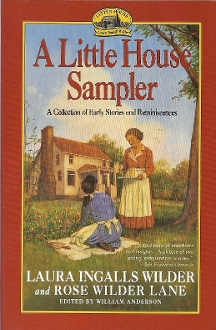
I picked up a copy of A Little House Sampler--no it's not about cross-stitch that Laura and Mary did--instead it is a collection of fiction, essays, articles, columns, poems, drafts, unpublished manuscripts, notes, and musings of Laura Ingalls Wilder and her journalist-novelist daughter, Rose Wilder Lane. 


I'm looking forward to reading a new novel that's just on the horizon,  A Wilder Rose: Rose Wilder Lane, Laura Ingalls Wilder, and Their Little Houses, by Susan Wittig Albert, and I wanted to get a flavor of their non-Little House writings first.  While I've read the LH series many times, I haven't really read much else that they wrote.

Monday, March 18, 2013

Marmee and Louisa, Louisa and Laura


For someone who spent the better part of my life avoiding reading Little Women and hence Louisa May Alcott, I seem to have been doing an awful lot of reading about LMA since I finally read LW a year or so ago.

The latest in my reads about LMA is Marmee and Louisa, by Eve LaPlante, a descendant of the Alcotts.  I really enjoyed the book and felt that LaPlante did a superb job in defending her premise that the relationship between LMA and her mother, Abigail May Alcott, was the most important in her life and was fundamental to her success as a writer.  But then, I was a sympathetic reader from the outset.

Even while I was reading Eden's Outcasts, by John Matteson, which is about LMA and her father, A. Bronson Alcott, I felt that LMA and her mother were closer in affection and temperament than she and her father.  Of course, there is no love lost between me and Bronson Alcott, whom I consider one of the most selfish, egotistical, and hypocritical personages of the nineteenth century.  Anyone who compares himself favorably with Jesus and then lets his family starve and beg their relations for rent money doesn't deserve many accolades for his ability to talk...nonstop...about himself.

Marmee and Louisa is by no means a definitive biography, but that's okay.  I like the laser focus on the mother-daughter relationship, how they interacted, depended on each other, and supported each other.

I also thought LaPlante did a good job of putting their lives into historical context, and I learned a lot of social history about the nineteenth century.  For example, she quotes Nancy Theriot (author of Mothers and Daughters in Nineteenth Century America: The Biosocial Construction of Feminism): "the late nineteenth-century generation...was 'the least married group of women in United States history, with a record 13 percent remaining single," making the point that LMA was not uncommon in remaining single.  It did cross my mind, however, that many of the men these women might have married were killed in the Civil War, but lack of eligible men doesn't undercut the idea that women who worked for the emancipation of slaves might chafe at remaining in bondage themselves.

Whilst reading about LMA and her mother and how this relationship affected her success as a writer, I also thought about that other towering American author for girls, Laura Ingalls Wilder.  Both LMA and LIW came from a family of girls, both were the second daughters of four girls, with still-born brothers; both grew up in poverty, and went to work to support their families at an early age.  Both wrote fictionalized accounts of their youth, smoothing rough edges and reinventing and reshaping events too painful to even acknowledge decades after they happened.  I can't help but wonder about the impact LMA had on LIW, whether she knew it or not.

I do love reading about authors--what drives them, inspires them, influences them, and shines through them.


Saturday, May 07, 2011

The Wilder Life


It's starting to feel like I signed up to do a Laura Ingalls Wilder reading challenge. First I reread Little House in the Big Woods (though I still haven't blogged about it) earlier this year, then I read Alison Arngrim's funny and interesting Confessions of a Prairie Bitch, last year I read Little House, Long Shadow, and now I have just finished Wendy McClure's The Wilder Life. I have high hopes of rereading all of the Little House books by the end of the year, but my intentions often outstrip my time.

Back to The Wilder Life. It was wonderful. Well-written, mostly funny, occasionally poignant, often insightful, The Wilder Life is to Little House mania what Julie and Julia is to Julia Child and cooking. Basically, the author, Wendy McClure, immerses herself in what she terms "Laura World" - she journeys to all the Little House sites, tries her hand at pioneer activities such as churning butter, makes some of the dishes detailed in the Little House Cookbook (gives rave reviews to the Apples n Onions), and muses on what she is looking for by this immersion.

As someone who grew up repeatedly reading the LH series, the book was enormously satisfying in that I could so often nod my head in agreement with feelings, observations, and questions that McClure recounts from her own childhood, adolescence, and adulthood reading LH. The scenes she describes in the books were all so familiar to me, as was her response to learning that the books were fiction and that Laura's daughter, Rose, was instrumental in the development of them. She captures my own conflicted feelings over discovering that the Wilder family was opposed to Roosevelt's New Deal, and Rose was a founding member of the Libertarian party. Personally, I find the real Laura and Rose not particularly in the kindred spirit realm, but the fictionalized Laura is definitely one of my childhood friends.

Off and on over the years I have toyed with making a pilgrimage to all the LH sites. After reading a couple of biographies of Laura, my interest in visiting the real houses diminished because I was in love with, as McClure puts it, "Laura World." Then, a different mood would strike and I would want to see where the real Laura lived and developed into a beloved American icon. Having read The Wilder Year, I'm torn again--seeing all the girls in their period dress I think I would find a bit depressing, but being able to do what McClure's husband Chris does would be magical--i.e., when the couple is camped near DeSmet, he happens to look up and sees exactly the landscape Garth Williams depicts when Laura and Pa go to see the railroad being made--the hills, the prairie, all unchanged over the past 130 years. That would be very cool.

I think the most interesting idea in the book is that Farmer Boy, with its abundance and lack of disaster, was Laura Ingall Wilder's own fantasy world. Here's how McClure puts it:
With all its over-the-top dinner scenes and constant allusions to the Wilder family's good fortune, literal and otherwise, Farmer Boy wasn't really the smug when-I-was-your-age sermon I'd originally made it out to be, but more a wistful dream conjured up by a woman who had spent much of her life enduring deprivation. It was a love letter to the original promise of success and prosperity that had so eluded her husband in his adulthood, when, like countless other settlers, he'd found out the hard way that farming methods from back East were no match for the dry land of Dakota Territory.

Suddenly it all made sense--Farmer Boy was Laura Ingalls Wilder's own Laura World, an ideal realm she'd imagined, a homesickness for a place she'd never been or seen.


On Goodreads, I marked that I had finished this book and had given it 5 stars. I felt a bit odd doing this, afterall I tend to be stingy with 5 stars, and I had to question whether I really thought The Wilder Life was equivalent to Pride and Prejudice, Middlemarch, The Great Gatsby, or any of the other great works of literature that I love so much. I gave it 5 stars because of the way it made me feel after reading it--that is, that I had discovered something integral about myself, what I value, who I am. Wendy McClure's journey to find out what Laura and the LH books meant to her helped me gain a better understanding of what Laura and the LH books mean to me, and at some level that's why I read and why I write. So I stand by the 5 stars.

Final note, one of the first things I noticed about the book is how it replicates the look and feel of the hardcover LH books that I acquired as a child and still have. The physical dimensions, the type face, and the layout all mimic the hardcovers I read, and even the few illustrations seem to have sprung from the pen of Garth Williams. It was atouch I particularly liked, and made me feel at home right away. Nicely done!

For all you Twitter fans, make sure you follow McClure who tweets as @HalfPintIngalls

Here's a typical tweet:
The Long Winter's over, the trains are running, & @ReverendAlden's Christmas barrel is here at last! (What's that weird smell?)

Monday, October 18, 2010

Little House, Long Shadow: Laura Ingalls Wilder's Impact on American Culture


I'm not sure whether I'm just a bit of a coward or whether I just shy away from offending others in an effort to keep the peace, but much as I loved reading Anita Clair Fellman's Little House, Long Shadow: Laura Ingalls Wilder's Impact on American Culture, it crossed my mind to simply not blog about it. However, the book is so good that I don't think I could live with myself if I didn't at least mention it.

I grew up on Laura Ingalls Wilder. I credit the fact that I didn't get my drivers license until I was almost 18 (instead of 16 when I could) on the influence she had over me as a teenager. I faithfully read the series almost every year between the ages of 10 and 20. Even in college, I remember blasting through them over Christmas break. I wanted to live on the prairie, on the frontier, in a dugout. I wanted to feel the wind in my hair and the sun on my face. I still do.

I remember how devastated I felt when I read William Anderson's biography of Laura and learned that the books were fictionalized accounts of her life. I remember studying the photographs of Laura, Almanzo, Rose, and Laura's immediate family and desperately looking for any resemblance to the Garth Williams' illustrations I knew so well.

Over the years, I have come to terms with the fact that the Little House books were children's fiction written by Wilder in collaboration with her daughter Rose Wilder Lane. I have also come to terms with the fact that theirs was a stormy, complicated relationship.

Little House, Long Shadow provides a fascinating look at the history and impact of the Little House books on American culture and the current political climate. As a card-carrying Liberal, I was amazed to learn how Wilder and Lane's political views shaped a set of books that in turn have influenced several generations of Americans.

Fellman does a superb job of dissecting the books, comparing the story they tell with the life that Laura and her family actually led, and pointing out the consistent inconsistencies (e.g., the government is always cast in a negative light even when other factors are in play; the independence and self-sufficiency of the family is always exaggerated). She also provides a thorough analysis of the various political and social movements of the time during which the books were written, providing an understandable context in which to examine the books. Fellman then moves on to explore how the Little House books were marketed and over time became an integral part of the American education system.

The thesis of her book is presented in the chapter "The Little House in American Politics." Here is the paragraph that I think best delineates Fellman's position.

Not only have the Little House books captured a place in the public culture of the United States, but they have also played a role in the nation's politics. Unlikely as it may seem, this series of children's books, in company with other more overtly anti-statist writings, helped prepare the ground for a shift, in the late twentieth century, in the assumptions about the appropriate role for government. In turn, the entire political culture of the United States has been affected. The books were part of the body of writings by those who had never come to terms with the changes in political philosophy and practice implied by the New Deal or who had become disaffected by liberalism as it was evolving.


I've said it before, "the pen is mightier than the sword!"

What I am still wrestling with is why my political orientation did not seem to be influenced at all by my love of Little House while growing up. I don't mean to discount Fellman's theory by my own experience--I really think she's on to something. But, I do acknowledge that I did learn a lot from Laura, stuff that has served me well as an adult, as a daughter, as a wife, and as a mother. Maybe the most valuable thing I learned from her was to think for myself--to take in and process and think and then keep what I found to be true and to let go of that which didn't work for me.

Regardless of your political leanings, regardless of whether you even have any, I think most readers will find this to be a fascinating look at the impact that literature can have on their culture and world.