Showing posts with label Kate Quinn. Show all posts

Tuesday, February 18, 2025

Post-Holiday Reading Roundup - Wrist is on the Mend

I'm back, having graduated from a splint to a brace in just one week, and the doctor's orders to do whatever. "If it hurts, then don't do it!" So cooking, driving, typing are all back--not sure I can play the piano yet or sew, but so much happier to be doing instead of whining!

So, without further ado, I present to you...what I have been reading:

Making It So - Patrick Stewart's Memoir

Really enjoyed this. I have never watched Star Trek: The Next Generation, which catapulted him from a stock Shakespearean actor to a global celebrity, but it is now on my watch list. I particularly enjoyed hearing about Stewart's youth in Yorkshire--very poor, hardscrabble, with a rough father, but incredibly interesting. I loved hearing about his early days as an actor, going from school plays to a scholarship in Bristol to the dream job with the Royal Shakespearean Company. All the backstage, behind the scenes stuff reminded me of the Judi Dench memoir, which I also loved. And his "bromance" with Ian McKellen was simply wonderful. Despite his celebrity, Stewart seems to have maintained a practical, salt of the earth demeanor which made the memoir work for me. I listened to him read it, but I did have to up the speed to 1.5 as he talks slower than is comfortable for this listener.


Fun Fact: Did you know that one of Stewart's first TV roles was as Mr. John Thornton in a BBC adaptation of Elizabeth's Gaskell's North and South, from 1975? I thought the marvelous version with Richard Armitage was the one and only adaptation! Not sure that I necessarily want to watch it, but who knew?


You Are Here - David Nicholls

Actually, this was a pretty good Valentine's Day read. It's all about getting over the heartache of a breakup and figuring out how to live and relate and even love again. And the best part is that our hero and heroine walk the Coast-to-Coast path in the UK--something I still burn with ambition to do myself. Of course, they do 15-20 miles a day, whereas I am a 8-12 mile/day hiker. But still, I loved reading about the walking.

Nicholls creates realistic characters who deal with modern life in ways that make sense to me--I really enjoy his writing and his characters.

In a Dark, Dark Wood - Ruth Ware

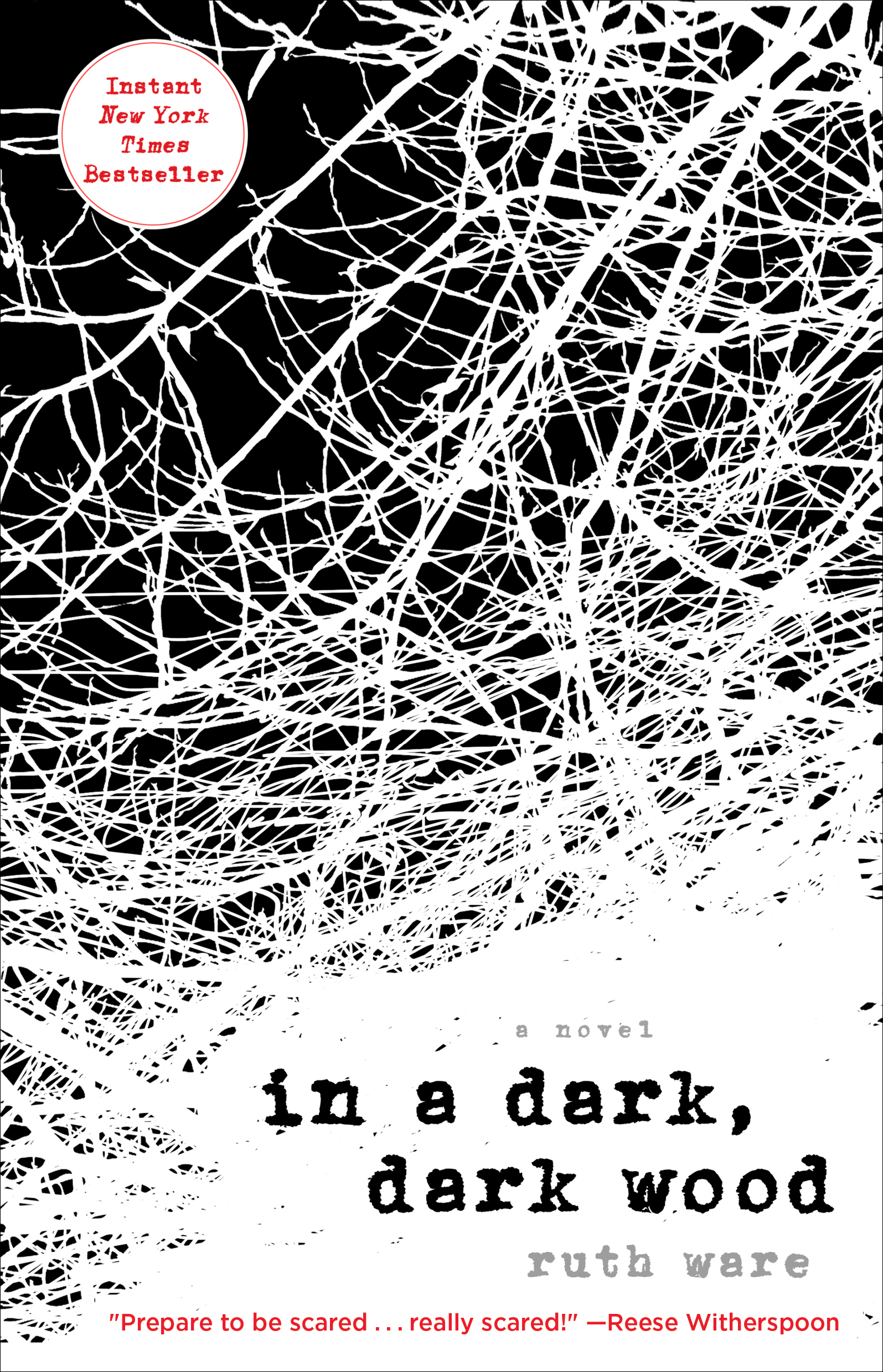
I am becoming addicted to Ware's thrillers, despite her penchant for rather dim heroines. This is the third one that I've read in the last 6 months, and it was a page turner and definitely took my mind off of my broken wrist. I did figure out the killer fairly early, which is never as much fun as being surprised, but it was still an interesting story.

Rereads 

The Winter King - Thomas Penn 

I reread this nonfiction book about the later years of the reign of Henry VII, and I enjoyed it immensely. It is so rich in detail that a reread still worked--lots to review and try to retain. Penn has written several other books about this time period--late Renaissance in England, and I want to read them all, starting with The Brothers York. One of my favorite historical periods to dive into.

Here's my original post on the book.

The Briar Club - Kate Quinn

I do love this book so much. The reread was listening to it with my husband because I knew he would enjoy it and it's fun to listen to a book while we're doing errands or on road trips.

And, here's my original post on this one.

Tuesday, January 07, 2025

Winter Reading and Watching Notes


Apart from holiday-themed books, I do have a number of other books recently read that desire their place in the sun, low in the sky though it is!

The Briar Club, by Kate Quinn - absolutely fabulous. It was such a good 5-star read that I am listening to it again with my husband. I love the setting--a boarding house in the early 1950s in Washington, DC. I love the cast of characters, from smooth-as-silk, mysterious Grace March who transforms a motley set of female boarders into friends and family (the kind that gets under your skin but you fight to protect!), to Bea (a former player in the All-American Girls Professional Baseball League) who finds new ways to live the dream, to Pete and Lena (the crotchety landlady's two children), to the rest of the women and their boyfriends, husbands, and lovers. It was a great look at life in the 1950s--the Red Scare and McCarthy, Pillsbury Bakeoffs, working women trying to keep afloat and safe in a man's world, racism, and food--each character provides a recipe for a dish that seems so 1950s. I hope she writes a sequel. I would love to stay in touch with all of these characters!

Ancestors: A History of Britain in Seven Burials, by Alice Roberts - I listened to the author read the first in a three-volume set of books that explore the archeological record in Britain and how recent technological advances are changing theories about when and how and by whom the area was populated. Roberts has a long list of credentials, has participated on many digs, and has access to leading archeologists and anthropologists--in addition, she is witty, articulate, and easy to listen to and understand. First rate all the way.


The Hazelbourne Ladies Motorcycle and Flying Club, by Helen Simonson - another fabulous book. This one is set in a resort hotel in coastal town in southern England just after WWII. Once again, women are struggling to support themselves after the war in which they were asked to do men's work and then asked to give up their jobs after the war ended. A good mix of upstairs/downstairs characters trying to figure out what's what in a rapidly changing world. 

A Good Life, by Virginie Grimaldi - a recommendation from Joann of Gulfside Musing, and a terrific story about two sisters who are spending a week in their beloved grandmother's house after she passed away. We learn their backstory as they reminisce and deal with the issues that have plagued their relatiionship over the years. Translated from French. Very good.


Jane and the Final Mystery, by Stephanie Barron - the final book in Barron's 15-book Jane Austen mystery series. It takes place mostly in Winchester in the months before Austen's death in August 1817, and it was lovely to see our heroine helping solve a murder mystery that involved one of her oldest and dearest friends. Jane was clearly declining rapidly at this point, and I appreciated how Barron was able to capture the spark and wit of Austen despite her physical limitations, fatigue, and knowledge that she didn't have long to live. This was a great close to a fabulous mystery series. I will miss the further adventures of Jane Austen, sleuth, but I am a devout rereader and I have all fifteen books at my disposal.

The It Girl, by Ruth Ware - I ended up really liking this mystery--endings can be tricky, but this one was particularly good in that it kept me guessing and the tension was great--but I was so frustrated with how dim the Oxford University protagonist was. I'm not sure if this is a weakness on the part of the author, but I found her self-doubt, naivete, and gullibility unbelievable. The titular "It Girl," April was so well-drawn that it was easy to see how most of her peers would want to murder her. This is the second book by this author I have read--I really liked her The Woman in Cabin 10--and I plan to read more. She does write good thrillers.

Nostalgic TV

There are so many TV options these days--countless streaming services, all offering new stuff...for a price. However, my husband and I decided to skip the latest trends and revisit old favorites. 


We just started season 4 of MASH--Col Blake and Trapper John are gone, BJ has replaced Trapper, and Col Potter has replaced Henry Blake. Margaret Hoolihan and Frank Burns are still steamy, and Hawkeye, Radar, Klinger, and Father Mulcahey are all in good form. I haven't watched MASH all the way through for over 20 years, maybe more, but since we have all the DVDs, why not? It is really some of the best TV ever. It was airing live when I was in Junior High, and my husband and I watched the final episode together shortly after we met and started dating.


And, last night we finished season 2 of Northern Exposure. Again. we have all the DVDs, and it's been at least a decade since we watched the whole thing. I love this show so much--back in 2001, we drove to Seattle for the JASNA AGM in October and happened to see a sign for Roslyn, WA. So we, of course, took the exit and walked around the town, taking pictures, buying t-shirts in the store that was the Joel's office, and having a beer at the Brick. We also stopped in 2010, which I included in a travelogue post.

I know there is a lot of great new TV out there, but just like rereading, rewatching can be immensely satisfying.

I'm curious--do any of you rewatch favorite TV shows too? 

Thursday, February 22, 2024

Wrapping Up Winter...Please

I've been busy in January and February.

I'm doing a Master Gardener short course through CSU (Colorado State University) extension and have completed the modules on Soils and Amendments, Science of Tree Planting, Tree Care, and Colorado Gardening. I just started Entomology and then after that will do Irrigation and then get my certificate. I have had a garden all my life, but until I retired it was on autopilot for much of the time--I planted, I weeded, I watered, I harvested, but I didn't have time to really dig in, so to speak.

My first big project is to convert an area that used to house our kids' play structure and is now a pea-gravel wasteland into a native (CO native) flower garden. I've been winter sowing Goldenrod, Bee Balm, False Indigo, Anise Hyssop, Rocky Mt Blue Penstemon, Butterfly Weed, Black-Eyed Susan and Little Bluestem Grass seeds. If you're interested in what winter sowing is all about: Starting Seeds in Winter (psu.edu)

Here are the flowers I chose for my native garden from my spreadsheet.
 
And this is the area that I will be planting.
I also plan to have my usual veggie garden and add natives to my perennial beds. I have some hard work and exciting times ahead!

In addition to the course and some gardening books, magazines, and videos, I have been doing other reading as well. 


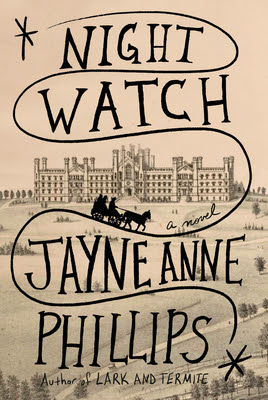
Night Watch, by Jayne Anne Phillips - set in the aftermath of the Civil War in West Virginia, this was an outstanding novel and actually a perfect follow up to Demon Copperhead, which takes place in the same region but 150 years later. Still the roots of the issues in Demon are clearly visible in Night Watch. There are definitely some parts of Night Watch that are difficult to read and the villain, Papa, is truly horrible, but I found the history to be fascinating--much of the story takes place in a lunatic asylum, and the author includes notes from the Quaker doctor (a real person) who founded the asylum, which really added to the overall story. At first, I was hesitant to read about an insane asylum because I thought it would be very disturbing, but this story showed how the approach of this institution, at least, helped people actually recover from the PTSD they developed during the war years and afterwards. Despite the subject matter, I found it satisfying and uplifting.

Here is a wonderful interview with Phillips, and this quote is a good summation of the novel: “Night Watch is about the post-apocalyptic world of the Civil War years, the tribal divisions, the search for scarce resources, a specific family fallen apart and struggling to survive.” She goes on to describe how this post-apocalyptic world is not unlike our modern world and the issues so many face.


Better Living Through Birding, by Christian Cooper - yep, this is the book by the African American Central Park birder whose request that a woman leash her dogset her off on a tirade that cost her her job and so much more. While the CP incident is what brought this birder notoriety, I really enjoyed reading about his life beyond the incident--how this nerdy kid found his niche in the world and applied the skills he learned as a birder to life in general--be respectful, be observant, be interested, listen, and learn.


The Alice Network, by Kate Quinn - I absolutely loved Quinn's The Rose Code, and I absolutely loved this earlier novel as well. Set in 1947 and 1915, this is the story of the intersecting threads of an American socialite trying to find out the truth about her French cousin's disappearance during WWII and an English woman who was a spy during WWI. I loved traveling around France with Charlie (the socialite), Eve (the ex-spy), and her hunky driver who has his own post-war demons to contend with. Not quite as good as The Rose Code but still a darn good yarn.

Have a great end-of-winter (or summer if you're down under) and happy reading, writing, working, and playing!

Friday, August 19, 2022

Mid-August Roundup - Reading, Walking, Learning

Dog days of summer--lots of rain in Colorado (hurrah!), a bit cooler weather, still no tomatoes. What's up with that? But don't you love my sunflower garden? The teddy bear sunflowers are finally coming out, and they are adorable!

Lots of walking. I've been closing my circles on my Apple Watch every day since Jan 1, and accomplished the July challenge (average 60 minutes of exercise per day), and I 'm track to do the August challenge (average burn 668 calories from exercise per day). Am I proud of this? You bet!

In addition to reading, I've been listening to Great Courses on Audible. Here's what I've listened to so far:

  • The Vikings, by Kenneth Harl - a 36-lecture course on the history and impact of the Vikings in medieval Europe. Absolutely, wonderful. The net-net is that Harl believes that the Viking raids, settlements, and assumption of power in certain areas was a major force in shaping Christian Europe. The Normans who invaded England in 1066 were essentially Vikings who had settled in Normandy and took control of the area. I did not realize that!
  • A History of Hilter's Empire, by Thomas Childers - a 12-lecture course that outlined the development of the Nazi party, its rise and fall. Again, incredibly interesting.
  • World War II: A Military and Social History, by Thomas Childers - I am just over half-way through this 30 lecture course. While I am getting more comfortable with the chronology and key points of the war in Europe, I am getting information that is largely new to me about the war in the Pacific and North Africa and the southern Mediterranean.
So why all this learning about WWII? My daughter and I are planning a trip to Germany in March/April. Because we are both interested in WWII, we want to visit a lot of the museums and historical sites from that time and the Cold War, so I wanted to do some pre-trip learning. I am also learning some German via Duolingo.

Now on to what I've been reading. 

The Midcoast, by Adam White - we're headed back to Maine for 10 days in September, so I wanted to read another novel set in Maine, and I saw this on a few blogs and thought I would give it a try. It was a solid 4-star novel, a debut novel, set in a very small town in Maine with an interesting story. Basically, the main character, Andrew, is a lot like Nick in The Great Gatsby in that he observes the rise and shattering fall of a family and how the facade of money and power can crumble when pushed even a little. The main character is an observer, not a player, without having much of a storyline himself. Not sure how this novel is doing overall in the market, but I think it could definitely use a better title, which I found dull and not enticing at all.


City of Vengeance, by D.V. Bishop - this is the first in a mystery series set in 16th century Florence and featuring Cesare Aldo, an officer working for the criminal courts in Florence, which bascially makes this a cop mystery. Absolutely loved the setting and Cesare is a great character with lots of potential for future stories. The writing was good and the mystery was interesting. Will definitely read the second in the series. Interestingly, I thought at the beginning of the book that it was going to be a take on The Merchant of Venice, as the first section deals with a gruff Jewish moneylender and his wayward daughter. The story didn't end up paralleling Merchant at all, but I was afraid we were straying into stereotypical grounds. Glad the author pulled back and told his own story without riding on Shakespeare's coattails. At 416 pages, this books squeaks under the wire to qualify for the Big Book Summer challenge.


The Diamond Eye, by Kate Quinn - WOW! I loved this book about a female, Russian sharpshooter during WWII. Not quite as good as The Rose Code, but wonderful nevertheless. I especially enjoyed the first part of the book, where Mila (aka Lady Death) is learning to be a soldier and developing her leadership skills (she eventually commands a platoon). The second part of the book deals with her visit to the US, Canada, and Great Britiain to drum up support for the US to aid the Allies and fight the Nazis. Mila Pavlichenko was a real person who wrote a memoir about her time in the Red Army and her trip to the US. The Author's Notes at the end is critical to enjoying/understanding the book, in my opinion, as she explains that 90% of the characters in the book are real people, and the only parts that she really fabricated were the larger story of Mila's estranged husband and the stalker who is trying to kill Roosevelt while she is visiting the White House. I particularly loved Mila's relationship with Eleanor Roosevelt, of whom I am a big fan! Reading this book while listening to the WWII Great Courses lectures was a perfect pairing.

Clocking in at 435 pages, this book also qualifies for the Big Book Summer challenge


Hope everyone has a good rest-of-August and happy reading, walking, and learning!

Tuesday, December 28, 2021

December Potpourri


Lots to catch up on--I haven't done a potpourri or roundup since RIP!

Anyway, apart from the Classics, here's what I've been reading:

Taste, by Stanley Tucci - I loved his CNN tour of Italy so much I watched it twice and then couldn't wait for Christmas to get his book. I listened to this foodie memoir, read by the author, and then asked for the book for Christmas for the recipes and to reread it. We're contemporaries, he is a few years younger than me, so it was so much fun to remember life in the 60s and 70s and 80s. A thoroughly enjoyable book.

Ribbons of Scarlet: A Novel of the French Revolution's Women, by Kate Quinn, et al - each chapter is authored by a different writer and features the story of a different woman, although the varioius women do show up in each other's stories. There is the wife of a philosopher, a sister of the King of France, a fruit seller who becomes a revolutionary, an artistocratic lady and they are all interesting and each story well written and compelling. It proves the notion that everyone has a story that deserves to be told, and I really enjoyed reading about the Revolution from the female perspective.

A Game of Birds and Wolves: The Ingenious Young Women Whose Secret Board Game Helped Win World War II, by Simon Parkin - this was a great follow-on to my reading about WWII code-breaking, and was an absolutely fascinating non-fiction. The Birds and Wolves were the German submarines that hunted down Allied ships using the strategy and techniques of a wolf pack (collaborative) and the fleets of submarines were given names of birds. The Wrens and their naval leader devised a game board on which they mapped the movements of the German subs and figured out the wolf-pack strategy and developed techniques for combating it. Riveting stuff! The pictures alone are fascinating. Now I am interested in the Battle of the Atlantic, and to that end have a copy of The Cruel Sea, by Nicholas Monsarrat, published in 1951, that I plan to read in 2022.

Farewell Mr Puffin: A small boat voyage to Iceland, by Paul Heiney - this was a gift from my brother Colin, who knows of my interest in birds, especially puffins, and sailing. Now I am eager to visit Iceland. It was a wonderful adventure, travel non-fiction book, filled with details of doing a passage (from just north of London), up the eastern coast of Britain and on northwest to Iceland. I particularly liked hearing about the various ports he laid up in, his various crews along the way, and the pubs and food eaten therein. Sadly, he only saw one puffin in an area abundant in puffins, but that was just bad luck. Really enjoyed this book and whetted my appetite for travel.

Jane and the Twelve Days of Christmas (#12 in Jane Austen Mysteries), by Stephanie Barron - I wanted to do a bit of Christmas reading this year and so dived into this wonderful novel after finishing #13 in the series, Jane and the Waterloo Map. It was great fun, despite the killjoys of Jane's brother James and his Mary Musgrove-esque wife, Mary. I particularly enjoyed Jane and Cassandra's gift of a doll with all the trimmings that they gave (over a period of days) to their niece, Caroline, one of James's daughters.

The Best Worst Christmas, by Kate Forster - this was an Audible freebie for members and I was looking for a light, bright Christmasy story that wasn't too treacly, and this was perfect. Loved all the characters, from the world-weary heroine back in England after living in Sydney for years, and her high-school boyfriend, now a doctor, and their parents. Very fun and festive.

The Stolen Lady, by Laura Morelli - this was a birthday gift from my daughter Sarah, who knows I love Morelli's books. As with The Night Portrait, by the same author, this combines the Italian Renaissance with WWII. This time, Anne, a typist working at the Louve, assists the curators in hiding the Mona Lisa and other art treasures from the musuem from the invading Nazis. The other half of the story chronicles the painting of the portrait of Lisa del Giocondo née Gheradini from the perspective of Leonardo da Vinci and Bellina, Lisa's lifelong maid. I absolutely loved visiting Milan and Florence in the early 1500s, as well as tracking the hiding places of the Louve artwork across France in the 1940s. I cannot wait to get back to both countries!

Winter Solstice, by Rosamunde Pilcher - according to GoodReads I read this book about 7 years ago, and I definitely had a copy in my stacks, but I honestly remember nothing about it except the tragedy that provided the catalyst for the bulk of the novel. I absolutely loved (re)reading it. Loved all the characters, the setting, north of Inverness in the winter, and the message of hope and rejuvenation in the bleak midwinter. An excellent Christmas story. I loved it so much I just started rereading The Shell Seekers, which I remember much better though I read it over 30 years ago when it first came out.

That's my roundup. Thankfully I am off work again this week, which means lots of reading and puzzle time. Happy Holidays to my blogging friends around the world. May your 2022 be filled with good health and good books.

Friday, July 30, 2021

Midsummer Roundup


It's that time again...snippets about books read that I haven't blogged about yet. Thank goodness I can refer to my GoodReads Read list!

The Rose Code, by Kate Quinn - excellent fictional companion to The Code Girls. The Code Girls (non-fiction) is about American WWII codebreakers and The Rose Code is about English ones, but the work and issues are similar. I loved the characters of The Rose Code, from socialite Osla who dated the future Duke of Edinburgh and who was based on the real-life Osla Benning to working girl Mab from London's East End to mousey Beth, and how they grew and developed and matured. The Bletchley Park setting was fascinating (now on my must-visit list) as was the process of code breaking. I loved reading about how the various departments contributed to the whole, mostly without the cogs in the machinery having an understanding of what role their cog played. Final note--the best part of the book is last third. Reads like a thriller!

Enigma, by Robert Harris - it feels like I'm doing a short course on WWII codebreaking, but midway through The Rose Code I decided to reread Enigma, about...you guessed it, WWII codebreaking at Bletchley Park. I know I read Enigma once upon a time, but it must've been when the kids were babies because I remembered none of it. Again, interesting setting and work and interesting characters, although this time 99% of the characters were male, so it was a different kind of story than that of The Rose Code.

A Cast of Falcons, by Steve Burrows - book 3 in the author's Birder Murder series and a terrific mystery that takes our hero, Detective Chief Inspector Dominic Jejune, from his beloved Saltmarsh in Norfork to Scotland and back with plenty of birding along the way. Dom's mysterious brother is a central figure in this book and is a charming addition. Hope we see more of him in future stories.

Booked to Die, by John Dunning - another reread, but I did remember bits and pieces of this one! Set in Denver, Cliff Janeway is a police detective with an eye and love for rare books. In the course of the mystery, he takes the leap from disgruntled employee to entreprenuer, opening his own rare book store in Denver's Book Row neighborhood. It was great fun reading about Denver, Evergreen, and even Longmont in a book-centric book. This is the first in the Cliff Janeway series, and I'm planning on reading the rest in the series. Cliff Janeway is very, very similar to Lovejoy, the British antiques dealer who stumbles upon murder after murder.

Faithful, by Alice Hoffman - I read this with the GoodReads group, True Book Talk, and it was absolutely excellent. Hoffman is a prolific author, and I've only read one other by her, The Museum of Extraordinary Things, which was okay but Faithful is far the superior book. Early on, it reminded me of The Horse Whisperer in that a young girl survives an accident that leaves her friend dead and must dig her way out of the grief and guilt that nearly buries her alive. I absolutely loved the main character, Shelby, and the NYC setting for most of the book. As much as anything else, this is a coming of age story in which Shelby matures as she rebuilds her life and constructs a family out of the strays (canine and human) that she rescues and that rescue her. I'm still not altogether sure how the title fits the story, but it has been interesting thinking about the word faithful and all that it implies when analyzed.

And now it's on to the dog days of summer, headed up to the mountains for a little break, but packing a case full of books to read while I enjoy the flowers and fruits of the season.

Hope you all stay well and remember to read on!

Thursday, May 27, 2010

Mistress of Rome


I read several blog posts about Mistress of Rome, by Kate Quinn, and was intrigued enough to put myself on the wait list at the library. Now I wish I had bought my own copy as I can definitely see myself wanting to reread this book in a few years.

It was really a fun read--I love Ancient Rome, even before HBO hooked me with Rome and Robert Harris sealed the deal with Imperium and Pompeii--and Quinn did a wonderful job in providing a great cast of characters and a strong plot that kept me on the edge of my seat, so to speak, until the denouement.

While occasionally Quinn's characters used idioms and speech patterns that were clearly modern, I felt comfortable that her history was solid. Besides, her dialogue was easy to read and not stilted or pretentious, so a few modernisms is okay by me for the sake of readability. I got the feeling that Quinn started with a few facts--an emperor who was assassinated and whom historians have mixed views on, and then she built a plot around those facts, and then peopled it with a spectrum of characters who end up intertwined.

I really enjoyed Thea, the main female character--I liked watching her grow and develop as a person, coming into her own and embracing her talents, her genealogy, and her place in the world, as a mother, a lover, a slave, and a friend. I liked her common sense, her grit, and passion. Domitian, the Roman Emperor, is a fascinating study in depravity and politics, and Arius, the gladiator who hails from the mountains of Britannia, seems a bit like a Roman version of Jamie Fraser, the Scottish hunky hero of Outlander, et al. The vixen of the story, Lepida, was painted a tad too evil--your classic "mean girl"--without a single redeeming feature, but I have to admit that I was cheering for her demise at the end and wondering how Quinn was going to pull it off.

Mistress of Rome is a very satisfying popular novel. Quinn provides a wonderful balance of fast moving plot (though the books spans about 15 years) with interesting details of daily life (food, clothes, customs, houses, transportation) and credible historical perspective (political situation within the Roman Empire, balance of power within the government, threats from outside of Rome), and to this she added realistic dialogue, salacious but not overly graphic situations, and a hero and heroine I could really care about.

In the "Historical Note" that follows the novel text, Quinn drops broad hints that sequels are in the making. However, I like that she didn't leave this book open-ended--everything is tidily wrapped up--but the children have stories that are yet untold. Fair enough--can't wait for their stories to hit the bookstores!

Mistress of Rome is a fun read, an interesting read, an informative read. A great combination.