So why did I give Wild for Austen: A Rebellious, Subversive, and Untamed Jane, by Devoney Looser, five stars? I already knew Austen to be a brilliant satirist who skewered those she disdained; I've read the madcap, irreverent stuff she wrote as a teen; and I've dissected her major novels, uncovering all sorts of salacious undercurrents that belie the prim and proper Miss Jane that early biographies promoted.
Despite feeling that the author was trying a bit too hard to make her "wild" point, I just really loved diving in Austen's work and life and times...again! It was a fun book to read--comforting in its familiarity, scholarly but accessible. Looser is a professor who has a knack of expressing her points elegantly. And, there was a lot of new info about Austen that I hadn't heard.
Part I is a walkthrough of Austen's works, starting with the Juvenilia and ending with the unfinished fragments. I particularly liked Chapter 3, "The Controversial Case of Sophia Sentiment," in which Looser lays out the case that Austen's first published work was a letter she wrote to The Loiterer, an Oxford weekly for which her brothers James and Henry wrote the bulk of the copy, under the pseudonym Sophia Sentiment. Looser convinced me that teenager Jane was in fact the author of this wonderful satirical letter. in which she argues for more romantic content and fewer stuffy essays.
Part II, "Fierce Family Ties," contained a lot of new information for me. Looser discusses Jane's relationship to the Burdett family--some of her letters indicate socializing with Frances Burdett and Sophia Burdett, respectively the sister and daughter of Sir Francis Burdett, a political radical who championed universal male suffrage and endured a stint in the Tower of London.
I also learned a lot from the chapter on Eliza, Comtesse de Feuillide, Jane's cousin and Henry's first wife. Jane spent a fair amount of time visiting Henry and Eliza, and Looser makes a compelling case about Jane's exposure to the international social set that Eliza enabled, including the Count and Countess d'Antraigueses--she was an opera singer and he was a spy--and they were brutually murdered in 1812.
And here you thought you knew everything there was to know about Jane's life!
Part III, "Shambolic Afterlives," was particularly fun to read, from early literary conversations with Jane's ghost, to imaginary lovers, to erotica. The penultimate chapter, "Loving (and Hating) Jane Austen," was my favorite and probably the reason I gave the book 5 stars--here's a particularly good passage that resonated with me:
On balance, I've found and still find Austen's novels to be not only a profound personal pleasure to read and reread but also a shared vehicle to explore with others what it might be to try to live a meaningful life in a world that's deeply unfair.
Getting through January always requires a stack of good books. Here are some winners that have been doing the trick for me.
The Wedding People
The Wedding People, by Alison Espach, was as good as all the hype around it. I saw it on so many blogs last year and was super excited when my turn in the library queue finally came. I went into the book not even knowing the premise, and I was a bit shocked when I found out what Phoebe's intentions were. For those of you living under a rock (as I was!), here's the GoodReads blurb:
It’s a beautiful day in Newport, Rhode Island, when Phoebe Stone arrives at the grand Cornwall Inn wearing a green dress and gold heels, not a bag in sight, alone. She's immediately mistaken by everyone in the lobby for one of the wedding people, but she’s actually the only guest at the Cornwall who isn’t here for the big event. Phoebe is here because she’s dreamed of coming for years—she hoped to shuck oysters and take sunset sails with her husband, only now she’s here without him, at rock bottom, and determined to have one last decadent splurge on herself. Meanwhile, the bride has accounted for every detail and every possible disaster the weekend might yield except for, well, Phoebe and Phoebe's plan—which makes it that much more surprising when the two women can’t stop confiding in each other.
In very short order, I found myself rooting for Phoebe as she found herself first clinging to life and then embracing it. I loved how we learned about all the various wedding people through their conversations with Phoebe. In a way, she reminded me of Austen's Anne Eliot in Persuasion--the person everyonr feels comfortable in confiding in. And, I ended up liking all of the wedding people--including the poor Bridezilla and the horrible ex-husband--just proving my maxim that everybody has a story worth hearing. That said, I loved where Phoebe ended up and I hope that Espach follows up the success of this novel with a sequel.
The Bookseller of Inverness
As part of my Reading Scotland project in anticipation of a planned trip there in September, I devoured The Bookseller of Inverness, by S.G. Maclean. I gave it a solid 5 stars on GoodReads for being a whopping good historical novel, thoroughly researched and chockful of interesting, believable characters, hair-raising adventures, and detailed descriptions of many places I plan to visit this fall. Again, here is the GoodReads blurb:
After Culloden, Iain MacGillivray was left for dead on Drumossie Moor [1745]. Wounded, his face brutally slashed, he survived only by pretending to be dead as the Redcoats patrolled the corpses of his Jacobite comrades.
Six years later, with the clan chiefs routed and the Highlands subsumed into the British state, Iain lives a quiet life, working as a bookseller in Inverness. One day, after helping several of his regular customers, he notices a stranger lurking in the upper gallery of his shop, poring over his collection. But the man refuses to say what he's searching for and only leaves when Iain closes for the night. The next morning Iain opens up shop and finds the stranger dead, his throat cut, and the murder weapon laid out in front of him - a sword with a white cockade on its hilt, the emblem of the Jacobites.
With no sign of the killer, Iain wonders whether the stranger discovered what he was looking for - and whether he paid for it with his life. He soon finds himself embroiled in a web of deceit and a series of old scores to be settled in the ashes of war.
The notes at the end by the author provided me with a list of excellent books on the Jacobites. I know I don't have time to read them all, but such wonderful choices to have.
The author has dozens of books listed on GR, some appeal more than others, but the Alexander Seaton series, set in Scotland in the 1620s, looks promising. Has anyone read anything by this author that they can recommend?
Nightshade
Nightshade (Catalina#1), by Michael Connelly, is the first in a new series, this time featuring a sheriff stationed on the island of Santa Catalina, off the coast of California and opposite LA. This is vintage Connelly--good characters, good mystery, good love-to-hate villains, good action, good side threads...but this time, fantastic setting. I spent half my time reading this book looking for places to stay on Catalina. I would seriously love to go there for a vacation. I think Connelly must have a connection to the island because I remember Mickey Haller (the Lincoln Lawyer) going there with one of his girlfriends after he and his wife divorced.
Oh...you probably want to know what this one is about. Here's the GR blurb:
Los Angeles County Sheriff’s Detective Stilwell has been “exiled” to a low-key post policing rustic Catalina Island, after department politics drove him off a homicide desk on the mainland. But while following up the usual drunk-and-disorderlies and petty thefts that come with his new territory, Detective Stilwell gets a report of a body found weighed down at the bottom of the harbor—a Jane Doe identifiable at first only by a streak of purple dye in her hair. At the same time, a report of poaching on a protected reserve turns into a case fraught with violence and danger as Stilwell digs into the shady past of an island bigwig.
Crossing all lines of protocol and jurisdiction, Stilwell doggedly works both cases. Though hampered by an old beef with an ex-colleague determined to thwart him at every turn, he is convinced he is the only one who can bring justice to the woman known as “Nightshade.” Soon, his investigation uncovers closely guarded secrets and a dark heart to the serene island that was meant to be his escape from the evils of the big city.
Surviving the Winter
This winter has been mostly mild and dry and windy in Colorado, with just a bit of snow and a few frigid days. We need more or we'll be facing drought conditions this coming summer.
Go Broncos! I just started watching football two seasons ago, but cheering on the Denver Broncos in the face of all the nay-sayers has been fun. I even bought myself a game-day tee-shirt! Those of you who have visited the Denver airport might recognize, Blucifer, the giant, blue, demon horse that most of us love and that epitomizes the Broncos for me!
Finally watching season five of Only Murders in the Building--we pulled our Hulu subscription after the Jimmy Kimmel kerfuffle but decided Disney had suffered enough and reinstated Hulu to watch Mabel, Charles, and Oliver solve the latest murder in the building. I am absolutely loving Selena Gomez's wardrobe this season.
Listening to Austen's Mansfield Park in preparation for our region's February discussion of the novel. BTW, I found a free audio version on Audiobooks, courtesy of LibriVox. The reader, Karen Savage, is doing a fine job, although I don't care for her Mary Crawford voice. I plan to scan an annotated version before the meeting in order to find some interesting tidbits to share.
Went to the Denver Art Museum Pissarro exhibit and decided I want to live in most of the places he painted. Here are a couple of favorites:
Best wishes for a successful survival of January. Tell me how you beat the mid-winter blahs.
Nothing like a couple of flights to get some great books read. Here's what I've been reading.
Pigs in Heaven, by Barbara Kingsolver - this is the sequel to the marvelous The Bean Trees and follows the story of Taylor and her adopted daughter, Turtle, three years after the end of the first book.
I loved everything about Pigs in Heaven--Taylor's ferocious spirit and ethical core shines through and makes the book sing. I also really enjoyed spending more time with Taylor's mother, Alice, who figures much more prominently in this story.
The gist of the story is that the Cherokee Nation discovers the anomalies in Turtle's adoption; when Taylor finds out that the adoption is being investigated, she literally freaks out and hits the road with Turtle. There is a lot of story and great characters along the way--from a real, live Barbie doll who does not share Taylor's ethical core, to the community of Heaven, Oklahoma that is practically one extended family, to Taylor's boyfriend, Jax, and Alice's cousin Sugar.
I love small-town stories and this eventually becomes one.
Fun Fact: the title comes from a Cherokee story about the Pigs in Heaven, aka the Pleiades, a constellation that consists of six wayward Cherokee boys and their mother.
Work Song, by Ivan Doig - another sequel to a wonderful novel, The Whistling Season. This story is all about charming Morrie Morgan and takes place ten years after the first book (i.e., 1919) and is set in Butte, Montana during its heyday as the "copper-capital of the world."
Morrie lives in a boarding house with a widowed landlady and a couple of ex-miners. He finds work first as an official mourner at wakes and then as a jack-of-all trades at the local library, which is run by a bigwig cattleman and ardent bibliophile. He gets involved in the local miners union, and true to form, comes up with wild and crazy solutions to the problems he and the union face--namely, how to create a stirring work song that will rally the miners and help them stand up to the copper company.
As with The Whistling Season, Work Song, is exuberant, energetic, and a whole lot of fun. While the issues, political and social, are real and sobering--WWI just ended and the Spanish Flu ravaged populations worldwide, unions were fighting for safer conditions and better, more equitable pay--the story itself is wonderful as Morrie deals with the union-busting goons who discover his Chicago past, which he is still trying to outrun. Rabrab (aka Barbara) from Whistling Season is now a 5th grade teacher in Butte and brings her children into his orbit with delightful results, especially Famine, fastest boy in the west.
Next in the trilogy about Morrie is Sweet Thunder. Can't wait to read it.
Kate & Frida, by Kim Fay - not a sequel but another book by a wonderful author. I read Fay's first book, Love and Saffron, a few years ago and so was eager to read this one. Like Love and Saffron, Kate & Frida is an epistolary novel--letters between two women who strike up a long-distance friendship and become truly best friends.
Kate works in a bookstore in Seattle, and Frida is living in Paris "enroute" to a life as a war correspondent. The novel is set in the 1990s, which was sort of nostalgic in that there are lots of references to 1990s TV, movies, celebrities, politics, etc., but life is not all that different now than then. Of course, now the letters would be emails and not delivered by snails. In the afterword, Fay says that many of the characters and situations were based on real people and events in her life, so I guess she needed to set the novel when she did.
In the course of the three years that the letters span, both Kate and Frida evolve from wanna-be writers to young women with a sense of who they are, what they want, and how they want to live. Not really a coming-of-age story--more of a coming-to-maturity story. My favorite bits, apart from the food descriptions, were when Frida was helping a group of refugee women from war-torn Sarajevo deal with the trauma they faced and the friends/family left behind during the Bosnian War.
Killers of a Certain Age, by Deanna Raybourn - I discovered this book on Lark Writes. The premise is that four sixty-something female assassins (targeting only the worst of the worst) come out of retirement when they are targeted for assassination. Most of the time reading this, I was reminded of The Golden Girls, with Billie and Mary Alice doubling as Dorothy, Helen was clearly naive Rose, and sexy Natalie was definitely Blanche. No real Sophia, but you can only stretch a parallel so far!
This was great fun to read, but I doubt I will read the second book in the series as I had a bit of a hard time with the whole assassination/killing aspect. I don't believe in vigilante justice, and the story points out that those with the power to name targets can be corrupted. I'd rather see us Gray Panthers sleuthing rather than killing. It is refreshing to see lots of books and TV/films featuring aging boomers who are still active and alert.
Garden Notes
Following age-old guidance, I planted a lot during the past few days of the Flower Moon (what the May full moon is called). The tomatoes and peppers were hardened off and now are in the ground, along with marigolds to keep the bugs at bay. A naturalist friend reminds me that a plant that is not being eaten is not part of the ecosystem, but I planted a whole native flower garden for them to feast upon so that leaving my tomato plants alone is not to much to ask.
Front planter box with coleus and impatiens.
Dining table on deck becomes garden bench!
The petunias are stretching out in their hanging baskets, gearing up for a season of blooms. I've been making pots of coleus and impatiens, which I think look stunning together. And my son and I planted carrots, beets, zucchini, and beans today. This weekend I'll be planting sunflowers as well as a bed of corn/beans/pumpkin (the Three Sisters).
TV Notes
We finally watched the final episode of Northern Exposure earlier this week. I cried. Here's a link to the gorgeous song that ended the series. This isn't footage from the show, but it is the same version of the song, Our Town, by Iris DeMent:
I just started watching Miss Austen--first episode was quite good, with Cassandra's flashbacks to when she and Jane where young. I didn't know that Mary Lloyd, James Austen's second wife, was also related to Cassandra's fiancé, who died before they could marry. Every story needs a villain, and Mary is shaping up to be the villain of this one.
Yes, I am obsessed with Spring. Now, with daylight savings time, I still struggle in the morning but am relishing the evening light.
I have five flats started under grow lights--Roma tomatoes, Moneymaker tomatoes, cherry tomatoes jalapeno peppers, yellow bell peppers, ancho peppers, coleus, and viola. Everthing sprouted in less than a week. I love those Botanical Interests seeds! This weekend I plan to get the snapdragons, marigolds, impatiens, tomatillos, and anaheims started. Last year I put in my native (to my region in CO) flower garden, and things are starting to green up!
Now on to what I've been reading...
The Last Ranger, by Peter Heller
Ren is a park ranger in Yellowstone, working hard to keep the park, its fauna, and the people who love and study them safe from ruffians and those who want to exploit the land and its resources. I found the plot reasonably interesting, with lots of tension, and I loved learning about the ways of the wolf packs that have been gaining a foothold in the park. I liked reading about the life of a park ranger in one of the premier national parks, and one that I have visited several times and love. I don't love Heller, and I definitely am not interested in his dystopian stuff, but this was a good solid outdoor adventure novel.
The Spy Coast (The Martini Club, #1), by Tess Gerritsen
Definitely a story inspired by the massive success of The Thursday Murder Club--the latter was published in 2020 and took off like a rocket, and The Spy Coast was published in 2023. Maybe I'm just cynical, but the premises of both are so similar. The Spy Coast is set in Maine and features a group of retired CIA spies who all live in the same village and have to dust off their spy skills when the past catches up with them. I'm not saying I didn't really enjoy the book and am looking forward to reading the second in the series. It has a good, interesting set of characters with a good, interesting plot. Appealing to us aging Baby Boomers is definitely a good idea!
The Berry Pickers, by Amanda Peters
Loved this book--also set in Maine. The story is narrated by two characters--a Native American girl/woman, kidnapped when she was five years old and raised by adoptive parents, and her brother, who was the last person to see her before she went missing. The two stories run parallel as the sister and brother live out their lives, struggling to figure out their place in the world. Reading about the treatment of Native Americans is rough, but I definitely feel I understand a bit more of how life was in Maine and maritime Canada in the mid/late 20th century. This is a debut novel, so I am eager to see what Peters writes next.
Death at the Sign of the Rook (Jackson Brody, #6), by Kate Atkinson
I just love Jackson Brody novels, and this one was such a treat to read. Jackson is his usual self-deprecating self, Reggie is there with all her baggage and snark and earnestness (which is a charming combination), and the premise is such fun. A murder mystery evening set at a dilapidated Downton Abbey-esque estate, with actual murders as well as stolen art (one of my favorite themes anyway) and goofy characters. Just so much fun!
The Annotated Emma, by Jane Austen with introduction and annotations by David Shapard
My JASNA regional book club decided to read Emma for our March book, so I decided to read the annotations by David Shapard while listening to an audio version. The older I got, the more I love Emma--she is just delightful to watch growing up. The annotations were pretty good--Shapard promised not to interpret but to try to illuminate details that a 21st reader might not get. He did a good job.
That's all for now, folks! Hope you are finding some great books that put a spring in your step as well.
Apart from holiday-themed books, I do have a number of other books recently read that desire their place in the sun, low in the sky though it is!
The Briar Club, by Kate Quinn - absolutely fabulous. It was such a good 5-star read that I am listening to it again with my husband. I love the setting--a boarding house in the early 1950s in Washington, DC. I love the cast of characters, from smooth-as-silk, mysterious Grace March who transforms a motley set of female boarders into friends and family (the kind that gets under your skin but you fight to protect!), to Bea (a former player in the All-American Girls Professional Baseball League) who finds new ways to live the dream, to Pete and Lena (the crotchety landlady's two children), to the rest of the women and their boyfriends, husbands, and lovers. It was a great look at life in the 1950s--the Red Scare and McCarthy, Pillsbury Bakeoffs, working women trying to keep afloat and safe in a man's world, racism, and food--each character provides a recipe for a dish that seems so 1950s. I hope she writes a sequel. I would love to stay in touch with all of these characters!
Ancestors: A History of Britain in Seven Burials, by Alice Roberts - I listened to the author read the first in a three-volume set of books that explore the archeological record in Britain and how recent technological advances are changing theories about when and how and by whom the area was populated. Roberts has a long list of credentials, has participated on many digs, and has access to leading archeologists and anthropologists--in addition, she is witty, articulate, and easy to listen to and understand. First rate all the way.
The Hazelbourne Ladies Motorcycle and Flying Club, by Helen Simonson - another fabulous book. This one is set in a resort hotel in coastal town in southern England just after WWII. Once again, women are struggling to support themselves after the war in which they were asked to do men's work and then asked to give up their jobs after the war ended. A good mix of upstairs/downstairs characters trying to figure out what's what in a rapidly changing world.
A Good Life, by Virginie Grimaldi - a recommendation from Joann of Gulfside Musing, and a terrific story about two sisters who are spending a week in their beloved grandmother's house after she passed away. We learn their backstory as they reminisce and deal with the issues that have plagued their relatiionship over the years. Translated from French. Very good.
Jane and the Final Mystery, by Stephanie Barron - the final book in Barron's 15-book Jane Austen mystery series. It takes place mostly in Winchester in the months before Austen's death in August 1817, and it was lovely to see our heroine helping solve a murder mystery that involved one of her oldest and dearest friends. Jane was clearly declining rapidly at this point, and I appreciated how Barron was able to capture the spark and wit of Austen despite her physical limitations, fatigue, and knowledge that she didn't have long to live. This was a great close to a fabulous mystery series. I will miss the further adventures of Jane Austen, sleuth, but I am a devout rereader and I have all fifteen books at my disposal.
The It Girl, by Ruth Ware - I ended up really liking this mystery--endings can be tricky, but this one was particularly good in that it kept me guessing and the tension was great--but I was so frustrated with how dim the Oxford University protagonist was. I'm not sure if this is a weakness on the part of the author, but I found her self-doubt, naivete, and gullibility unbelievable. The titular "It Girl," April was so well-drawn that it was easy to see how most of her peers would want to murder her. This is the second book by this author I have read--I really liked her The Woman in Cabin 10--and I plan to read more. She does write good thrillers.
Nostalgic TV
There are so many TV options these days--countless streaming services, all offering new stuff...for a price. However, my husband and I decided to skip the latest trends and revisit old favorites.
We just started season 4 of MASH--Col Blake and Trapper John are gone, BJ has replaced Trapper, and Col Potter has replaced Henry Blake. Margaret Hoolihan and Frank Burns are still steamy, and Hawkeye, Radar, Klinger, and Father Mulcahey are all in good form. I haven't watched MASH all the way through for over 20 years, maybe more, but since we have all the DVDs, why not? It is really some of the best TV ever. It was airing live when I was in Junior High, and my husband and I watched the final episode together shortly after we met and started dating.
And, last night we finished season 2 of Northern Exposure. Again. we have all the DVDs, and it's been at least a decade since we watched the whole thing. I love this show so much--back in 2001, we drove to Seattle for the JASNA AGM in October and happened to see a sign for Roslyn, WA. So we, of course, took the exit and walked around the town, taking pictures, buying t-shirts in the store that was the Joel's office, and having a beer at the Brick. We also stopped in 2010, which I included in a travelogue post.
I know there is a lot of great new TV out there, but just like rereading, rewatching can be immensely satisfying.
I'm curious--do any of you rewatch favorite TV shows too?
Since I've been participating in Nonfiction November and I really cannot seem to do more than one post per week, and even that is a challenge, I have a slew of wonderful books read that demand a comment or two.
Persuasion, by Jane Austen - This time I read the annotated version, with an introduction by David Morrison, and really enjoyed both the novel and the notes. I have said that I don't like annotated versions, but this one worked for me. A perfect Autumn read, and I think it just might be my favorite Austen novel.
We Solve Murders, by Richard Osman - first novel in what promises to be a new series by the author of the immensely popular Thursday Murder Club mysteries. It was bit slow going for the first third, but then the pace picked up and it turned out to be terrific. Basic idea is that a young woman (Amy) and her father-in-law (Steve) are best buds and team up to solve a series of murders and end up deciding to open a detective agency. He is a retired cop, and she is a professional bodyguard. They are funded by a best-selling author who craves excitement, and there is a motley assembly of secondary characters who are all good company. Osman's sense of humor is spot on for me, and the scenarios he creates, while pretty far-fetched and complicated, are also interesting, entertaining, and logical to a point.
The Lover of No Fixed Abode, by Carlo Fruttero and Franco Lucentini (Gregory Dowling, translator) - set in Venice, a rich, restless Roman princess falls in love with a mysterious tour guide, and while you might be thinking this is a sappy, feel-good romance (ala Roman Holiday), it is so much more. Not until at least two-thirds, maybe even three-quarters, into the book do you get the idea that Mr. Silvera is not simply a tour guide. I don't believe I am giving away too much of the twist of the novel to say that this is the most intriguing time travel book that I have ever read. And it's not really time travel but more about the elasticity of the time/space continuum. There is Jewish folklore and Christian mythology tied up along with an intimate voyage into the heart and magic of Venice. Booking my trip for 2025 now!
The Frozen River, by Ariel Lawhon - I absolutely loved Lawhon's Code Name Helene, from a few years ago, and this latest novel by the author was another 5-star read for me. Based on the diary of Martha Ballard, a Maine midwife in the late 18th century, the story has a murder mystery at its heart, but I loved it for the depiction of the life of a family and a community. In so many ways, Martha and her story reminded me of Claire in Diana Gabaldon's Outlander series. While Martha is not a time-traveler, the fictional Martha created by Lawhon shares her outspokenness, her insistence on truth and justice, her fierce love and protection of her extended family, her dedication to her profession and her desire to heal, both physically and emotionally. I love visiting Maine, and it was such a treat to read about its early days when the USA was brand new.
The Comfort of Ghosts, by Jacqueline Winspear - the final book in the absolutely wonderful Maisie Dobbs series. It was a beautiful rounding of the story, tying up loose ends, and connecting threads from the earliest novels together in a meaningful and satisfactory ending. I am sorry that there will be no more adventures with Maisie, but I do love to reread so I will happily visit with her from time to time.
Happy Thanksgiving to all my blogging friends. Stay safe, stay warm, and enjoy that second slice of pie!
At the Edge of the Orchard, by Tracy Chevalier - I like everything Chevalier writes, and this was no exception, except it takes a lot of faith to make it through the first part, which has some of the most disagreeable characters you can imagine. Actually, I started this book five or so years ago and stopped reading after about 30 pages because I couldn't stand the company. But, my husband read it and said that the awful people are really only in the first part and the overall story is good. Then, the GoodReads True Book Talk group voted to read it in July, so I plunged back in.
The story starts with a homesteading family in the Black Swamp in Ohio in the 1830s and their struggle to survive and grow apples, courtesy of John Chapman, aka Johnny Appleseed. The father loves grafting trees to produce his favorite variety to eat, and the mother loves hard cider...to a fault.
Robert is the eldest son, and the novel really gets good when he heads west to make his fortune and after trying his hand at cowboying and gold mining, he ends up working for a botanist from England who makes his living by providing English gardens and landowners with seeds and seedlings from redwoods and sequoias. Who knew this was a thing back in the 1850s? Loved reading about California in the early days.
How to Read a Book, by Monica Wood - this was a recommendation from JoAnn at Gulfside Musing, and it was a thoroughly enjoyable novel. Shades of Orange is the New Black as a women's correctional facility figures prominently--Violet is incarcerated for manslaughter, Harriet is a retired teacher who leads a weekly bookclub at the prison, and Frank is the husband of the woman Violet accidently killed. It is truly a lovely story about second chances and the power of forgiveness as a life-giving force.
Fun Fact: did you know that African Grey Parrots are super smart and can differentiate colors and objects and show feelings and affection? I didn't, but I learned a lot about them while reading this book!
Jane Austen: Writing, Society, Politics, by Tom Keymer - this was the JASNA Denver/Boulder bookclub's selection for our July read. Chosen because the author is delivering a keynote at the JASNA AGM in October in Cleveland (no, I am not going this year), it turned out to be quite interesting.
A sampling of the tidbits I learned:
Blaise Castle, where John Thorpe takes Catherine Morland at breakneck speed in Northanger Abbey, was actually a tourist trap and folly and not a real gothic castle.
Virginia Woolf wrote something called "Jane Austen at 60," which I think I would like to read sometime.
It was a fun, interesting book, and I'm sure his keynote will be excellent.
Once Persuaded, Twice Shy, by Melodie Edwards - for our September book, JASNA Denver/Boulder decided to read some fun modern riffs on Persuasion. I am traveling in September, so I got a jumpstart and read this one, which takes place in Canada (Niagra-on-the-Lake). It was enormous fun--well-written with mostly believable characters, sufficient angst, and a lovely resolution. Perfect summer escapism, but everyone agreed...the title is atrocious.
The author has also written a modern Jane Eyre story, Jane & Edward, that I might read. Has anyone read it? Worth reading?
The Scarecrow, by Michael Connelly - I've been listening to Connelly's Harry Bosch, Mickey Haller (Lincoln Lawyer), and Renee Ballard LA crime novels, but I didn't know that he had a 3-part series that featured a newspaper reporter until I was looking for something to listen to and stumbled across the middle book in the series. I generally don't read series out of order, but rules are made to be broken.
Jack McEvoy is a LA Times crime reporter who has just been given his pink slip. He sees an opportunity to write a final, Pulitzer-Prize winning story with a tip that comes during his last week, and we're off to the races. This was classic Connelly in that I felt like I really had an insider's view of a newsroom and the relationships between law enforcement, lawyers, and the media. The set up was high-tech featuring data centers and hacking, the bad guys were smart and horrible, and the characters were terrific. I'm just sorry that McEvoy only has three books.
The Plot, by Jean Hanff Korelitz - I was super excited to read this one, but only ended up giving it three stars because I really hated the ending, which felt so contrived and non-satisfying. I also had a hard time buying into the premise, which is that a struggling novelist uses a surefire plot that one of his students told him before that student passed away. Apparently, using this plot was somehow considered heinous, which really didn't resonate with me, and the revenge angle also stretched my ability to suspend disbelief.
-----------------
I think that's a wrap on the reading front.
In other news, it is finally raining in Colorado, helping to dampen down the wildfires and smoky haze, which means I need to get outside a do some weeding while we have a break from the heat.
I am loving the Olympics. Women's rugby!!! Who knew it was so much fun to watch? And track and field, and swimming, and diviing, and volleyball, and tennis, and something called Cross Canoe Slalom. Wow!
I am also loving Bridgerton. I finally bit the bullet and started watching. Finished season 2 last night, now on to season 3. I used to think Downton Abbey had the best costumes, but Bridgerton is just eye-candy galore.
The tomatoes are starting to ripen so I'll be making tomato sauce to freeze for the winter. The chili peppers are fantastic, so I've been roasting and peeling and dicing and freezing for green chili. I actually grew bell peppers this year, and they are growing and just starting to ripen. The onions are awesome.
Life is good. Hope you are well and enjoying the dog days.
Wow, it's been almost two weeks since my last post. Time flies when you are planting seeds, watering seedlings, trimming overgrown dogwoods, moving pea gravel, and dreaming of snowless days! Springtime in Colorado means weekly snowstorms...thankful for the moisture, though!
Here are the milk jugs in which I sowed native seeds for the garden.
And here you can see that the Anise Hyssop seeds, which I sowed on Feb 7, have germinated.
When I am not gardening, here's what I've been reading:
The Call of the Wrens, by Jenni Walsh - another dual timeframe with two main characters whose stories converge. Marion is a dispatch motorcycle rider with the Wrens (i.e., Women's Royal Navy Services) during WWI and Evelyn has the same role during WWII. I love the time period and the individual stories were good--what I had a bit of a problem with was how they converged. A solid three stars, but it left me with a bit of eye-rolling despite really enjoying learning about motorcycle dispatch riding.
The Day That Never Comes, by Caimh McDonnell - second in the 7-part Dublin trilogy (yes, you read that right, 7 books in this trilogy), which just shows the charm and cheek of this Irish comic turned mystery writer. This was an excellent followup to book 1, The Man With One of Those Faces. Believe me when I say that these books are enormously fun to read.
The Door in the Wall, by Marguerite de Angeli - I read this after Kathy posted about it on Reading Matters. Published in 1949, it is a children's book that chronicles the adventures of young Robin, son of a knight in 13th century England. We hear about the plague, which cripples Robin, and how he learns to function again and enjoy life (i.e., finding a door in the wall), about life in both a monastery and a castle, and what it was like to travel in the medieval world. Thoroughly enjoyable.
Jane Austen, by Margaret Kennedy - I've been reading Austen and reading about Austen for over 50 years but only heard about this marvelous little book earlier this year. It was pitched to me as a bio, but the biographical details are brief, and most of the book is commentary by Kennedy, a novelist and playwright from the early 20th century. I haven't read anything else by her, but I think her observations and critique of Austen's work are spot on...except for Lady Susan, which I liked far more than she did. This book wasn't easy to find, but I got a copy through interlibrary loan from a university library.
Oh, and Happy Equinox! Something we can all celebrate!
February is always a long month and this year's was no exception. But, we are just over 3 weeks away from the equinox and I can already feel my equilibrium being restored and my fingers have beeen itching to tell you about what I've been reading.
Mysteries
Black Diamond, by Martin Walker - #3 in this marvelous mystery series set in the Dordogne in France and featuring the lovely Bruno as police force of one in a little village in France where he cooks for his friends, hangs out with his dog, and tries his best to keep the peace. In this story, we get a glimpse of the rival Vietnamese and Chinese immigrants who compete for business, both the legal and the illegal kind. I love these books because they aren't just edge-of-your seat stories but provide historical, cultural, and regional sidestories that I like as much, if not more, than the actual mystery plot.
The Madness of Crowds, by Louise Penny - I enjoyed State of Terror (the co-authored thriller by Hillary Rodham and Louise Penny) so much that I just wanted more of Penny and Armand Gamache and Three Pines, so I read #17 in her wonderful series. It was excellent, of course, and delved with the aftermath of Covid and the ethics involved in medical decisions. This is the first novel I've read that references Covid, and I thought Penny handled the subject deftly.
Raven Black, by Ann Cleeves - I've been enjoying this prolific author's Matthew Venn series so much that I thought I would read some of her other series. My library had this one handy, so now I am reading her Shetland series. It was absolutely excellent with many of my favorite elements: small, tight community with secrets, harsh but compelling environment (the Shetland islands are not for the feeble), and well-written plot that kept me guessing until the end.
The Lost Man, by Jane Harper - I've enjoyed Harper's Aaron Falk series, but this was head and shoulders above them. An absolutely outstanding thriller about life in the outback of Australia. Again, love those harsh environments with a closed, tight community carrying a load of baggage and secrets. Harper did an outstanding job painting a stiflingly hot, pressure-cooker story that had a glorious ending.
Not Mysteries
A Civil Contract, by Georgette Heyer - my JASNA bookclub is reading Heyer for our March meeting, and my friend Maxene recommended this Regency Romance as a bit atypical with a hero and heroine cut from different cloths than the usual Heyer fare. I loved it--absolutely loved it. Adam is a spare whose older brother manages to die, making him the heir, and then his father dies leaving him a mountain of debt. The solution? That's right--accept the civil contract offered by a parevenu who wants his plain daughter to marry a lord. I loved practical, sweet Jenny who tries hard to make Adam happy, and I especially loved her dad, Mr. Chawleigh, who is the definitive bull in a chinashop but with a heart as big as his bank account. The side characters were interesting and added zest to the story. All in all, a wonderful way to get through the doldrums of February.
The Maid, by Nita Prose - another out-of-the-park novel. Loved it so much. Molly Gray, the hotel maid cum detective, has a very literal approach to life, not unlike Elizabeth Zott in Lesssons in Chemistry and Elinor Oliphant. It's frustrating to watch her not "get it" but then marvelous when the penny finally drops and she sees her way clear. Her moral compass is finely polished and this was a fun, interesting read. I believe this is Prose's debut novel, so I am eager to see what she does next.
Celebrating Pride and Prejudice: 200 Years of Jane Austen's Masterpiece, by Susannah Fullerton - I gave this 3 stars on GoodReads mostly because I loved the first half and was bored to skimming in the second half. The first half retold the tale as old as time of how P&P came to be published and the impact its publication made on the oh-so-short life of Austen, and then she dived into commentary about all the major and minor characters, which was fun to read, insightful, and just like a JASNA meeting. The second half explored the various translations, adaptations, sequels, prequels, and Austenmania ad nauseum. I think the book would have garnered another star had it been shorter. Short books can still be good and sell...just saying.
White Teeth, by Zadie Smith - I've heard of this book for years but wouldn't have picked it up and read it without it being the selection of the GoodReads True Book Talk group. It is a story of life in London during the 1970s to the turn of the millenium, focusing on the lives of Archie and his Jamaican-born wife, Clare, and Samad (an immigrant from Bangladesh) and his wife Alsana, and their children. I just found out that there is a four-part mini-series available on Amazon, so I might watch it. The book was excellent and thought-provoking.
Hope you are all well, discovering great books to explore, and finding your own equilibrium as we approach the equinox. That's something we can all celebrate, worldwide.
April was a particularly good month, bookwise. Here's what made me happy in April (in addition to the dull brown of a Colorado winter starting to green up and warm up!).
Finding Langston, by Lesa Cline-Ransome - I loved Langtson Hughes's first autobiography, The Big Sea, so when I was browsing the audio section of the library and found this little gem, I knew I had to check it out. It is a short book--a quick listen that I flew through in just a couple of days--but the characters are memorable and their story poignant. Here's the blurb on GoodReads:
When 11-year-old Langston's mother dies in 1946, he and his father leave rural Alabama for Chicago's brown belt as a part of what came to be known as the Great Migration. It's lonely in the small apartment with just the two of them, and at school Langston is bullied. But his new home has one fantastic thing. Unlike the whites-only library in Alabama, the local public library welcomes everyone. There, hiding out after school, Langston discovers another Langston, a poet whom he learns inspired his mother enough to name her only son after him.
As much as anything, this book is about the power of literature to transport, enrich, transform, comfort, and ennoble us. For many people, poetry can be daunting, but hearing Hughes's poems through the mind of a lonely 11-year old boy made them so accessible and vibrant. That said, I don't want to minimize the bones of the story--the struggles of the African Americans who participated in the Great Migration and fled the Jim Crow South for the mean streets of Chicago. Leaving home, even when home is oppressive, is hard. Great book.
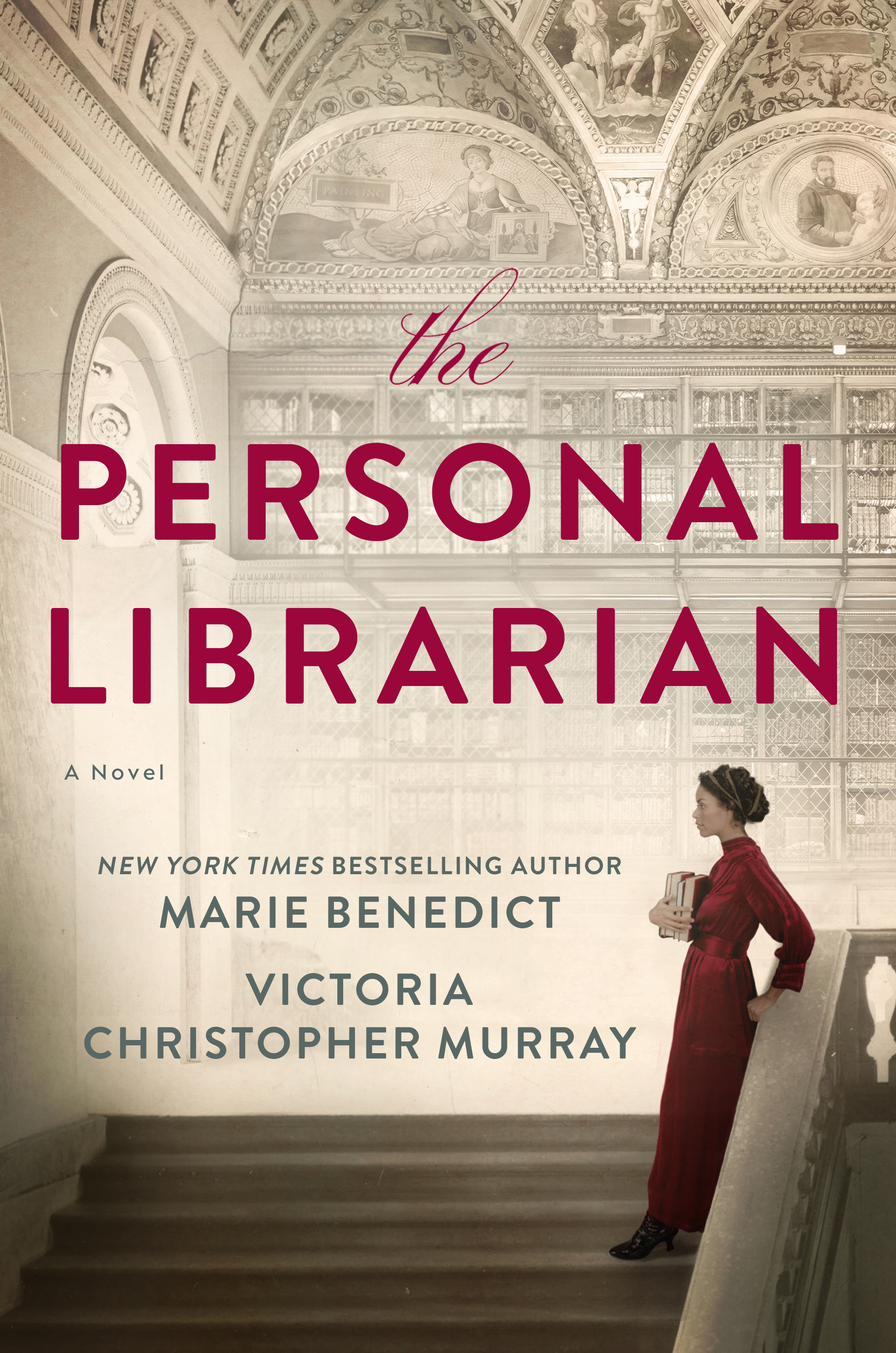
The Personal Librarian, by Marie Benedict and Victoria Christopher Murray - OMG, what a fantastic book. Again, here is the GoodRead blurb (can you tell that I hate to write synopses when I can lift one that sings!).
In her twenties, Belle da Costa Greene is hired by J. P. Morgan to curate a collection of rare manuscripts, books, and artwork for his newly built Pierpont Morgan Library. Belle becomes a fixture on the New York society scene and one of the most powerful people in the art and book world, known for her impeccable taste and shrewd negotiating for critical works as she helps build a world-class collection.
But Belle has a secret, one she must protect at all costs. She was born not Belle da Costa Greene but Belle Marion Greener. She is the daughter of Richard Greener, the first Black graduate of Harvard and a well-known advocate for equality. Belle's complexion isn't dark because of her alleged Portuguese heritage that lets her pass as white—her complexion is dark because she is African American.
The Personal Librarian tells the story of an extraordinary woman, famous for her intellect, style, and wit, and shares the lengths to which she must go—for the protection of her family and her legacy—to preserve her carefully crafted white identity in the racist world in which she lives.
What do I love about this book? Let me count the ways. First, I love the Morgan Library--one of my favorite places to visit in NYC, and I've been there at least three times. So, it was a no-brainer to read this book--I'm not a particular fan of Robber Barons, but I do find J.P. Morgan interesting because he used some of his millions to procure the art and manuscripts that he loved. The fact that a financier can love art for its own sake redeems him...a bit.
Next, the whole phenomenon of "passing" is something I never even thought about until fairly recently. Of the several books I have read on the subject (Passing by Nella Larsen and The Vanishing Half by Brit Bennet), I think this is the best because it is grounded in historical fact. I'm not saying I didn't really like both of the other books, but Belle da Costa Greene really lived a double life, really made the hard choices, really struggled with identity, really had to reconcile her ambition and need to lead a full, rich life against the backdrop of overwhelming and debilitating racial prejudice.
Then, there is the art and manuscripts--I loved learning about the art world of the early 20th century--Belle is nothing if not totally masterful in how she infiltrates the world and procures the pieces that she and J.P. love to distraction.
Finally, there is the whole gilded age and pre-WWI fashion, parties, and high society. What a great book!
I belong to the Jane Austen Society of North America, Denver/Boulder region, and our bookclub selection for the May meeting is The Jane Austen Society, by Natalie Jenner. True to form, here is the GoodReads blurb:
One hundred and fifty years ago, Chawton was the final home of Jane Austen, one of England's finest novelists. Now it's home to a few distant relatives and their diminishing estate. With the last bit of Austen's legacy threatened, a group of disparate individuals come together to preserve both Jane Austen's home and her legacy. These people—a laborer, a young widow, the local doctor, and a movie star, among others—could not be more different and yet they are united in their love for the works and words of Austen. As each of them endures their own quiet struggle with loss and trauma, some from the recent war, others from more distant tragedies, they rally together to create the Jane Austen Society.
The first thing to know is that the novel is not based on the actual facts or people involved in the creation of the real Jane Austen Society in the UK. It is completely a product of Jenner's imagination, as is the letter that one of the characters finds in a book in which Austen provides tantalizing details about one of her reputed love affairs. Remember, this is all fiction! It was a fun read. Somewhat lightweight compared to my other April books, but still fun. And it will be fun to discuss with other JASNA bookclubbers in a mid-May, Can I recommend it? Why not? We all need some fun and what-ifs from time to time.